Product Design, Manufacturing & Innovation Resources
घर » वोल्टेइक ढेर में विद्युत रासायनिक अभिक्रिया

वोल्टेइक ढेर में विद्युत रासायनिक अभिक्रिया

1800
  • Alessandro Volta
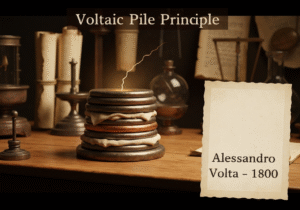
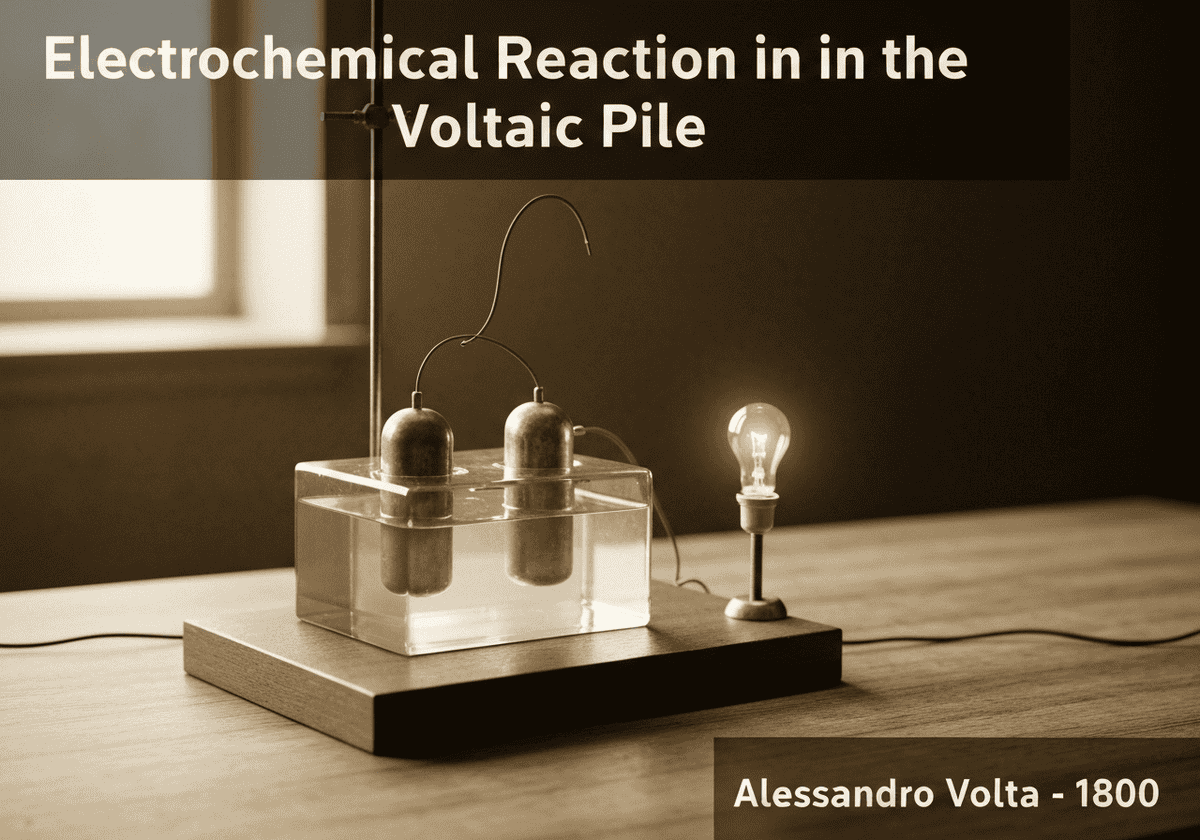
Voltaic pile demonstrating electrochemical reaction with zinc and copper electrodes.

(यह छवि केवल उदाहरण के लिए बनाई गई है)

एक विद्युत धारा वोल्टाइक ढेर यह एक रेडॉक्स अभिक्रिया द्वारा उत्पन्न होता है। जस्ता एनोड पर, जस्ता धातु ऑक्सीकृत होती है, जिससे प्रति परमाणु दो इलेक्ट्रॉन मुक्त होते हैं ([latex]Zn rightarrow Zn^{2+} + 2e^{-}[/latex])। ये इलेक्ट्रॉन बाह्य परिपथ के माध्यम से तांबे के कैथोड तक जाते हैं। वहाँ, जलीय इलेक्ट्रोलाइट से हाइड्रोजन आयन अपचयित होकर हाइड्रोजन गैस बनाते हैं ([latex]2H^{+} + 2e^{-} rightarrow H_2[/latex])।


The operation of the वोल्टाइक ढेर is governed by the principles of electrochemistry. Each metal has a different electrode potential, or tendency to lose electrons. Zinc is more reactive than copper, meaning it has a more negative electrode potential and is more easily oxidized. This difference in potential is what drives the flow of electrons from the zinc (anode) to the copper (cathode) through an external wire. The electrolyte’s role is crucial; it contains ions that can move between the electrodes to balance the charge, completing the electrical circuit. In a simple brine (NaCl) or acid (H2SO4) electrolyte, water molecules provide the hydrogen ions (H+) for the reaction at the cathode.

The overall reaction for a pile using a sulfuric acid electrolyte is [latex]Zn + 2H^{+} \rightarrow Zn^{2+} + H_2[/latex]. The copper itself does not chemically react; it serves as a noble, conductive surface for the reduction of hydrogen ions. The potential of a single zinc-copper cell is approximately 0.76 volts, though this can vary with the electrolyte concentration and temperature. This fundamental mechanism of converting stored chemical energy into electrical energy is the basis for all modern batteries, albeit with different materials and more sophisticated designs to improve efficiency and लंबी उम्र.

UNESCO Nomenclature: 2203
विद्युत रसायन विज्ञान

Type

रासायनिक प्रक्रिया

व्यवधान

मूलभूत

उपयोग

व्यापक उपयोग

शगुन

  • एंटोइन लावॉइसियर का दहन और ऑक्सीकरण में ऑक्सीजन की भूमिका पर किया गया कार्य।
  • रासायनिक तत्वों और उनकी अभिक्रियाशीलता श्रृंखला की अवधारणा
  • आयनिक यौगिकों और जलीय विलयनों में उनके व्यवहार की समझ
  • हेनरी कैवेंडिश द्वारा हाइड्रोजन गैस की पहचान

आवेदन

  • all modern batteries (alkaline, lead-acid, लिथियम आयन)
  • ईंधन कोशिकाएं
  • रासायनिक उत्पादन के लिए औद्योगिक विद्युत अपघटन
  • corrosion prevention through कैथोडिक संरक्षण
  • धातुओं का विद्युत शोधन

पेटेंट:

NA

संभावित नवाचार विचार

  • bio-batteries using सूक्ष्मजीव oxidation of organic waste
  • प्रकाश का उपयोग करके रेडॉक्स प्रतिक्रियाओं को संचालित करने वाले फोटोइलेक्ट्रोकेमिकल सेल
  • आंतरिक शॉर्ट सर्किट की मरम्मत करने वाले इलेक्ट्रोलाइट्स से युक्त स्व-उपचारित बैटरियां
  • विशिष्ट पर्यावरणीय प्रदूषकों को बेअसर करने के लिए लक्षित रेडॉक्स प्रतिक्रियाएं
  • batteries using liquid metal electrodes for grid-scale storage
  • लघु बायोसेन्सरों को ऊर्जा प्रदान करने के लिए एंजाइम-उत्प्रेरित प्रतिक्रियाएं
  • सोडियम या एल्यूमीनियम जैसे प्रचुर मात्रा में पाए जाने वाले तत्वों पर आधारित रिचार्जेबल बैटरियां
  • कार्बन डाइऑक्साइड को सीधे पकड़ने और परिवर्तित करने के लिए विद्युत रासायनिक प्रणालियाँ
संबंधित विषय: रेडॉक्स अभिक्रिया, एनोड, कैथोड, ऑक्सीकरण, अपचयन, इलेक्ट्रोलाइट, इलेक्ट्रोड विभव, विद्युत रसायन विज्ञान।

ऐतिहासिक संदर्भ

वोल्टेइक ढेर में विद्युत रासायनिक अभिक्रिया

1788
1800
1800
1800
1800
1801
1802
1785
1788
1800
1800
1800
1800
1802
1802

(यदि तिथि अज्ञात है या प्रासंगिक नहीं है, उदाहरण के लिए "द्रव यांत्रिकी", तो इसके उल्लेखनीय उद्भव का एक अनुमानित आंकड़ा प्रदान किया गया है)

नवीनतम परिवर्धन

शीर्ष पोस्ट और लेख

शीर्ष मूल उपकरण

10वां वर्ष सालगिरह

पंजीकृत सदस्यों के लिए पूर्ण आकार की छवियाँ और डाउनलोड 100% निःशुल्क उपलब्ध हैं।