Product Design, Manufacturing & Innovation Resources
집 » 애자일 프로젝트 관리

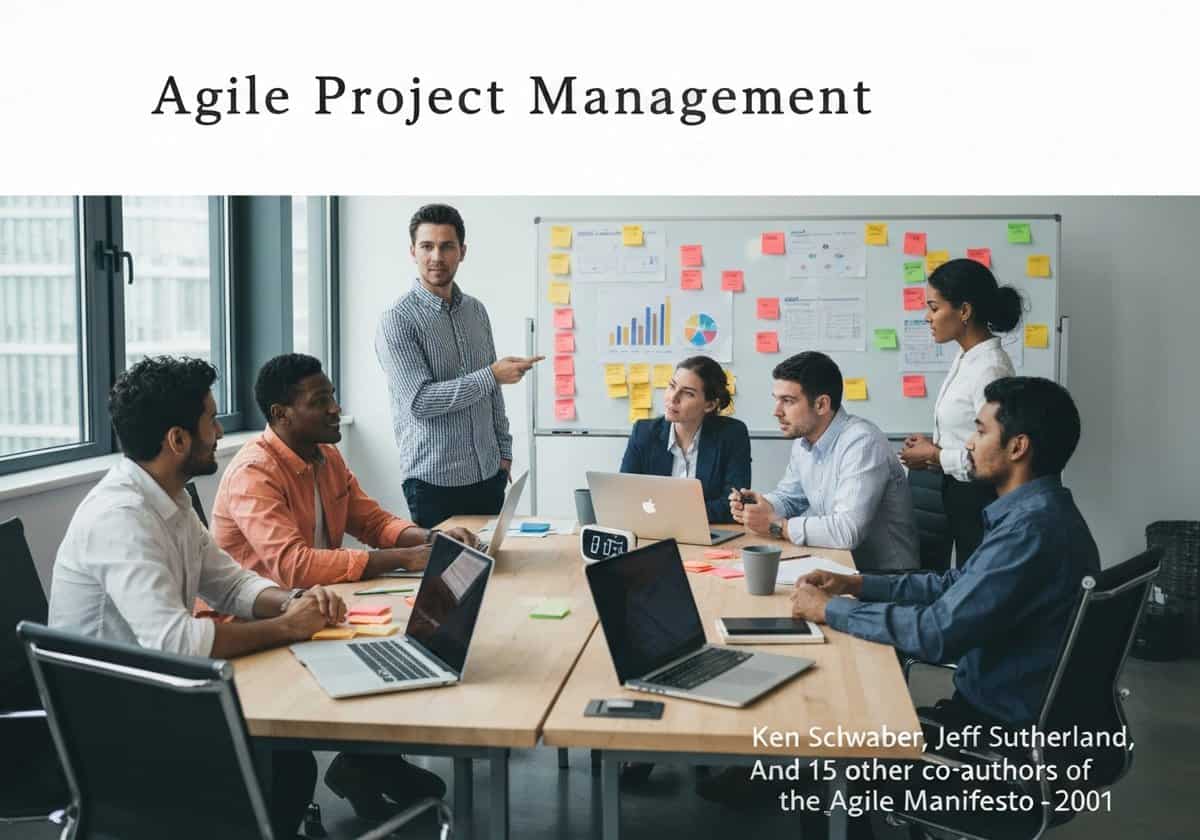
애자일 프로젝트 관리

2001
  • Ken Schwaber
  • Jeff Sutherland
  • And 15 other co-authors of the Agile Manifesto
Agile project management meeting with diverse team in modern office.

(설명을 위한 생성된 이미지입니다)

Agile project management is an iterative approach to delivering a project throughout its 생명주기. It breaks down large projects into smaller, manageable tasks completed in short iterations or ‘sprints.’ This allows for frequent reassessment, adaptation of plans, and flexibility in response to change. It prioritizes customer 협동, working software, and responding to change over comprehensive documentation and rigid plans.

Agile methodologies evolved as a reaction to the perceived limitations of traditional ‘waterfall’ methods, which are sequential and often rigid. The core principles of Agile are articulated in the 2001 ‘Manifesto for Agile Software Development.’ It values individuals and interactions over processes and tools, working software over comprehensive documentation, customer collaboration over contract negotiation, and responding to change over following a plan. The novelty was this explicit shift in values, prioritizing human-centric collaboration and adaptability over rigid, process-driven control.

Popular Agile frameworks include 스크럼, Kanban, and Extreme Programming (XP). Scrum, for instance, organizes work into sprints, typically lasting one to four weeks. Each sprint begins with a planning meeting and ends with a review and retrospective. Daily stand-up meetings (or ‘daily scrums’) keep the team aligned. Key roles in Scrum include the Product Owner (represents stakeholders), the Scrum Master (facilitates the process), and the Development Team. The goal is to deliver a potentially shippable increment of the product at the end of each sprint, allowing for rapid feedback and continuous improvement. This iterative nature makes Agile particularly well-suited for projects where requirements are expected to evolve or are not fully understood at the outset, a common scenario in software and innovative product development.

UNESCO Nomenclature: 1203
– Computer engineering

유형

추상 시스템

분열

점진적

용법

널리 사용됨

전구체

  • Iterative and incremental development models (e.g., Evo model)
  • 린 제조 principles (e.g., 도요타 생산 시스템)
  • Rapid Application Development (RAD)
  • Dynamic Systems Development Method (DSDM)

응용 프로그램

  • software development
  • new product development
  • marketing campaign management
  • research and development
  • event planning
  • business process improvement

특허:

NA

잠재적 혁신 아이디어

  • agile frameworks for managing scientific research and discovery
  • ‘agile governance’ models for public sector policy implementation
  • agile methodologies applied to primary and secondary education curricula
  • ai-powered scrum masters that facilitate meetings and identify impediments
  • agile hardware development, applying iterative principles to physical product engineering
  • personal kanban systems for individual productivity and habit formation
  • agile principles applied to disaster response and humanitarian aid coordination
  • ‘agile farming’ techniques for adaptive crop and livestock management
  • agile legal practices for managing complex litigation
  • using agile sprints to write and publish collaborative novels or screenplays
Related to: Agile, project management, Scrum, Kanban, iterative, Sprint, software development, Agile manifesto, incremental, adaptive planning.

역사적 맥락

애자일 프로젝트 관리

1990
1993
1997-04-23
2001
2010
2020
1990
1990
1993
1998
2010
2016

(날짜를 알 수 없거나 관련이 없는 경우, 예를 들어 "유체역학"의 경우, 주목할 만한 등장 시기를 대략적으로 추정하여 제공합니다.)

10년차 기념일

고화질 이미지 및 다운로드는 등록된 회원에게만 100% 무료로 제공됩니다.

> 로그인 <