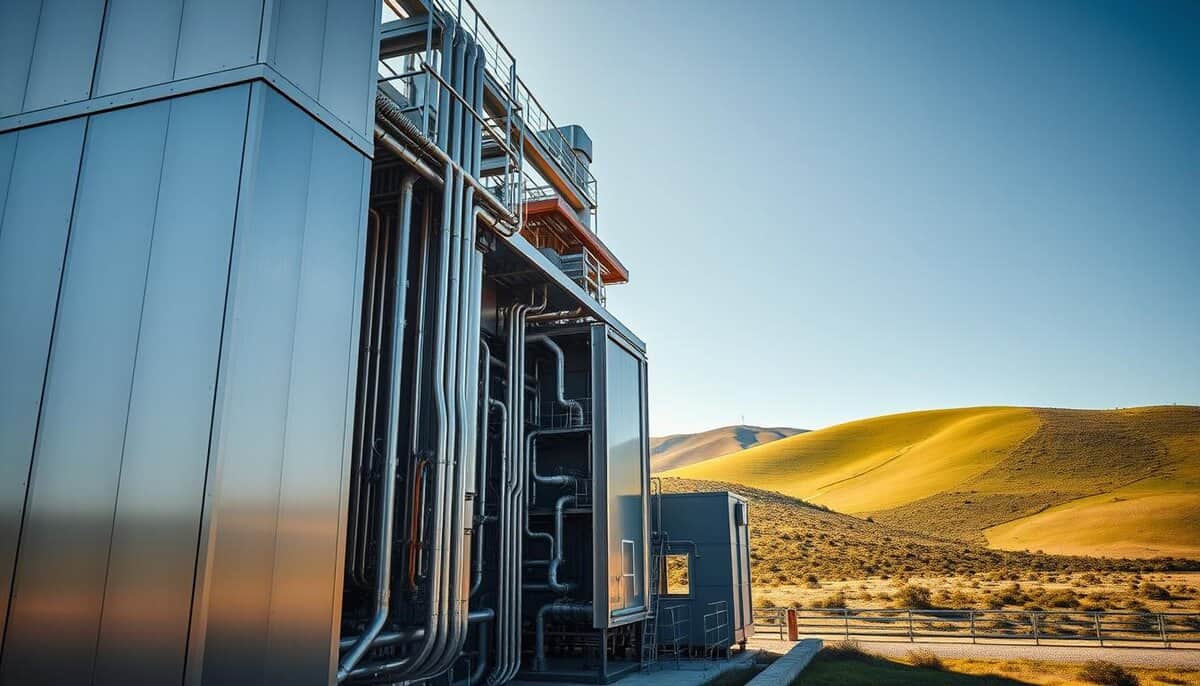
세계적인 노력으로 질병 퇴치가 이루어짐에 따라 기후 변화 심화된다, 직접 공기 포집 (DAC), usually meant for Direct Air Carbon Capture (DACC) emerges as a promising yet controversial technology in the arsenal of carbon dioxide removal (CDR) strategies. This article will dissect the fundamental principles of DAC technology, analyze various approaches such as solid sorbents and liquid solvents, and highlight the current stage of development traversed by key industry players. 또한, 이 보고서는 DAC 시스템의 에너지 요구 사항, 불가능한 경제적 타당성 및 환경적 영향 문제를 다루는 동시에 시스템의 효율성과 확장성을 저해할 수 있는 문제점과 오해에 대해서도 해명할 것입니다.
핵심 요약
- DAC는 주변 공기에서 이산화탄소를 직접 포집하는 기술입니다.
- 다양한 기술에는 고체 흡착제와 액체 용매가 포함됩니다.
- 기술은 진화하고 있으며, 주요 산업 참여자들이 새롭게 등장하고 있습니다.
- DAC 작동에는 매우 상당한 에너지 입력이 필요합니다.
- 경제적 타당성은 지역과 기술에 따라 크게 다릅니다.
- 확장성은 효율성과 비용 측면에서 오해를 불러일으키곤 합니다.
- 가장 좋은 폐기물은 애초에 발생시키지 않는 폐기물이다.
직접 공기 탄소 포집 기술의 기본 원리
직송 Carbon Capture (DAC) technology operates on the principle of chemically capturing carbon dioxide (CO₂) straight from the atmosphere. It typically employs a sorbent or solvent that selectively binds CO₂. Upon saturation, the material is then subjected to a regeneration process, often involving heat or a reduction in pressure, to release the captured CO₂. For instance, systems using solid sorbents might employ a cyclic process where the sorbent is heated to around 100-150 degrees Celsius to release CO₂. This process can be represented by the reaction:
[latex] {CO}_2 + {Sorbent} {\rightleftharpoons} {Sorbent-CO}_2 {(bound form)} [/latex]
The overall efficiency of DACC systems can vary significantly based on the technology and design employed. Several methods include high-temperature sorbents, aqueous amine-based solvents, and alkaline mineralization. A report by the Global CCS Institute indicated that high-temperature sorbents can capture 90% of CO₂, while amine solutions can achieve similar results with lower energy costs. Each method shows distinct trade-offs in energy input, capture efficiency, and scalability potential, which influences the choice of technology based on the application required.
A notable advancement in DAC technology is the direct capture of CO₂ from ambient air combined with renewable energy sources to offset operational energy requirements. For example, Climeworks, a leading DAC firm, reported a capture cost of $600 per ton of CO₂ in 2021. This figure highlights the current financial challenges while also underlining that with increased investment and innovation, costs may decrease over time.
2025년 현재, 보다 실제적인 규모의 테스트 결과는 이러한 주장이 반박될 수 있음을 보여줍니다.
다양한 DACC 접근 방식 및 기술 개요

직송 Carbon Capture (DACC) technologies can be broadly categorized into two main approaches: liquid-based and solid-based systems. Liquid-based systems primarily utilize chemical absorbents to capture CO2 from the air. A notable example is the use of potassium hydroxide (KOH) solutions, which chemically react with CO2 to form potassium carbonate. Once the absorbent is saturated, a thermal regeneration process is employed, releasing pure CO2 while regenerating the absorbent for reuse. On the other hand, solid-based systems employ sorbent materials that bind CO2. Materials such as amine-functionalized metals or activated carbon can adsorb CO2 at ambient temperatures, offering the advantage of reduced energy requirements for regeneration.

포집 물질의 선택은 DAC 시스템의 효율에 상당한 영향을 미칩니다. 고체 흡착제는 액체 시스템에 비해 이산화탄소 흡착 용량이 크고 에너지 비용이 낮기 때문에 선호되는 경우가 많습니다. 예를 들어, 일부 연구에 따르면 고체 흡착제 시스템은 이산화탄소 1톤 포집에 약 500MJ의 에너지만 투입하면 90% 이상의 이산화탄소 포집 효율을 달성할 수 있는 반면, 일부 액체 시스템은 1톤 포집에 최대 1,240MJ의 에너지가 필요합니다. 효율 지표는 DAC 시스템을 대규모로 구현할 때 타당성을 평가하는 데 매우 중요합니다.
Emerging technologies also include hybrid systems that combine the advantages of both solid and liquid approaches. These systems can optimize CO2 capture by integrating solid sorbents for initial capture phases and liquid absorbents for subsequent scrubbing processes. Recent advancements have demonstrated that such hybrid configurations can enhance overall CO2 capture rates, thus paving the way for providing cost-effective solutions for various industrial operations.
Different DAC facilities such as Climeworks in Switzerland and Carbon Engineering in Canada highlight operational variations in these technologies. Climeworks has employed a modular approach using solid sorbent filters, while Carbon Engineering utilizes a more traditional liquid absorption method. The choice between these technologies often revolves around factors such as target market, energy costs, and geographic location, which dictate the operational efficiency of DAC systems.
| Technology Type | Energy Requirement (MJ/ton CO2) | Capture Efficiency (%) TBC at scale and on the long run | Regeneration Method |
|---|---|---|---|
| Liquid Absorbents | 1,240 | Up to 90 | Thermal |
| Solid Sorbents | 500 | Up to 90 | Thermal or Electric |
| Hybrid Systems | 변하기 쉬운 | Higher than 90 | Combined Methods |
팁: when evaluating DAC systems, consider the local energy sources and costs, as they significantly influence the overall efficiency and economic feasibility of the chosen technology.
Energy Requirements and Sources for Effective DAC Processes
Energy consumption represents a significant consideration in Direct Air Carbon Capture (DACC) processes, as efficient removal of CO2 from the atmosphere necessitates considerable electricity and thermal energy inputs. Various DAC technologies exhibit varying energy demands, which typically fall within the range of 1.5 to 10 GJ per ton of captured CO2. The main energy consumers include fans for air intake, heat exchangers, and chemical processes involved in capturing and releasing CO2. The specificity of the technology and the conditions of the operational environment directly influence these requirements.

For successful operation, DAC technologies can utilize a mix of energy sources: renewable, fossil, and nuclear.
Renewable sources like solar and wind power can provide clean energy, significantly lowering the 탄소 발자국 of DAC systems. For instance, a study reported that a solar-powered DAC plant in the United States captured about 1,000 tons of CO2 per year, whereby solar energy accounted for 55% of its energy use.
In contrast, fossil-based energy sources are often cheaper but have implications for the overall emissions profile of the process.
| Energy Source | 장점 | 단점 |
|---|---|---|
| Renewable | Low carbon footprint, sustainable | Intermittent availability, higher initial costs |
| Fossil | Cost-effective, readily available; very concentrated | Increases emissions, not sustainable |
| Nuclear | Stable supply, low emissions | Public perception, nuclear waste issues; military applications also. |
Operational efficiencies are significantly enhanced when heat recovery systems are implemented. By capturing waste heat from the DAC process, overall energy consumption can be reduced by up to 30%.
팁: integrating on-site renewable energy generation (such as solar panels) can reduce reliance on grid electricity and potentially enhance the economic feasibility of DAC operations.
Economic Viability and Cost Analysis of DAC Implementation
Cost analysis for DAC implementation reveals a broad spectrum of estimates, reflecting variations in technology and operational scale. Current costs are often pegged between $100 and $600 per ton of CO2 captured. For instance, Climeworks, a leader in DAC, has reported costs around $600 per ton, while other methods, such as mineralization, may achieve lower costs in ideal settings. Factors influencing costs include plant size, location, and energy requirements.
To assess economic viability, the Levelized Cost of Carbon Abatement (LCCA) provides a necessary perspective. LCCA incorporates both capital and operational expenditures, offering a comprehensive view over the project’s 수명. For example, incentives like tax credits or carbon pricing can affect LCCA, making DAC systems more competitive with traditional carbon offsetting methods.
Challenges include high energy demands and initial capital investments, leading to uncertain economic returns. Despite these obstacles, emerging markets for carbon credits and governmental support aim to lower the financial barrier. A favorable policy environment is crucial in facilitating investment and adoption, as seen in regions prioritizing carbon neutrality, ultimately enhancing feasibility for DAC systems.
Challenges and Misconceptions Surrounding DAC Scalability and Effectiveness
Direct Air Carbon Capture faces significant challenges regarding its scalability and effectiveness. The technological and operational implementation at a large scale remains a core issue. For instance, a study from the Massachusetts Institute of Technology (MIT) provided insights indicating that to achieve a meaningful reduction in global CO2 emissions, DAC technology would need to operate at a massive scale, potentially capturing billions of tons of CO2 annually. Currently, existing DAC facilities capture around 10,000 tons per year, highlighting a major disparity between current capabilities and the required scale.
There’s also an ongoing debate about the overall effectiveness of DAC in mitigating climate change. The idea that DAC can efficiently offset emissions while other sectors continue emitting at high rates has been widely discussed, but research indicates that relying solely on DAC without simultaneous reductions in emissions from fossil fuels can lead to insufficient climate goals. Critics argue that this could create a false sense of security, leading to slower adoption of more effective reduction strategies.

Economically, the high operational costs associated with DAC are a concern for scalability. The cost of capturing CO2 has been estimated at over $300 per ton with current technologies. While innovations and economies of scale may drive this cost down in the future, investment in complementary technologies and infrastructures is also necessary. Stakeholders need to be aware of hidden costs related to maintenance, carbon storage logistics, and energy consumption.
Furthermore, misconceptions surrounding the technology’s physical footprint and resource requirements are prevalent. DAC systems have the potential to occupy large land areas and require significant water and energy resources, which may compete with other land uses and resources, particularly in water-scarce regions. This leads to difficult trade-offs in planning and deployment.
팁: organizations interested in deploying DAC technologies should conduct comprehensive life-cycle assessments to analyze the environmental impacts holistically, indicating the potential for unintended consequences that could undermine sustainability goals.
Due to the high energy concentration in oil and its small cost of extraction, any DAC method, trying to get the small percentage of CO2 in in air, will always be more expensive and complex than the problem it is supposed to solve.
As Lean practitioners, the best waste is the one you do not produce at first.
The only way is to reduce the fossile extraction and consumption.
자주 묻는 질문
직접 공기 탄소 포집 기술의 기본 원리는 무엇입니까?
직접 공기 탄소 포집(DACC) 기술은 화학적 공정을 통해 대기에서 이산화탄소를 직접 포집하는 기술입니다. 일반적으로 흡착제나 용매를 사용하여 이산화탄소를 결합시킨 후 분리하여 저장하거나 재활용할 수 있습니다.
DAC에 사용할 수 있는 다양한 접근 방식과 기술에는 무엇이 있을까요?
직접 공기 중 이산화탄소 포집에는 크게 고체 흡착제, 액체 용매, 그리고 광물화 방법의 세 가지 접근 방식이 있습니다. 각 방법은 이산화탄소를 포집하는 고유한 메커니즘을 가지고 있으며 기술적 성숙도 또한 다양합니다.
DAC의 경제적 타당성은 어느 정도이며, 비용 분석 결과는 무엇을 보여주는가?
DAC 기술의 경제적 타당성은 여전히 평가 중이며, 현재 추정 비용은 톤당 이산화탄소 포집에 100달러에서 600달러 이상으로 매우 높은 수준입니다.
DAC의 확장성과 효율성에 관해 어떤 문제점과 오해가 존재합니까?
DAC가 직면한 과제로는 높은 에너지 소비량, 불분명한 인프라 요구 사항, 그리고 효과에 대한 다양한 대중적 인식 등이 있습니다. DAC가 기후 변화 문제를 단독으로 해결할 수 있다는 오해가 흔히 있지만, DAC는 더 광범위한 해결책 포트폴리오의 일부로 간주되어야 하며, 심지어는 해결책 자체가 아니어야 합니다.
Related Readings
- Regulatory Framework for DAC: DAC 기술의 구현 및 운영을 규율하는 법적 지침 및 표준.
- 재생에너지원과의 통합: DAC 공정과 재생 에너지 시스템 간의 잠재적 시너지 효과를 통해 효율성을 향상시킬 수 있습니다.
- 탄소 활용 전략: 포집된 이산화탄소를 가치 있는 제품이나 연료로 전환하는 방법.
- DAC 공정에서의 열 관리: DAC 작동에서 열에너지 사용을 최적화하는 기술.
- Consumer Carbon Footprint Awareness: 개인과 기업의 탄소 발자국을 줄이는 데 있어 DAC의 역할에 대해 대중을 교육합니다.
- 포집된 CO2의 장기 저장 솔루션: DAC 기술을 통해 추출한 CO2를 안전하고 효율적으로 저장하기 위한 전략.
- DAC와 다른 방식의 비교 효율 베크스: 탄소 포집 및 저장 기술을 활용한 바이오에너지 생산에 있어 DAC 기술의 효과를 검토합니다.
External Links on Direct Air Carbon Capture (DAC)
국제 표준
(링크 위에 마우스를 올려놓으면 콘텐츠에 대한 설명을 볼 수 있습니다.)
사용된 용어집
Bioenergy with Carbon Capture and Storage (BECCS): 바이오매스 에너지 생산과 이산화탄소 배출을 포집 및 저장하는 기술을 결합하여 대기 중 이산화탄소 농도를 줄이는 동시에 재생 에너지를 생산하는 공정입니다.
Carbon Capture & Sequestration (CCS): a process that captures carbon dioxide emissions from sources like power plants and industrial processes, transporting it for storage underground or utilizing it in various applications, thereby reducing greenhouse gas concentrations in the atmosphere.
Contamination Control Strategy (CCS): a systematic approach to prevent, detect, and mitigate contamination in controlled environments, ensuring product quality and safety through defined procedures, monitoring, and risk management practices.
Direct Air Capture (DAC): 화학적 공정이나 물리적 방법을 이용하여 대기에서 이산화탄소를 직접 추출함으로써 온실가스 농도를 줄이고 기후 변화의 영향을 완화하는 기술.
Direct Air Carbon Capture (DACC): 이산화탄소를 화학적 공정을 통해 다른 가스로부터 분리하여 저장 또는 활용할 수 있도록 함으로써 대기 중 온실가스 농도를 줄이는 기술입니다.
Error-Correcting Code (ECC): a method used in digital communication and data storage that enables the detection and correction of errors in transmitted or stored data by adding redundant information, allowing recovery of original data despite corruption or loss.