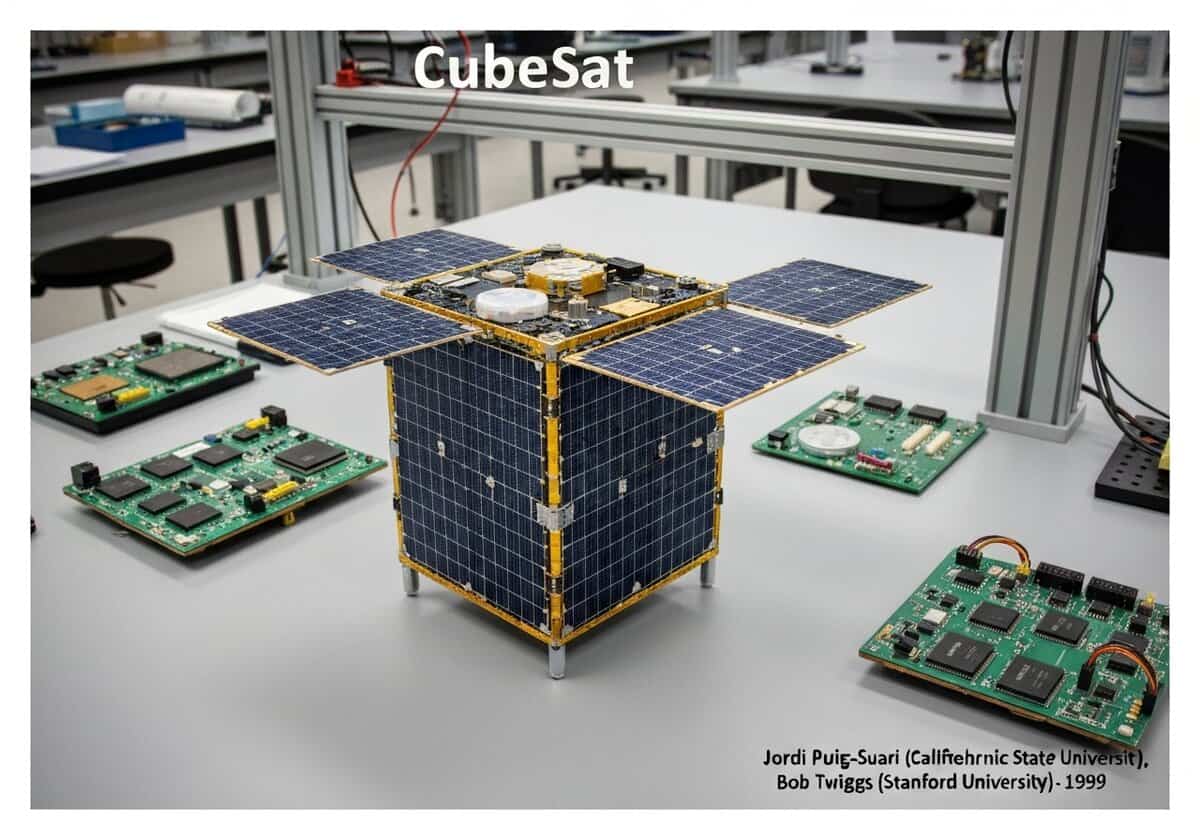
큐브샛은 표준 크기인 10x10x10cm(1U)를 사용하는 나노위성 종류에 대한 규격으로, 질량은 최대 2kg입니다. 큐브샛은 1.5U, 2U, 3U, 6U 또는 12U 이상의 크기로 확장될 수 있습니다. 이러한 표준화는 발사체 공유 및 기성 부품 시장 형성을 가능하게 함으로써 우주 임무 진입 장벽을 획기적으로 낮췄습니다.


(설명을 위한 생성된 이미지입니다)
큐브샛은 표준 크기인 10x10x10cm(1U)를 사용하는 나노위성 종류에 대한 규격으로, 질량은 최대 2kg입니다. 큐브샛은 1.5U, 2U, 3U, 6U 또는 12U 이상의 크기로 확장될 수 있습니다. 이러한 표준화는 발사체 공유 및 기성 부품 시장 형성을 가능하게 함으로써 우주 임무 진입 장벽을 획기적으로 낮췄습니다.
그만큼 큐브샛 스탠다드는 1999년 대학원생들에게 위성 설계, 제작, 시험 및 운영에 대한 실무 경험을 제공하기 위한 교육 도구로 구상되었습니다. 핵심 혁신은 단순히 작은 크기뿐만 아니라, 형태와 발사체와의 인터페이스를 표준화한 데 있었습니다. 이는 발사 중 큐브샛을 안전하게 고정하고 스프링 시스템을 사용하여 궤도로 방출하는 상자 형태의 메커니즘인 폴리피코위성 궤도 전개 장치(P-POD)를 통해 구현되었습니다.
By standardizing the external dimensions and providing a simple, reliable deployment method, the CubeSat specification decoupled the satellite’s design from the specifics of the launch vehicle. This allowed launch providers to treat CubeSats as a uniform type of secondary payload, simplifying integration and safety reviews. This predictability fueled the creation of a vibrant ecosystem of commercial-off-the-shelf (COTS) components. Companies began mass-producing CubeSat-compatible subsystems like power systems, on-board computers, radios, and attitude 제어 시스템. This COTS market drastically reduced the cost and development time for new missions, transforming the CubeSat from a purely educational tool into a viable platform for commercial ventures, government science, and even interplanetary exploration.
큐브샛
(날짜를 알 수 없거나 관련이 없는 경우, 예를 들어 "유체역학"의 경우, 주목할 만한 등장 시기를 대략적으로 추정하여 제공합니다.)

고화질 이미지 및 다운로드는 등록된 회원에게만 100% 무료로 제공됩니다.
> 로그인 <