2025년에는 생명공학 연구 자금이 91억 3,700만 달러에 달할 것으로 예상된다는 사실을 알고 계셨나요? 이처럼 막대한 투자는 생명공학 연구의 중요성을 보여줍니다. 신경 공학이 분야는 여러 과학 분야를 융합하여 신경 활동을 이해하고 제어하는 방식을 개선합니다. 단순히 자금을 확보하는 것만이 목적이 아니라, 뇌와 컴퓨터 연결을 발전시키고, 뇌 질환 치료법을 바꾸며, 우리가 기계와 상호작용하는 방식을 혁신하는 데 중점을 둡니다.
신경공학은 생명공학, 뇌과학, 디지털 기술을 융합하여 의료 연구를 선도하고 있습니다. 2025년에는 이 분야가 우리의 지식과 역량의 한계를 뛰어넘을 것입니다. 예를 들어, 몇몇 환자들은 다음과 같은 치료를 받았습니다. BCIs 뇌에 직접 이식하는 방식은 아니지만, 16만 명이 넘는 사람들이 뇌 질환 치료를 위해 심부뇌자극 장치를 사용했습니다.
핵심 요약
- 2025년 신경공학은 생명공학 및 생체공학을 포함한 다양한 연구 분야에 걸쳐 상당한 자금 지원을 받을 것으로 예상됩니다.
- Brain-computer interfaces and neuromodulation techniques are at the forefront of current research trends.
- EEG를 이용한 비침습적 BCI는 유망한 신기술이지만, 신호 추출에 있어 여러 가지 어려움에 직면해 있습니다.
- Institutions like Harvard are actively seeking experts in the field to drive forward innovative research.
- 인공지능과 머신러닝의 발전은 앞으로 더욱 향상될 것입니다. 비씨에이 성능 및 신뢰성.
2025년 신경 공학 개요
Neural engineering in 2025 stands at the crossroads of innovation and major healthcare advancements. It combines computer science, electrical engineering, and more to make devices that work with brain tissue. The field’s wide applications, like brain-computer links, neuroimaging, and robot-assisted motion, highlight its game-changing potential.
정의 및 범위
신경공학은 공학 기술을 활용하여 신경계를 이해하고 개선하는 학문입니다. 뇌졸중이나 뇌 손상과 같은 심각한 문제를 치료하고 로봇 제어 능력을 향상시키는 데 도움을 줍니다. 이 분야는 뇌 활동을 기술적 해결책으로 전환하여 우리가 움직이고 세상을 인지하는 방식을 개선하는 데 큰 진전을 이루고 있습니다.
역사적 맥락과 진화
신경공학 분야는 기본적인 신경 조절 장치에서 복잡한 뇌-컴퓨터 연결 장치에 이르기까지 발전해 왔습니다. 현재 핵심적인 연구 과제는 신경을 치유할 수 있는 조직을 만드는 것입니다. 동물 연구는 인간 뇌의 신경 경로를 이해하는 데 매우 중요했으며, 이는 2025년에 이루어질 오늘날의 신경공학적 성과를 위한 토대를 마련했습니다.
또한, 지속적인 신경 기록 시스템은 우리가 신경 신호를 보고 제어하는 방식을 변화시켰습니다. 뇌졸중 후 운동 기능을 회복하는 데 도움을 주는 장치들은 이 분야의 실질적인 영향력을 보여줍니다. 그리고 이 분야는 계속 성장하고 있으며, 인간의 능력을 향상시키는 새로운 방법을 제시할 가능성을 품고 있습니다.
| 필드 | 애플리케이션 | 영향 |
|---|---|---|
| 뇌-컴퓨터 인터페이스 | Control robotic devices, improve neuroprostheses | 확장된 인간-기술 상호작용 |
| 신경영상 | 고급 뇌 지도 작성 기술 | 뇌 기능에 대한 더 나은 이해 |
| Neural Tissue Engineering | 신경 복구 및 재생 | 신경 손상 후 회복 개선 |
| 신경로봇공학 | 향상된 로봇 팔다리 제어 | 절단 장애인의 삶의 질 향상 |
신경공학 연구의 최신 동향
2025년, 신경공학은 과학 기술 분야에서 비약적인 발전을 이루고 있습니다. 다양한 학문 분야를 융합한 새로운 혁신이 핵심입니다. 더욱 향상된 신경 인터페이스, 뇌-컴퓨터 시스템, 그리고 신경 활동을 조절하는 새로운 방법들이 등장하고 있습니다. 이러한 발전은 의학을 변화시키고 뇌와 신경에 대한 우리의 지식을 심화시키고 있습니다.
신경 인터페이스 및 뇌-컴퓨터 인터페이스
현재 신경 인터페이스와 뇌-컴퓨터 인터페이스(BCI)가 선두를 달리고 있습니다. 새로운 소재와 제작 기술 덕분에 성능이 크게 향상되었으며, 그 결과 침습성이 줄어들고 신경계와의 상호작용이 더욱 원활해졌습니다. 특히 BCI는 심각한 운동 장애를 가진 사람들이 의사소통을 하고 기기를 제어하는 데 매우 중요한 역할을 합니다.
신경조절 및 신경보철
신경조절 및 신경보철 또한 많은 주목을 받고 있습니다. 심부뇌자극술과 같은 기술은 파킨슨병과 간질 치료에 도움이 됩니다. 신경보철은 신경계 기능을 개선하거나 대체하는 기술입니다. 핵심은 정밀한 제어와 각 환자에게 더욱 적합하도록 만드는 것입니다. 이는 더 나은 건강 결과와 더 많은 치료 선택지를 제공할 수 있을 것으로 기대됩니다.
신흥 기술 및 혁신
신경 공학을 인공지능 및 머신러닝과 결합하는 것이 큰 트렌드입니다. 이를 통해 신경 장치는 더욱 스마트해지고 스스로 조정할 수 있게 됩니다. 더 나은 피드백을 제공하고 실시간으로 데이터를 처리할 수 있습니다. 나노기술을 활용한 흥미로운 연구도 진행 중입니다. CRISPR-Cas9 또한 앞으로 우리가 나아갈 방향을 보여줍니다. 이러한 변화는 신경 질환의 진단 및 치료 방식을 바꿀 수 있습니다.
게다가 우리 몸과 잘 융합되는 정교한 신경 인터페이스에 대한 연구도 진행 중입니다. 이는 신경 공학 연구 분야가 끊임없이 미래지향적임을 보여줍니다. 신경 공학이 의료 서비스를 혁신하고 인간의 능력을 향상시킬 수 있다는 희망적인 신호입니다.
Key Companies Leading Neural Engineering in 2025
In 2025, established companies and innovative startups are making big strides in neural engineering. They are focusing on neural interfaces, neuromodulation, and neuroprostheses. Their work is changing how we think about the future of these technologies.
Main Players in the Market
Big companies have been leading the charge in neural engineering. They’re innovating and developing new technologies:
- Boston Scientific: they are leaders in creating minimally invasive devices. Their Greenlight system treats benign prostate hyperplasia effectively.
- Medtronic: investing heavily in R&D, Medtronic makes devices like cardiac pacemakers and neurostimulation systems. They focus on advanced tools that require less invasive surgeries.
- GE Healthcare: they specialize in diagnostic imaging like MRI, CT, and ultrasound. GE Healthcare is dedicated to improving patient care with these technologies.
- Abbott: known for their diagnostic products, Abbott is improving the management of diabetes, heart conditions, and more. Their work significantly impacts healthcare technology.
- Stryker: Stryker is advancing surgical procedures and orthopedic treatments. They design medical devices that support these improvements.

Startups and New Entrants
New companies are also bringing fresh ideas to neural engineering. They’re developing new solutions and getting the funding they need:
- Blackrock Neurotech: they got $200 million from Tether in April 2024. Blackrock is making big advancements in neural interfaces.
- Verge Genomics: with $134.1 million in Series B funding, they’re tackling neurodegenerative diseases. This makes them a key player in neural engineering.
- Ceribell: they’ve seen an impressive growth rate over five years. Ceribell is maintaining its growth in the neural engineering field.
- Neuralink: valued at $5 billion after getting $280 million in funding. Neuralink is working on brain-machine interfaces that could change neural engineering.
- Hippoc: this Montreal startup got $3 million in seed funding. They’re mixing neuroscience and AI for groundbreaking innovations.
The global neuroscience market is expected to hit $721 billion by 2026. A 4.2% growth rate is fueling this trend. With continued investments, we’ll see more jobs and innovations in neural engineering.
The biomedical engineering field is ~ 주도의 by companies like Boston Scientific and Medtronic. They’re at the forefront of medical tech advancements. These companies are key to better healthcare through new devices and technologies.
| 회사 | Notable Achievement |
|---|---|
| Blackrock Neurotech | Raised $200M from Tether; majority stake acquisition |
| Verge Genomics | Secured $134.1M Series B funding |
| Ceribell | 7,592% search growth rate over five years |
| Neuralink | $5B valuation after $280M funding |
| Hippoc | $3M seed funding for neuroscience and AI platform |
Both established companies and new players are shaping neural engineering’s future. Their innovations offer promising 직업 prospects. These advancements will push healthcare into new territories.
Practical Applications of Neural Engineering in 2025
Neural engineering is doing big things in 2025. It’s changing many parts of our lives and health, thanks to new tech. Medical areas and beyond are seeing huge improvements.
Medical and Therapeutic Uses
Neural engineering is making a mark in medicine. The IEEE Brain Workshop in Chicago will show off these advances. It is all set for October 3-4, 2025, focusing on new therapies and their impacts.
Neuroprosthetics are a game-changer, fixing sight, hearing, and movement. Optogenetics is also fighting Parkinson’s and epilepsy. A big team of experts is joining forces to tackle medical hurdles with neural engineering in 2025.
| Medical Challenge | Neural Engineering Application |
|---|---|
| Neurological Disorders | Optogenetics-based therapies |
| 모터 Function Restoration | 신경 보철 |
| Vision and Hearing Loss | Advanced Neuroprosthetics |
Non-Medical Applications
Neural engineering isn’t just for medicine. It’s also boosting non-medical fields. Things like brain-computer interfaces (BCIs) are getting better, thanks to it.
This tech is making it easier to dive into virtual worlds. It’s opening new doors in gaming, learning, and VR. Dr. Amy Kruse from Satori Neuro will talk about these leaps at the IEEE Symposium.
In 2025, neural engineering’s reach is impressive. It’s mixing new technologies with cool applications. This mix is set to greatly boost what humans can do.
Future Advancements in Neural Engineering
Future advancements in neural engineering will deeply change how we interact with technology. Over 50 scholarly articles were reviewed, showing that the field is quickly evolving. These articles discuss various topics. For example, brain-computer interfaces, neuroprosthetic implants, and methods for modeling neurological diseases. They also talk about deep brain stimulation and devices that can control epilepsy.

Projected Technological Breakthroughs
In 2025, big breakthroughs in neural engineering are expected. The reviewed literature highlights technologies like the BrainGate implant and DARPA’s brain-computer project. There are also new methods for detecting neurotransmitters. Innovations such as neural tissue for treating spinal cord injuries and visual aids for the blind are on the horizon.
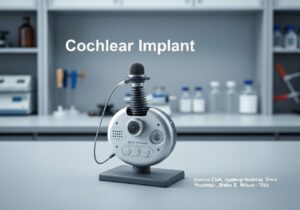
Companies like Medtronic PLC are at the forefront, offering treatments for many medical conditions worldwide. They are making advances in bionics and prosthetics. This includes improved limbs, Cochlear implants, and retinal implants that use new tech.
Potential Impact on Society
These advancements will have a big impact on society. Brain-computer interfaces (BCIs), like ECoG or EEG, are helping people with many conditions. Successful collaborations between experts are key to these technologies.
Ethics and societal impact are also important to consider. Topics like the safety of implant electrodes and privacy are being discussed. Successful cases have already improved many lives. For example, bionic reconstruction after nerve injury and prosthetic arms for arm loss have been transformative.
The table below summarizes some of the key advancements and their impacts:
| Advancement | Key Contributor | 영향 |
|---|---|---|
| BrainGate Implant | Medtronic PLC | Restoration of movement for paralytic patients |
| Visual Neuroprosthesis | Cochlear | Vision restoration for the blind |
| Neural Tissue Transplantation | Various research institutions | Spinal cord injury treatment |
| Neuroprotheses | Ekso Bionics, Ossur | Enhanced prosthetic limb functionality |
These future advancements in neural engineering in 2025 are set to break new ground. They bring new hope and possibilities for millions worldwide in both medicine and technology.
Opportunities in Neural Engineering
The field of neural engineering is growing fast. It offers great careers and learning opportunities. Schools and research places are creating new programs for this demand.
Career Prospects and Educational Pathways
Jobs in neural engineering vary widely, from schools to high-tech firms. Now, many colleges offer degrees in neural engineering and related fields. A standout program is at Georgia Tech and Emory University. It blends neuroscience, engineering, and medicine.
It gets support from the NIH and other funding. This mix of studies prepares students for the future.
| Institution | Program | Application Deadline |
|---|---|---|
| University of Washington | Research Experience for Undergraduates | January 15, 2025 |
| Georgia Tech | Undergraduate Research in Engineering/Sciences | February 15, 2025 |
| Neuromatch Academy | Open Science 101 Course | 해당 없음 |
| Georgia Tech & Emory 대학교 | Computational Neural-Engineering Training Program | Rolling |

Funding and Grants
The NIH now gives 50% more support to neural engineering programs. This boost helps Georgia Tech and Emory University grow their program. More students can now get help with fees and gain knowledge and skills.
Other funds come from the National Science Foundation (NSF) and its workshops. These efforts give students a broad and deep education. They’re ready to tackle today’s neural engineering challenges.
The Impact of Neural Engineering in 2025
Neural engineering, as we know it in 2025, has changed our world. It has reshaped healthcare, impacting the economy and how we live. Through advanced biotech, innovative diagnostic tools, and new treatments, it brings major changes.
Healthcare Improvements
Neural engineering has led to huge steps forward in healthcare. One example is how researchers at Michigan State University study early brain development. This research helps spot disorders like autism and ADHD earlier than before.
Research at MSU also found that honeybees can sniff out lung cancer signs in breath. This breakthrough in diagnostics is changing patient care. It allows doctors to find diseases sooner and improve treatment success.

Economic and Social Impacts
The economic effects of neural engineering in 2025 are big. This growing sector sparks innovation, creates jobs, and opens new markets. For instance, two MSU Biomedical Engineering students were recognized for their research. This shows the need for more education programs to build a skilled workforce.
| Healthcare Advancements | Economic Contributions |
|---|---|
| Improved diagnostic techniques (e.g., honeybee biomarker detection) | Job creation and innovation in biomedical sectors |
| Advanced treatments for neurological disorders | Market opportunities for new medical devices and technologies |
Neural engineering’s societal impact has stirred deep ethical discussions. The idea of human enhancement through bioengineering poses serious questions. For example, Rebecca Knickmeyer studies genetics in brain development, highlighting future shifts in how we view neurological conditions.
In summary, neural engineering changes healthcare, economy, and societal norms. As we move forward, balancing tech advancements with ethical concerns is key. We must make sure these innovations are good for everyone.
Challenges and Ethical Considerations
The field of neural engineering is rapidly growing. It faces many challenges and ethical issues. We must solve these problems for the field to move forward responsibly.
Ethical Dilemmas in Neural Engineering
One major ethical consideration in neural engineering is the debate between enhancement and therapy. Devices like brain-computer interfaces can help with conditions like epilepsy, Parkinson’s disease, and loss of communication. But, their use for making people “better than well” brings up issues of privacy and fairness.
There are also concerns about making people all think similarly, being inauthentic, and devaluing achievements. Informed consent is critical to let people know the risks and possible dangers. Past issues with medical devices highlight the need for strict ethical standards.
Technical and Practical Challenges
The challenges in neural engineering go beyond just ethical concerns. Technical issues also stand in the way. Brain-computer interfaces need to record many neurons and need better electrodes and materials to do this well. The complexity of the human nervous system makes creating effective treatments hard.
Our knowledge of the brain is still limited. This makes it tough to improve and fine-tune neural interfaces. Invasive interfaces need surgery, while noninvasive ones use 의복 devices. Both have unique challenges that require more research and innovation.
| Key Challenges | 예시 |
|---|---|
| Ethical Dilemmas | Privacy concerns, inequality, informed consent |
| Technical Challenges | Improving electrode design, recording sufficient neurons |
| Practical Implementation | Integration within complex nervous systems |
It’s crucial to tackle these challenges and ethical issues as neural engineering grows. This ensures its responsible and sustainable development.
결론
Neural engineering is advancing rapidly as of 2025. It’s creating new chances and tough choices for us. We see big steps forward in tech like neural and brain-computer interfaces, and in treating or replacing parts of the nervous system. Spiking Neural Networks (SNNs) are now competing with Deep Neural Networks (DNNs). They are making waves in space and cars, among others.
This field isn’t just changing health care. It could change our economies and how we live together. New ideas like Meta-SpikePropamine and Chip-In-Loop SNN 대리 Learning show the field’s energy. There’s a growing interest in tech that senses events and in neuromorphic engineering. For these ideas to help society, we need teamwork across fields and smart rules.
Conferences like The Brain and The Chip 2024 was key. They set high standards and share big ideas, shaping the future of neural engineering. The dedication of places like the University Miguel Hernández in Elche is vital. They ensure top-notch education and research in this exciting area. Neural engineering’s future is bright, but it needs us to work together—academics, companies, and governments.
자주 묻는 질문
What is the current status of neural engineering research and applications in 2025?
In 2025, neural engineering is leading the way in medical science. It combines bioengineering, brain studies, and digital tech. The goal is to understand and control how the brain works. This area works on fixing nervous system problems and improving how humans and machines interact. It uses new materials science and tiny manufacturing technologies.
How has neural engineering evolved historically?
Neural engineering has grown from simple devices to advanced brain-computer links. It now works to improve and restore human abilities. This is done by turning brain activity into useful actions and back. It uses expertise from computer brain studies, electrical studies, and other fields.
What are the current trends in neural engineering research?
The latest trends in this field include better neural links and computer-brain interfaces, new ways to control brain activity, artificial limbs, and cutting-edge technology in materials and tiny manufacturing. These improvements aim for less invasive, more effective ways to connect with the human brain.
Who are the key companies leading neural engineering in 2025?
Both big companies and new startups are key players in neural engineering. Big firms push forward research on neural links. Startups bring new ideas and get venture capital to make a mark in the sector.
What are the practical applications of neural engineering in 2025?
Neural engineering has many uses, from medical treatments for diseases like Parkinson’s and epilepsy to non-medical purposes. It helps improve how we process information and interact with digital worlds. These uses show its 다재 and huge potential.
What future advancements are expected in neural engineering?
Future breakthroughs in neural engineering will change how we interact with technology. Expect better brain-computer interfaces and devices that can adjust brain activity. These will make the line between human thought and machines even fuzzier.
What opportunities exist for careers in neural engineering?
There are many job chances in neural engineering, in academic research, and tech companies focused on learning machines and smart intelligence. Many universities now offer special courses and degrees. They are often supported by grants from big science funds.
How does neural engineering impact healthcare in 2025?
Neural engineering is improving healthcare with better diagnosis and care through advanced biotechnologies and treatments. It’s driving innovation, creating jobs, and opening new markets. But it also brings up big ethical questions about human enhancement.
What are the main challenges and ethical considerations in neural engineering?
This field faces big challenges, including ethical issues about privacy, agreeing to treatment, and the line between making people better and therapy. The complexity of the brain makes finding effective treatments hard. This requires teamwork across many fields and careful rules.
사용된 용어집
Brain-Computer Interface (BCI): 뇌와 외부 장치 간의 직접적인 통신을 가능하게 하여 신경 활동을 통해 기술을 제어할 수 있도록 하는 시스템입니다. 일반적으로 신호 획득, 처리 및 명령 변환을 통해 보조 장치나 신경 보철 장치와 같은 응용 프로그램을 제어합니다.
Clustered Regularly Interspaced Short Palindromic Repeats (CRISPR): 박테리아의 자연 방어 메커니즘을 활용하는 유전자 편집 기술로, RNA 유도 뉴클레아제를 사용하여 특정 유전적 위치를 표적으로 삼아 변형함으로써 DNA 서열을 정밀하게 수정할 수 있습니다.
Computed Tomography (CT): X선과 컴퓨터 처리를 이용하여 인체의 단면 이미지를 생성하는 의료 영상 기술로, 내부 구조와 조직을 자세히 시각화할 수 있게 해줍니다. 2차원 데이터를 3차원 이미지로 표현함으로써 진단 능력을 향상시킵니다.
Conversion Rate (CR): 웹사이트 또는 랜딩 페이지 방문자 중 구매 또는 뉴스레터 구독과 같은 원하는 행동을 완료한 방문자의 비율로, 전환 수를 전체 방문자 수로 나누어 계산합니다.
Institute of Electrical and Electronics Engineers (IEEE): 전기공학, 전자공학, 컴퓨터 과학 및 관련 분야의 기술 발전을 위해 출판물, 학술대회 및 표준 개발을 통해 헌신하는 전문 협회입니다. 전 세계 전문가와 연구자 간의 혁신과 협력을 촉진합니다.
Magnetic Resonance Imaging (MRI): a medical imaging technique that uses strong magnetic fields and radio waves to generate detailed images of internal body structures, particularly soft tissues, by detecting the signals emitted from hydrogen nuclei in the presence of a magnetic field.
Programmable Logic Controller (PLC): 산업 공정 자동화에 사용되는 디지털 컴퓨터로, 명령어를 저장하는 프로그래밍 가능한 메모리, 기계를 모니터링하고 제어하기 위한 입출력 인터페이스, 그리고 제어 알고리즘을 실행하는 프로세서로 구성됩니다.
Radiology Information System (RIS): 의료 영상 데이터를 관리하고, 방사선 검사 일정 예약, 추적 및 보고를 용이하게 하며, 다른 의료 시스템과 통합하여 업무 흐름과 환자 치료를 향상시키는 소프트웨어 시스템입니다.
Robotic Process Automation (RPA): 소프트웨어 로봇을 사용하여 비즈니스 프로세스에서 반복적이고 규칙 기반의 작업을 자동화하는 기술로, 인간이 디지털 시스템과 상호 작용하는 방식을 모방함으로써 효율성, 정확성 및 생산성을 향상시킵니다.
Spiking Neural Network (SNN): SNN(스핀 신경망)은 생물학적 신경망을 모방하여 이산적인 스파이크 또는 활동 전위를 통해 정보를 처리하는 계산 모델로, 시간적 코딩과 이벤트 기반 처리를 가능하게 합니다. SNN은 뉴로모픽 컴퓨팅에 사용되며, 시간 의존적인 데이터로부터 학습하는 능력이 특징입니다.