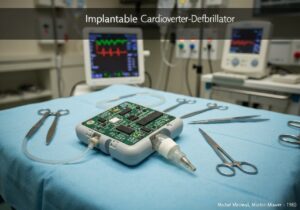

인간 능력 향상은 신체적, 감각적 또는 인지적 능력을 일반적인 한계를 넘어 확장하는 기술을 의미합니다. 외골격, 생체공학적 보철물, 이식형 장치, 웨어러블 기기, 신경 강화 기술 등이 그 예입니다. 유전자 공학은 더 심층적인 차원에서 동일한 질문을 제기합니다. 치료 목적과 능력 향상을 위한 사용은 종종 동일한 장치를 다른 사용자에게 적용하는 경우입니다.
엔지니어들은 어려운 통합 문제에 직면해 있습니다. 인터페이스는 수십 년 동안 안전하게 유지되어야 하고, 전력 공급원은 제한적이며, 인체에서 오는 신호는 잡음이 많습니다. 규제 기관은 의료 기기와 소비자 제품을 구분하고, 윤리 심사는 해당 기술을 면밀히 주시합니다. 트랜스휴머니즘 논쟁은 차치하고라도, 더 나은 보철 제어, 보조 외골격, 인지 도구 등 실용적인 기술 발전이 예상됩니다. 아래 논문들은 이러한 발전을 추적합니다.
인간 능력 향상은 치료가 끝나는 지점에서 시작됩니다. 신경 연결망이 가동되고 있습니다. 뇌-컴퓨터 인터페이스웨어러블 및 이식형 하드웨어에 관하여 의료기기그리고 수명 목표에 관하여 장수 과학유전자 레벨 업그레이드가 진행 중입니다. 크리스퍼그리고 인간-기계 설계에 관하여 인간-컴퓨터 상호작용.
본 자료는 인간 능력 향상, 트랜스휴머니즘, 신경 강화, 인지 증강, 웨어러블 기술, 유전 공학, 생체 공학 보철, 이식형 장치 및 외골격에 초점을 맞춰 분류하고 집중적으로 다룬 전 세계 영문 논문 및 특허를 엄선하여 정리한 것입니다. 다양한 온라인 과학 저널에 게재된 자료들을 포함합니다.
Composition and methods for t cell isolation, car-t manufacture and treatment
Patent published on the 2026-10-29 in WO under Ref WO2026226448 by CARING CROSS INC [US] (Zhu Zhongyu [us], Xie Yanping [us], Sowd Greg [us], Wu Xiaorong [us], Xiong Ying [us], Dropulic Boro [us])
Abstract: A streamlined process for CAR-T cell production is disclosed, involving the isolation of immune cells such as T cells or NK cells from a patient or donor blood by negative selection using multispecific antibodies, activation to enhance proliferation of T cells, in vitro expansion, and genetic engineering to express chimeric antigen receptors (CARs) targeting specific cancer antigens. This approach improves the efficiency, scalability, and accessibility of CAR-T cell therapy. Also disclosed is a [...]
Our summary: This content describes a streamlined process for CAR-T cell production involving T cell isolation, activation, and in vitro expansion. The method enhances efficiency and accessibility of CAR-T therapy. A rapid preparation allows CAR-T cells to be ready for infusion within 24 hours.
T cell isolation, CAR-T manufacture, genetic engineering, immunotherapy
Patent
Knee joint exoskeleton motion recognition method and knee joint assist device
Patent published on the 2026-10-15 in WO under Ref WO2026213844 by YUANYE TECH WUXI CO LTD [CN] (Ding Ye [cn], Leng Peimin [cn], Liu Zihao [cn], Wang Qun [cn], Dong Yue [cn], Wang Xujun [cn], Wang Cunjin [cn], Wei Zhuoyi [cn], Li Xinhui [cn])
Abstract: A knee joint exoskeleton motion recognition method and a knee joint assist device. The knee joint exoskeleton motion recognition method is based on a lower limb exoskeleton device, and the knee joint assist device comprises the lower limb exoskeleton device. The lower limb exoskeleton device comprises: a joint drive electric motor, wherein the joint drive electric motor comprises a pair of rotating assemblies, the joint drive electric motor is configured to apply a torque to the pair of rotating[...]
Our summary: A knee joint exoskeleton motion recognition method utilizes a lower limb exoskeleton device. The device features a joint drive electric motor and binding mechanisms for the thigh and shank. It enhances stability during movement and protects the knee joint through simulated damping control.
exoskeleton, motion recognition, knee joint, assist device
Patent
Systems and methods for implanting and explanting implantable devices
Patent published on the 2026-10-15 in WO under Ref WO2026217786 by AXOFT INC [US] (Spencer Andrew [us], Denardo Matthew [us], Le Floch Paul [us], Vashahi Foad [us], Ye Tianyang [us], Norris Samantha [us], Park Hyunsu [us], Lee Jongha [us], Huang Rongchen [us], Albouy Romain [us], Couturier Charles P [us], Tasserie Jordy [us], Hinton Hen)
Abstract: The present application provides, inter alia, systems and methods for implanting soft and/or flexible probes on or into an organ or tissue, e.g., a brain, and explantation thereof, while preserving the functionality and integrity of the probes.[...]
Our summary: The application details systems for implanting flexible probes into organs like the brain. It emphasizes methods that ensure the functionality of the probes is maintained. Additionally, it covers the explantation process to safely remove the devices.
implantable devices, soft probes, organ implantation, explantation methods
Patent
Devices, kits, and methods for light-activated tooth whitening
Patent published on the 2026-10-15 in WO under Ref WO2026215199 by KONINKLIJKE PHILIPS N V [NL] (Mao Jingliang [nl])
Abstract: The present disclosure is directed to an inventive tooth whitening solution that reduces in- office whitening chairside time while achieving the desired whitening quality and performance. While the inventive device is intended for in-office tooth whitening, it can be extended to take-home whitening products as well. Various embodiments and implementations herein are directed to a tooth whitening kit, device, and method for teeth whitening. The tooth whitening kit and device includes a blue light[...]
Our summary: The content describes a tooth whitening solution that reduces chairside time while maintaining quality. It features a blue light-embedded mouthpiece and a customized whitening tray for in-office use. The method uses a low hydrogen peroxide gel, eliminating the need for gum protection during treatments.
tooth whitening, light activation, dental devices, whitening kit
Patent
Systems and methods for continuous operation of battery-free implants
Patent published on the 2026-10-15 in WO under Ref WO2026217942 by ARIZONA BOARD OF REGENTS [US] (Gutruf Philipp [us], Kasper Kevin [us])
Abstract: The present disclosure provides a wireless, wearable, biosymbiotic battery-free-implant hub to facilitate seamless utilization of wireless, battery-free implantable devices over chronic timescales in freely moving patients without needing to manage battery life. This wearable device transfers power and exchanges data with wireless, battery-free implantable electronics over chronic timescales, enabling sustained operation of chronic biointerfaces.[...]
Our summary: The disclosure presents a battery-free implant hub for continuous operation of wireless devices. It enables power transfer and data exchange with implantable electronics. This technology supports sustained functionality in freely moving patients without battery management.
battery-free implants, wireless power transfer, biosymbiotic devices, chronic biointerfaces
Patent
Unified controller for powered ankle assistive devices
Patent published on the 2026-10-07 in EP under Ref EP4817565 by UNIV UTAH RES FOUND [US] (Lenzi Tommaso [us], Pruyn Kai [us])
Abstract: [0001] A powered ankle support device, for example, an ankle prosthesis or ankle exoskeleton, comprises an ankle joint assembly coupled between an upper support member, such as the shank, and a lower support member, such as a prosthetic foot or foot support member. An actuator is associated with the ankle joint assembly to move the lower support member with respect to the upper support member. Angle sensors sense an ankle angle of the ankle joint assembly, a shank angle of the upper support memb[...]
Our summary: The powered ankle support device integrates an ankle joint assembly with an actuator for movement. Angle sensors provide data on various joint angles to the controller. The controller computes the required torque and sends signals to the actuator for optimal performance.
powered ankle assistive devices, actuator control, angle sensors, torque application
Patent
A Short Review
Published on 2026-02-03 by Izabela Rojek, Jakub Kopowski, Agnieszka Osi?ska, Dariusz Miko?ajewski @MDPI
Abstract: 3D-printed hand exoskeletons are important because they enable the creation of affordable, lightweight, and highly customizable assistive and rehabilitation devices tailored to individual patient needs. Their rapid production and design flexibility accelerate innovation, improve access to therapies, and accelerate functional recovery for people with hand impairments. This article discusses the development of a hand exoskeleton using advanced additive manufacturing. It highlights how Industry 4.0[...]
Our summary: 3D-printed hand exoskeletons provide affordable and customizable rehabilitation solutions. The integration of Industry 4.0 principles enhances rapid prototyping and material efficiency. Future advancements toward Industry 6.0 focus on human-machine collaboration and adaptive systems for continuous improvement.
3D printing, hand exoskeletons, Industry 4.0, AI-based design
Publication
Advances in Microbial Fuel Cells Using Carbon-Rich Wastes as Substrates
Published on 2026-01-25 by Kexin Ren, Jianfei Wang, Xurui Hou, Jiaqi Huang, Shijie Liu @MDPI
Abstract: Microbial fuel cells (MFCs) have attracted increasing attention due to their potential applications in renewable energy generation, waste utilization, and biomass upgrading, offering a promising alternative to traditional fossil fuels. By directly converting carbon-rich wastes into electricity, MFCs provide a unique approach to simultaneously address energy demand and waste management challenges. This review systematically examines the effects of various carbon-rich substrates on MFC performance[...]
Our summary: Microbial fuel cells (MFCs) convert carbon-rich wastes into electricity, addressing energy demand and waste management. Various substrates, including lignocellulosic biomasses and lipid waste, enhance MFC performance and bioelectricity generation. The integration of these substrates supports sustainability and the development of a circular bioeconomy.
Microbial Fuel Cells, Carbon-Rich Wastes, Renewable Energy, Waste Management
Publication