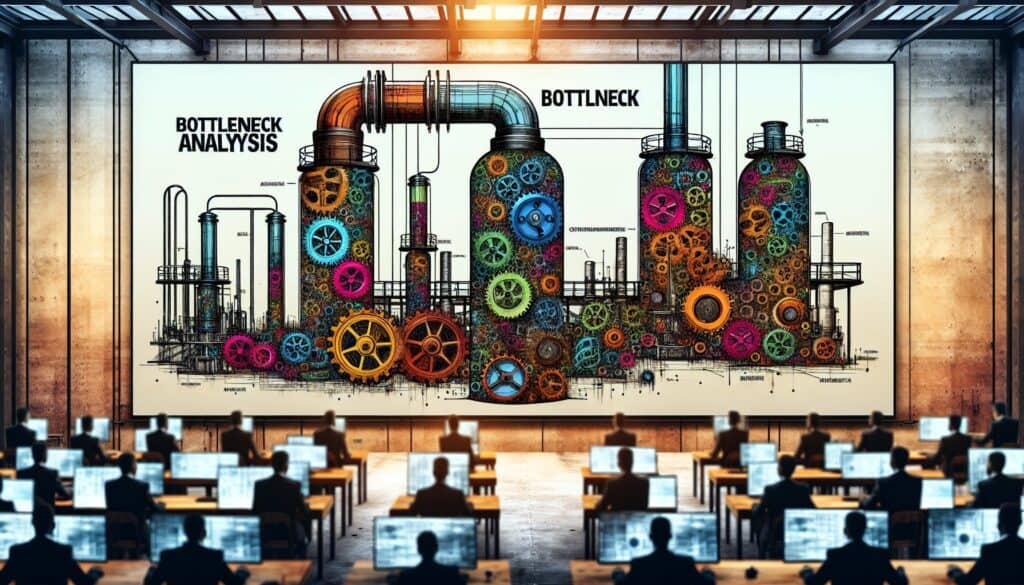
Bottleneck Analysis finds extensive applications across various industries such as manufacturing, software development, healthcare, and logistics, where processes can often be linear and interconnected. In a manufacturing context, this methodology aids in identifying stages within assembly lines that lead to delays, allowing for targeted interventions like machinery upgrades or reallocating labor resources to enhance productivity. In software development, bottlenecks may arise during code integration or testing phases, prompting teams to refine their workflows and improve collaborative practices by implementing tools like continuous integration/continuous deployment (CI/CD) systems. In healthcare, Bottleneck Analysis can reveal inefficiencies in patient flow, such as long wait times in emergency departments, leading to process redesigns that optimize staff allocation and patient triage systems. Initiatives typically start within teams or departments but can benefit from cross-functional participation, engaging stakeholders such as management, frontline employees, and external partners, which leads to a comprehensive understanding of the process and its constraints. Enhanced communication and collaboration among team members during the analysis phase can drive more effective solutions. Implementing Bottleneck Analysis may also involve tools like
value stream mapping and cause-and-effect diagrams, enabling teams to visualize issues and prioritize actions that yield the highest benefits in efficiency and
cost savings. This approach is particularly advantageous during early project phases when establishing baseline processes, making it possible to set benchmarks for future improvements and facilitate ongoing refinement as organizations adapt to changing market conditions or operational demands.