지속적인 개선, 능률, 린 제조, 프로세스 개선, 프로세스 매핑, 프로세스 최적화, 생산력, 근본 원인 분석
목적:
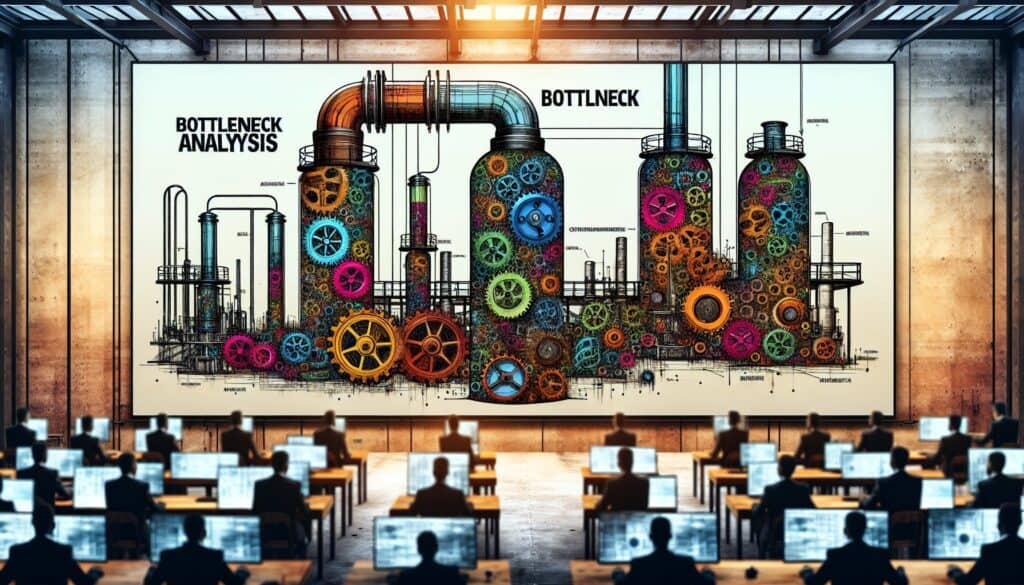
전체 공정 용량 또는 처리량을 제한하는 부분을 파악하기 위해서입니다.
사용 방법:
이 과정은 프로세스를 도식화하고, 작업이 쌓이거나 지연되는 지점을 파악하며, 이러한 병목 현상의 근본 원인을 규명하는 것을 포함합니다. 목표는 병목 현상의 효율성을 개선하여 시스템 전체 성능을 향상시키는 것입니다.
장점
전반적인 프로세스 효율성과 생산성을 향상시키고, 개선 노력의 우선순위를 정하는 데 도움을 주며, 비용 절감 및 주기 단축으로 이어질 수 있습니다.
단점
진정한 병목 현상을 파악하는 것은 특히 역동적인 시스템에서는 복잡할 수 있습니다. 하나의 병목 현상을 해결하면 또 다른 병목 현상이 드러날 수 있으며, 해결책에는 투자 또는 상당한 프로세스 변경이 필요할 수 있습니다.
카테고리:
린 시그마, 조작, 문제 해결, 프로젝트 관리
다음과 같은 경우에 가장 적합합니다:
시스템 내 제약 요소를 파악하고 완화함으로써 프로세스 흐름을 개선하고 처리량을 증가시킵니다.
Bottleneck Analysis finds extensive applications across various industries such as manufacturing, software development, healthcare, and logistics, where processes can often be linear and interconnected. In a manufacturing context, this methodology aids in identifying stages within assembly lines that lead to delays, allowing for targeted interventions like machinery upgrades or reallocating labor resources to enhance productivity. In software development, bottlenecks may arise during code integration or testing phases, prompting teams to refine their workflows and improve collaborative practices by implementing tools like continuous integration/continuous deployment (CI/CD) systems. In healthcare, Bottleneck Analysis can reveal inefficiencies in patient flow, such as long wait times in emergency departments, leading to process redesigns that optimize staff allocation and patient triage systems. Initiatives typically start within teams or departments but can benefit from cross-functional participation, engaging stakeholders such as management, frontline employees, and external partners, which leads to a comprehensive understanding of the process and its constraints. Enhanced communication and collaboration among team members during the analysis phase can drive more effective solutions. Implementing Bottleneck Analysis may also involve tools like 가치 흐름 매핑 and cause-and-effect diagrams, enabling teams to visualize issues and prioritize actions that yield the highest benefits in efficiency and cost savings. This approach is particularly advantageous during early project phases when establishing baseline processes, making it possible to set benchmarks for future improvements and facilitate ongoing refinement as organizations adapt to changing market conditions or operational demands.
이 방법론의 주요 단계
현재 프로세스 흐름을 도식화하고, 각 단계와 관련된 리소스를 자세히 명시하십시오.
업무가 누적되거나 지연이 발생하는 영역을 파악하십시오.
파악된 각 병목 현상의 근본 원인을 분석하십시오.
영향력과 실현 가능성을 기준으로 해결해야 할 병목 현상의 우선순위를 정하십시오.
선정된 병목 현상에 대한 맞춤형 솔루션을 개발하십시오.
해결책을 실행하고 그 효과를 모니터링하십시오.
필요에 따라 재평가 및 조정을 통해 프로세스를 반복하십시오.
프로 팁
시뮬레이션 모델링을 활용하여 다양한 시나리오 하에서 프로세스의 잠재적인 미래 상태를 분석하고, 개입 후 성과에 미치는 영향을 예측하는 데 도움을 줍니다.
병목 현상에 직접적으로 관여하는 운영자로부터 지속적인 피드백을 받아 실시간 문제 파악 및 혁신적인 해결책을 마련하십시오.
다양한 프로세스 요소 간의 상호 의존성을 탐색하기 위해 다변량 분석 기법을 구현하여 표면적인 증상을 넘어 근본 원인을 더 깊이 이해할 수 있도록 합니다.