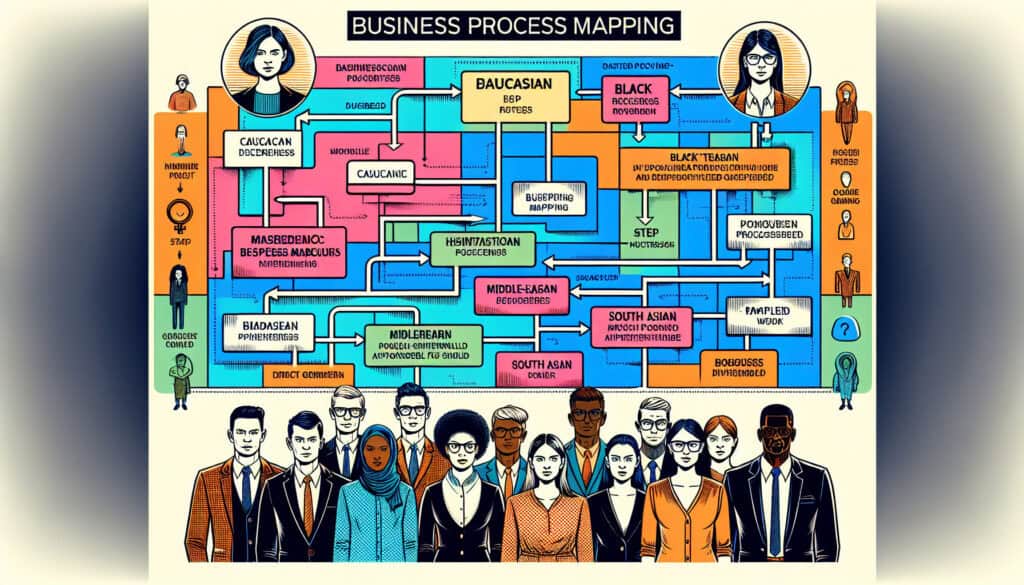
Business Process Mapping plays a significant role in various sectors including manufacturing, healthcare, finance, and software development, as it provides a structured approach to visualizing workflows within these industries. In the context of
プロジェクト管理, this methodology is particularly effective during the initial phases of process analysis and design, helping teams clarify current processes before implementing new systems or
テクノロジー. Participants usually include process owners, project managers, analysts, and often end-users, ensuring comprehensive input that captures all aspects of the workflow. For example, in healthcare, mapping medication administration processes can reveal bottlenecks that lead to medication errors, enabling improvements in patient safety. In software development, visual maps can illustrate user journey flows, ensuring that the design aligns with user expectations and needs. Tools such as BPMN (Business Process Model and Notation) offer standardized symbols to create diagrams that communicate effectively across departments, bridging gaps between technical and non-technical stakeholders. This approach enhances training by providing a visual reference that learners can refer to, making the understanding of complex procedures more accessible. Additionally, mapping enables a comparative analysis of alternative processes, supporting businesses in making data-driven decisions regarding potential improvements or automation strategies, which can lead to significant
コスト削減 and productivity gains over time.