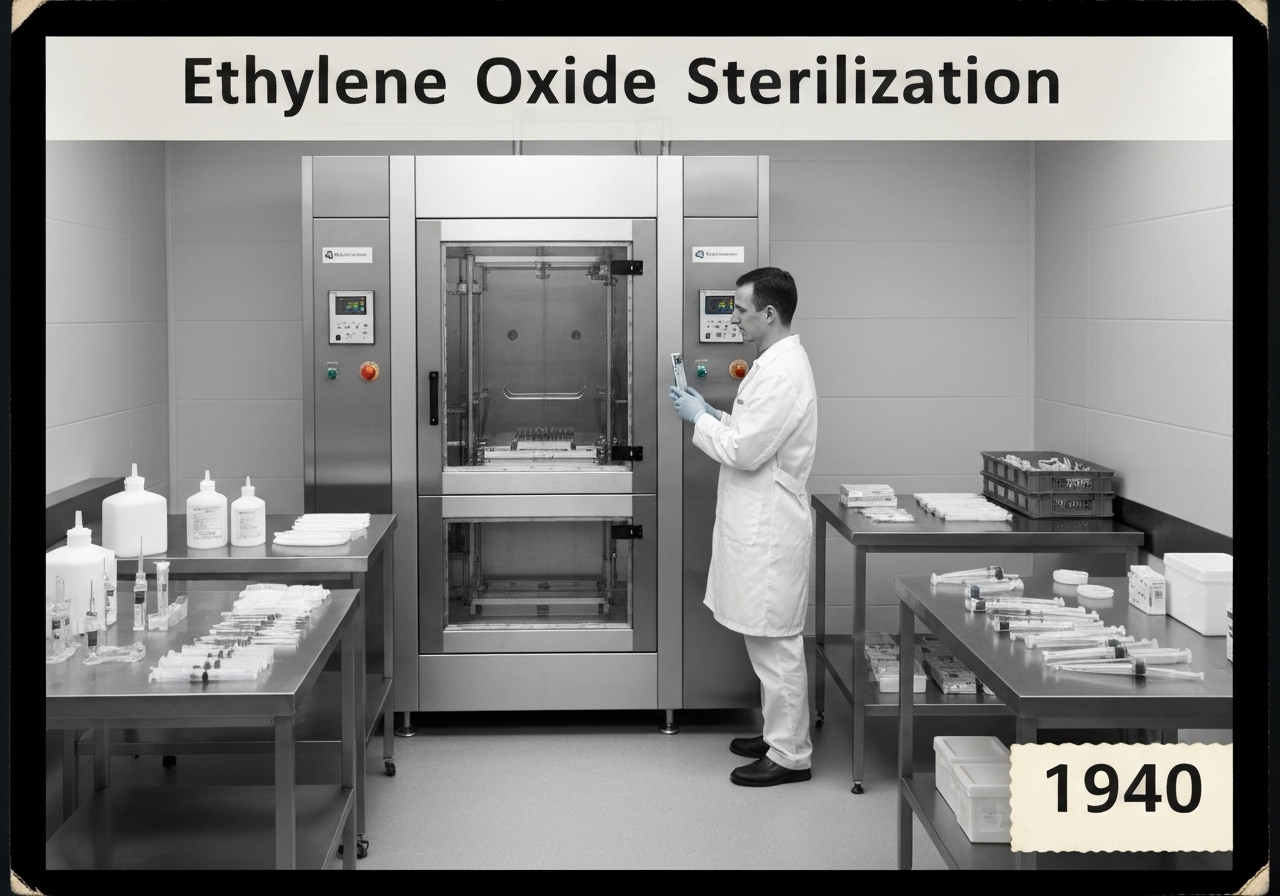
Ethylene oxide (C2H4O) is a colorless, flammable, and highly reactive gas. Its effectiveness as a sterilant lies in its ability to act as a potent alkylating agent. The process works at a molecular level. The strained three-membered ring of the ethylene oxide molecule readily opens and reacts with nucleophilic groups in essential cellular components. It primarily targets sulfhydryl (-SH), amino (-NH2), carboxyl (-COOH), and hydroxyl (-OH) groups found in proteins and nucleic acids (DNA and RNA). By adding an alkyl group to these sites, EtO permanently modifies the molecules, blocking reactive sites, causing cross-linking, and ultimately preventing microbial metabolism and replication. This mechanism is effective against all forms of microorganisms, including highly resistant bacterial spores. A typical EtO sterilization cycle is complex and must be carefully controlled. It consists of several phases: preconditioning (adjusting temperature and humidity), gas injection (introducing the EtO), exposure or dwell time (holding the load under specified conditions for several hours), and aeration (removing residual EtO gas). Key parameters are gas concentration (typically 400–1200 mg/L), temperature (usually 37–63 °C), relative humidity (40–80%), and exposure time (1–6 hours). The lower temperature range makes it ideal for materials that would be damaged by the heat of autoclaving, such as polymers, electronics, and medical devices with complex designs. However, EtO is toxic, carcinogenic, and explosive, requiring stringent safety protocols and a lengthy aeration period to ensure residual gas is removed from the sterilized items to safe levels before they can be used.
酸化エチレンは1859年にシャルル=アドルフ・ヴルツによって初めて合成されましたが、その強力な生物活性が十分に認識されたのはずっと後のことでした。1920年代にはロイド・L・シュレーダーによって殺虫剤として特許が取得されました。医療用品の滅菌剤としての応用は1940年代に開拓され、特に使い捨てプラスチック医療機器の普及に伴い、1950年代には広く普及しました。米国軍が機器の滅菌プロセスを開発したと伝えられています。この技術革新は、重要なギャップを埋めたという意味で画期的なものでした。酸化エチレンが登場する以前は、現代医療に不可欠になりつつあった、熱に弱い器具や用品を確実に滅菌する方法がなかったのです。これにより、滅菌済みの使い捨て医療機器を大量生産・使用することが可能になり、医療関連感染症のリスクを大幅に低減することができました。