Product Design, Manufacturing & Innovation Resources
家 » プロトスペーサー隣接モチーフ(PAM)

プロトスペーサー隣接モチーフ(PAM)

2008
  • Luciano Marraffini
  • Erik Sontheimer
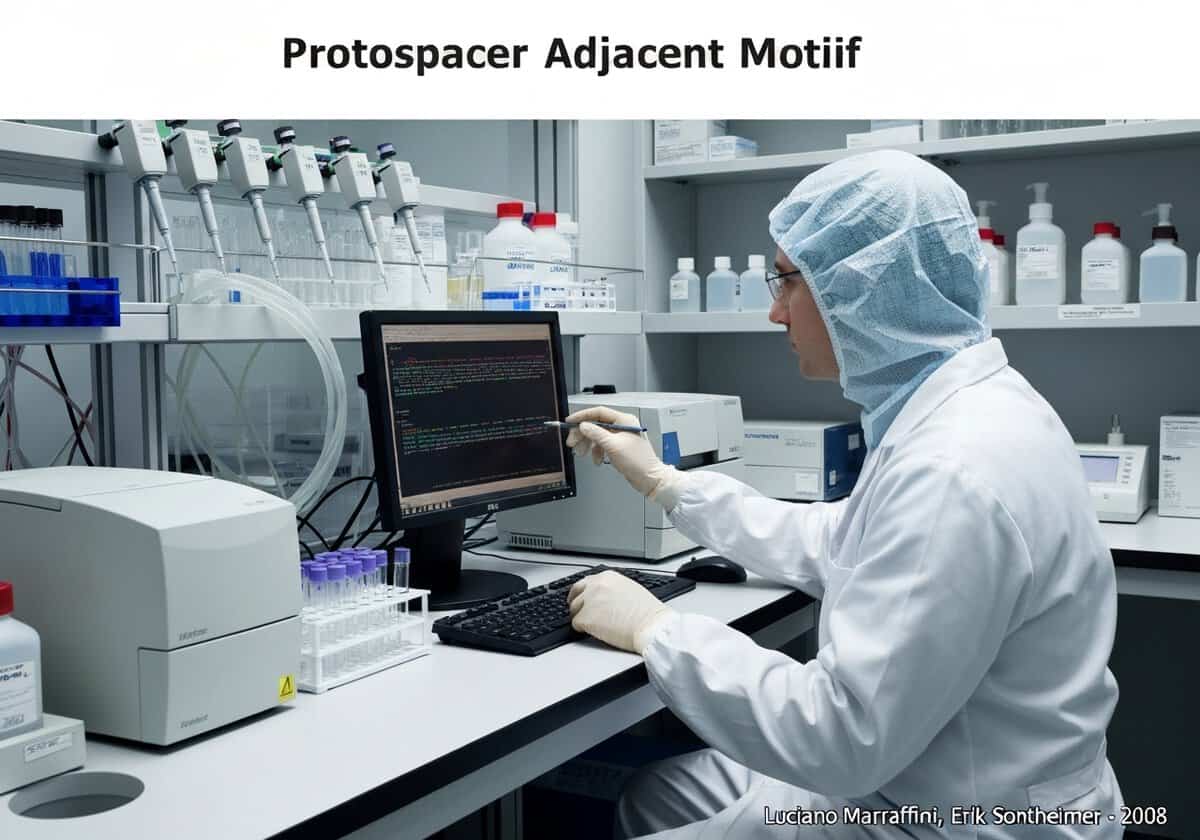
Molecular biologist analyzing DNA sequence with focus on Protospacer Adjacent Motif in a laboratory.

(画像はイメージです)

プロトスペーサー隣接モチーフ(PAM)は、Casヌクレアーゼが標的DNA配列に結合して切断するために必要な、通常2~6塩基対の短い特異的なDNA配列です。侵入DNA中の標的部位(プロトスペーサー)のすぐ下流に位置しています。PAMは宿主自身のDNAには存在しません。 CRISPR locus, which serves as a critical self-versus-non-self recognition mechanism, preventing autoimmune destruction.


プロトスペーサー隣接モチーフ(PAM)の発見は、CRISPR-Casシステムがなぜこれほど高い精度で機能するのかを理解する上で極めて重要な出来事でした。研究者たちは、このシステムが外来DNAを標的として切断するには、標的配列の隣に特定の短い配列(プロトスペーサー)が存在する必要があることを発見しました。広く用いられている*Streptococcus pyogenes*由来のCas9の場合、この配列は5'-NGG-3'であり、'N'は任意のヌクレオチドです。ガイドRNAを搭載したCas9タンパク質は、まずDNAをスキャンしてこのPAM配列を探します。PAMに結合した場合にのみ、タンパク質は隣接するDNAをほどき、ガイドRNA配列との一致をテストします。一致が見つかった場合、Cas9のヌクレアーゼドメインが活性化され、二本鎖切断が行われます。

This PAM-dependent targeting mechanism is the key to how the system avoids attacking the bacterium’s own genome. The クリスパー array, from which the guide RNAs are derived, contains the same spacer sequences as the targets. However, the repeat sequences within the CRISPR array do not contain the PAM sequence. Consequently, the Cas9-gRNA complex cannot bind stably to the CRISPR locus itself, preventing an autoimmune catastrophe. This elegant solution for self/non-self discrimination is a hallmark of the system’s efficiency. For gene editing applications, the PAM requirement is a double-edged sword: it ensures specificity but also constrains the set of possible target sites in a genome. This has driven significant research into discovering or engineering Cas variants with different, more flexible, or even non-existent PAM requirements to make any part of the genome accessible to editing.

UNESCO Nomenclature: 2417
分子生物学

タイプ

生化学的メカニズム

混乱

実質的な

使用法

広く普及している

前駆物質

  • 特性 クリスパー・キャス9 システムのコンポーネント
  • タンパク質-DNA結合相互作用と特異性の理解
  • CRISPRがDNAを標的とする免疫システムであるという仮説
  • 様々なDNA基質に対するCasタンパク質の活性を試験するためのin vitroアッセイ

アプリケーション

  • CRISPR-Cas9遺伝子編集におけるガイドRNA設計の重要なルール
  • ゲノム内の潜在的なオフターゲット部位の予測を可能にする
  • PAM特異性を改変したCasタンパク質を設計し、編集可能なゲノム部位の範囲を拡大する
  • オフターゲット効果を低減する高精度Cas9変異体の開発の基礎

特許:

NA

潜在的なイノベーションのアイデア

  • developing ‘pam-less’ cas nucleases through directed evolution for unrestricted genome editing
  • creating a diagnostic tool that only activates upon detecting a pathogen-specific pam sequence
  • designing a dna data storage system where the pam sequence acts as a file header or index marker
  • engineering cas proteins that recognize methylated dna as a pam, allowing for epigenome-specific editing
  • creating a ‘pam-lock’ system where a therapeutic gene is only activated in cells containing a viral pam sequence
  • developing a library of orthogonal cas-pam pairs for complex, multi-gene regulation in synthetic organisms
  • using pam-binding domains as dna ‘stains’ for super-resolution microscopy of genomic regions
  • creating a system where pam recognition is light-activated, providing spatiotemporal control over gene editing
  • engineering a cas protein that leaves a permanent ‘scar’ at the pam site after binding, creating a molecular event recorder
  • designing a computational tool to predict the evolution of viral pam sequences as they escape crispr pressure
関連キーワード: PAM、プロトスペーサー隣接モチーフ、Cas9、自己認識、DNAターゲティング、遺伝子編集、S. pyogenes、オフターゲット、生化学、NGG。

歴史的背景

プロトスペーサー隣接モチーフ(PAM)

1990
1997
2000
2008
1990
1990
1997
2000

(日付が不明または関連性がない場合、例えば「流体力学」などでは、その注目すべき出現時期の概算値が提示されます。)

10年目 周年

フルサイズの画像とダウンロードは、登録会員のみが100%無料で利用できます。