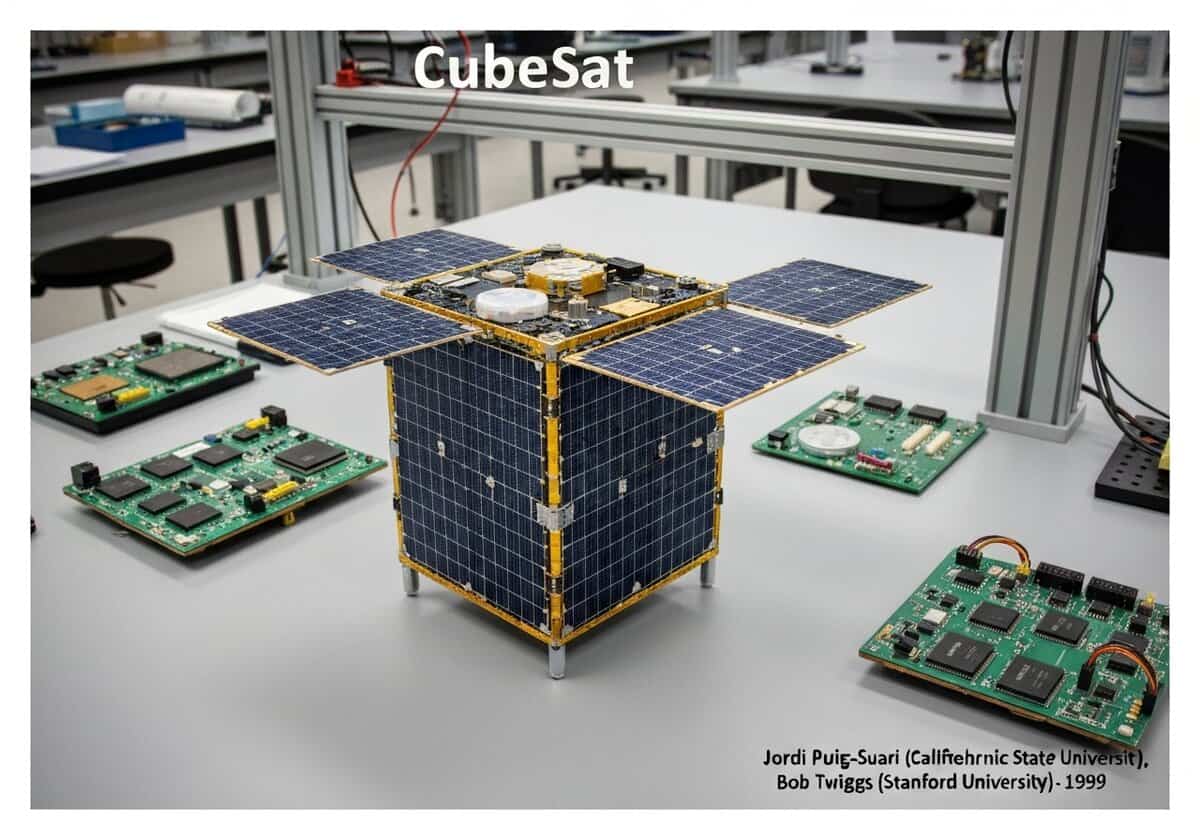
の CubeSat この規格は、大学院生に衛星の設計、製造、試験、運用に関する実践的な経験を積ませるための教育ツールとして、1999年に考案されました。その核心となる革新は、小型化だけでなく、形状の標準化と打ち上げロケットとのインターフェースの標準化にありました。これは、打ち上げ時にCubeSatをしっかりと保持し、バネ仕掛けのシステムを用いて軌道上に放出する箱型の機構であるPoly-Picosatellite Orbital Deployer(P-POD)によって実現されました。
By standardizing the external dimensions and providing a simple, reliable deployment method, the CubeSat specification decoupled the satellite’s design from the specifics of the launch vehicle. This allowed launch providers to treat CubeSats as a uniform type of secondary payload, simplifying integration and safety reviews. This predictability fueled the creation of a vibrant ecosystem of commercial-off-the-shelf (COTS) components. Companies began mass-producing CubeSat-compatible subsystems like power systems, on-board computers, radios, and attitude 制御システム. This COTS market drastically reduced the cost and development time for new missions, transforming the CubeSat from a purely educational tool into a viable platform for commercial ventures, government science, and even interplanetary exploration.