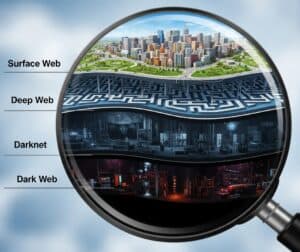
「ダークウェブ」「ダークネット」「ディープウェブ」という用語はしばしば同義語として使われますが、これらはインターネットの異なる層と構成要素を表しています。ディープウェブは、オンラインバンキングや有料サイトなどの無害なものも含め、検索エンジンにインデックスされていないすべてのウェブコンテンツを包含しますが、ディープウェブはインデックスされていないすべてのコンテンツを指します。 ダークネット 技術インフラストラクチャ(Tor や I2P匿名性を提供するもの。ダークウェブとは、これらのダークネット上に存在するコンテンツのことです。ワールドワイドウェブ(サーフェスウェブ)とは、一般に公開されインデックス化されているコンテンツのことです。
ディープウェブ

ディープウェブはインターネットの大部分を占め、GoogleやBingといった標準的な検索エンジンではインデックスされないすべてのコンテンツを包含しています。これには、保護されているか、特定のクエリの背後に隠されている、膨大な量の無害で日常的な情報が含まれます。ディープウェブのコンテンツへのアクセスには特別なソフトウェアは必要なく、URLを知っているか、より一般的には認証を行うだけで済みます。インターネットのこの部分は、ほとんどのユーザーにとって日常的に利用されるツールとなっています。
ディープウェブコンテンツの例としては、オンラインバンキングポータル、ウェブメールの受信トレイ、プライベートなソーシャルメディアのプロフィール、購読制の学術誌、クラウドストレージ、企業イントラネットなどが挙げられる。
その決定的な特徴は秘密主義ではなく、ウェブクローラーによるアクセスが不可能であることである。
ページがインデックスされない理由は、有料コンテンツである、パスワードが必要である、データベースクエリに応じて動的に生成される、または所有者が明示的に「noindex」タグを使用しているためです。コンテンツ自体は標準的なサーバーインフラストラクチャでホストされ、従来の方法でアクセスされます。 インターネットプロトコル.
ダークネット
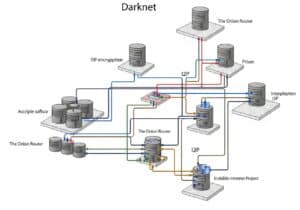
ダークネットとは、既存のインターネットの上に重ねて構築された特殊なオーバーレイネットワークであり、アクセスするには専用のソフトウェアや設定が必要となる。
これらのネットワークは、トラフィックを暗号化し、複数のサーバーを経由してルーティングすることで、ユーザーのIPアドレスと位置情報を隠蔽し、ユーザーに高度な匿名性を提供するように設計されています。
ダークネットへのアクセスを可能にする最も有力な技術は タマネギ ルーター(Tor)だけでなく、インビジブル・インターネット・プロジェクト(I2P)のようなネットワークも存在する。これらのネットワークは、プライベートで追跡不可能なように構築された技術インフラ、いわば「道路」である。
ダークネットの目的は、匿名での通信とホスティングを容易にすることです。このインフラは、抑圧的な政権下で身元を保護する必要のあるジャーナリストや政治的反体制派から、企業や政府からプライバシーを守りたい個人まで、さまざまな主体によってさまざまな理由で利用されています。ネットワーク自体はコンテンツ中立ですが、高い匿名性を備えたアーキテクチャにより、プライバシーが最優先されるホスティングサービスに適した環境となっています。工学や科学分野向けのダークネットツールに関する詳細な記事をご覧ください。

The Dark Web

The dark web refers to the collection of websites and services that are hosted on and accessed via a darknet.
While the darknet is the infrastructure, the dark web is the content itself—the “places” you can go using those private roads.
These websites are not reachable with standard web browsers and their URLs typically end in a special top-level domain, such as “.onion” for services on the Tor network. Because of the strong anonymity provided by the underlying darknet, the dark web has become known for hosting both legitimate and illicit activities.
While the dark web contains legitimate uses, such as secure whistle-blowing platforms and privacy-advocacy groups, it is more notoriously associated with black markets. These marketplaces facilitate the trade of illegal goods and services, including narcotics, stolen financial data, malware, and counterfeit documents. The anonymity of the network makes it difficult for law enforcement to identify and locate the individuals operating these sites. It is important to recognize that the dark web constitutes a very small fraction of the much larger deep web.
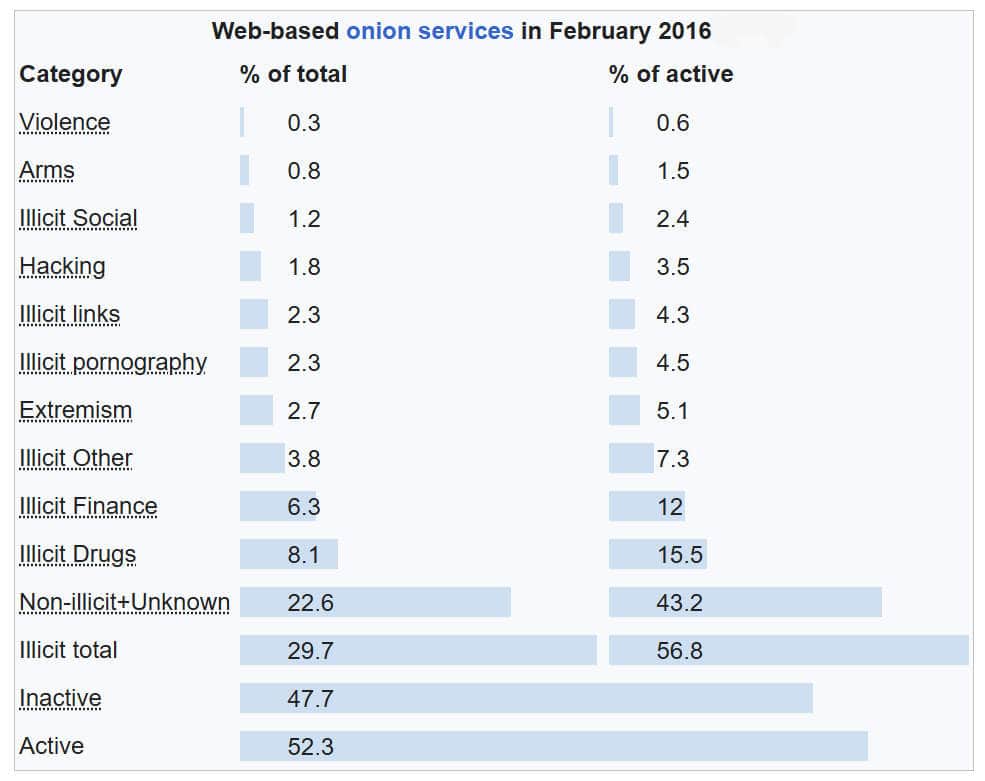
注記: the figures above have now to be taken for relative comparison only, as the number of sites has sky rocketed since, including surface web (www)
Comparison, Including the WWW
In orange below our key takeaways for each:
| パラメータ | World Wide Web (Surface Web) | Deep Web | ダークネット | Dark Web |
|---|---|---|---|---|
| Core Concept Analogy | The public, indexed books in a library’s main reading room. | The library’s entire collection, including private archives and membership-only sections. | The secure, anonymous pneumatic tube system used to request and deliver books from the archives. | The specific, uncatalogued books and documents found only within the library’s most secure archives. |
| 意味 | Publicly indexed web pages accessible by standard search engines. | All web content not indexed by search engines. | The overlay network infrastructure providing anonymity (e.g., Tor, I2P). | Websites and services (“hidden services”) hosted on darknets. |
| Size & Scale | Billions of pages, but estimated to be less than 5% of the total web. | The vast majority of the internet, estimated at over 95% of all online content. | A global, distributed network infrastructure. Size measured by nodes (Tor has thousands of relays). | A small, fluctuating subset of the deep web. Estimated in the tens of thousands of active sites at any time. |
| Access Method | Standard web browsers (Chrome, Edge, Firefox). No special configuration needed. | Standard web browsers, but access requires login credentials, a direct URL, or passing a paywall/CAPTCHA. | Requires specific software (e.g., Torブラウザ, I2P router) to connect to the network. | Accessed using specific software (like the Tor Browser) to connect to the darknet first. |
| URL Structure | Standard domains (e.g., .com, .org, .gov) resolved by public DNS. | Standard domains, often with long, dynamically generated URLs containing query strings. | Not applicable. It is a network protocol, not a destination with a URL. | Special, non-standard domains (e.g., “.onion”, “.i2p”) resolved within the darknet. |
| 匿名性レベル | Low. User IP address is visible to websites, ISPs, and network monitors. | Low. Access is typically tied to a known identity (username, account number). | High. Designed to obscure the user’s IP address from the destination service via multi-layer 暗号化 and relays. | High for both users and hosts. Anonymity is the default and a core feature of the environment. |
| Primary Intent | Public information dissemination, commerce, and communication. | Secure access to private or protected information and services. | To provide an anonymous, censorship-resistant communication channel. | To host services and disseminate information without revealing the identity of the host or users. |
| Typical Content | News, e-commerce, blogs, government portals, social media, マーケティング content. | Email inboxes, cloud storage, banking portals, medical records, academic journals, corporate intranets. | Content-neutral network traffic (encrypted data packets). | Black markets, political dissident forums, secure whistleblower dropboxes, privacy blogs, illicit file sharing. |
| Legality of Content | Overwhelmingly legal, though it can link to or describe illegal acts. | Overwhelmingly legal and mundane. | The network technology itself is legal and used for legitimate purposes. | Highly mixed. Contains both legal (e.g., privacy advocacy) and a significant amount of illegal content. |
| Typical User Profile | General public. | Authenticated individuals (e.g., bank customers, employees, students). | Privacy advocates, journalists, law enforcement, political dissidents, security-conscious individuals. | A wide spectrum including criminals, activists, whistleblowers, researchers, and the curious. |
| Hosting Method | Hosted on publicly addressable web servers in data centers. | Hosted on standard web servers, but behind application-level security controls. | A network of volunteer-run nodes (relays) that pass traffic. | Hosted as “hidden services” on servers whose location and identity are obscured by the darknet. |
| Associated Risks | Malware, phishing, tracking cookies, scams, data collection by corporations. | Data breaches of the service provider, phishing attacks targeting login credentials. | Potential for deanonymization through network analysis or software vulnerabilities. Risk of connecting to malicious exit nodes. | Extreme content, sophisticated scams, malware, interacting with law enforcement operations, high risk of financial loss. |
External Links on Internet Laws
国際規格
(リンクにカーソルを合わせると、コンテンツの説明が表示されます)
用語集
Domain Name System (DNS): 人間が読みやすいドメイン名をIPアドレスに変換する階層型システムであり、ブラウザがインターネット上のリソースを特定してアクセスできるようにする。ドメイン名レコードを保存および管理するサーバーで構成され、インターネットトラフィックの効率的なルーティングを促進する。
Internet Protocol (IPv4): パケット交換ネットワーク上での通信を円滑にするため、デバイスに固有の数値アドレスを割り当て、データルーティングと配信を可能にするネットワーク層プロトコル。32ビットのアドレス体系を採用しており、約43億個の固有アドレスを生成できる。
Uniform Resource Locator (URL): インターネット上のリソースへの参照であり、プロトコル識別子、ドメイン名、およびオプションのパスまたはクエリパラメータで構成され、ウェブページ、ファイル、またはサービスへのアクセスを可能にする。