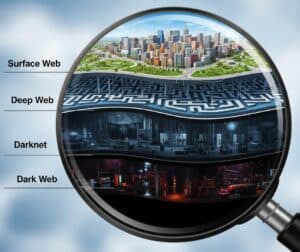
Os termos "dark web", "darknet" e "deep web" são frequentemente usados como sinônimos, mas descrevem camadas e componentes distintos da internet: enquanto a deep web abrange todo o conteúdo da web não indexado pelos mecanismos de busca, incluindo coisas inofensivas como bancos online e sites com acesso pago, a deep web engloba todo o conteúdo não indexado. darknet é a infraestrutura técnica (uma rede sobreposta como o Tor ou I2P) que proporciona anonimato. A dark web é o conteúdo que reside nessas darknets. A World Wide Web (web de superfície) é o conteúdo indexado publicamente.
A Deep Web

The deep web represents the largest part of the internet, encompassing all content that is not indexed by standard search engines like Google or Bing. This includes a vast amount of benign and routine information that is protected or located behind a query. Access to deep web content does not require special software, only direct knowledge of the URL or, more commonly, authentication. This part of the internet is a daily tool for most users.
Exemplos de conteúdo da deep web incluem portais de bancos online, caixas de entrada de webmail, perfis privados em redes sociais, periódicos acadêmicos por assinatura, unidades de armazenamento em nuvem e intranets corporativas.
A característica definidora não é o sigilo, mas sim a inacessibilidade aos mecanismos de busca da web.
Uma página pode não estar indexada porque está protegida por um paywall, exige senha, é gerada dinamicamente em resposta a uma consulta de banco de dados ou seu proprietário usou explicitamente a tag 'noindex'. O conteúdo em si é hospedado em infraestrutura de servidor padrão e acessado pela rede convencional. protocolo de internet.
A Darknet
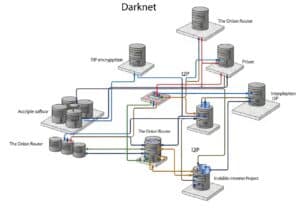
Uma darknet é um tipo específico de rede sobreposta que se sobrepõe à internet existente e requer software ou configurações especializadas para acesso.
Essas redes são projetadas para fornecer um alto grau de anonimato aos seus usuários, criptografando o tráfego e roteando-o por meio de vários servidores, o que oculta o endereço IP e a localização do usuário.
A tecnologia mais proeminente para permitir o acesso à darknet é... Cebola Roteador (Tor), mas também existem outros como o Projeto Internet Invisível (I2P). Essas redes são a infraestrutura técnica, as “estradas” construídas para serem privadas e não rastreáveis.
O objetivo de uma darknet é facilitar a comunicação e a hospedagem anônimas. Essa infraestrutura pode ser usada por diversos atores por diferentes motivos, desde jornalistas e dissidentes políticos em regimes opressivos que precisam proteger sua identidade, até indivíduos que simplesmente desejam manter sua privacidade em relação a corporações e governos. Embora a rede em si seja neutra em relação ao conteúdo, sua arquitetura de alto anonimato a torna um ambiente adequado para hospedar serviços onde a privacidade é fundamental. Veja nosso artigo detalhado sobre ferramentas da darknet para engenharia e ciência:
The Dark Web

The dark web refers to the collection of websites and services that are hosted on and accessed via a darknet.
While the darknet is the infrastructure, the dark web is the content itself—the “places” you can go using those private roads.
These websites are not reachable with standard web browsers and their URLs typically end in a special top-level domain, such as “.onion” for services on the Tor network. Because of the strong anonymity provided by the underlying darknet, the dark web has become known for hosting both legitimate and illicit activities.
While the dark web contains legitimate uses, such as secure whistle-blowing platforms and privacy-advocacy groups, it is more notoriously associated with black markets. These marketplaces facilitate the trade of illegal goods and services, including narcotics, stolen financial data, malware, and counterfeit documents. The anonymity of the network makes it difficult for law enforcement to identify and locate the individuals operating these sites. It is important to recognize that the dark web constitutes a very small fraction of the much larger deep web.
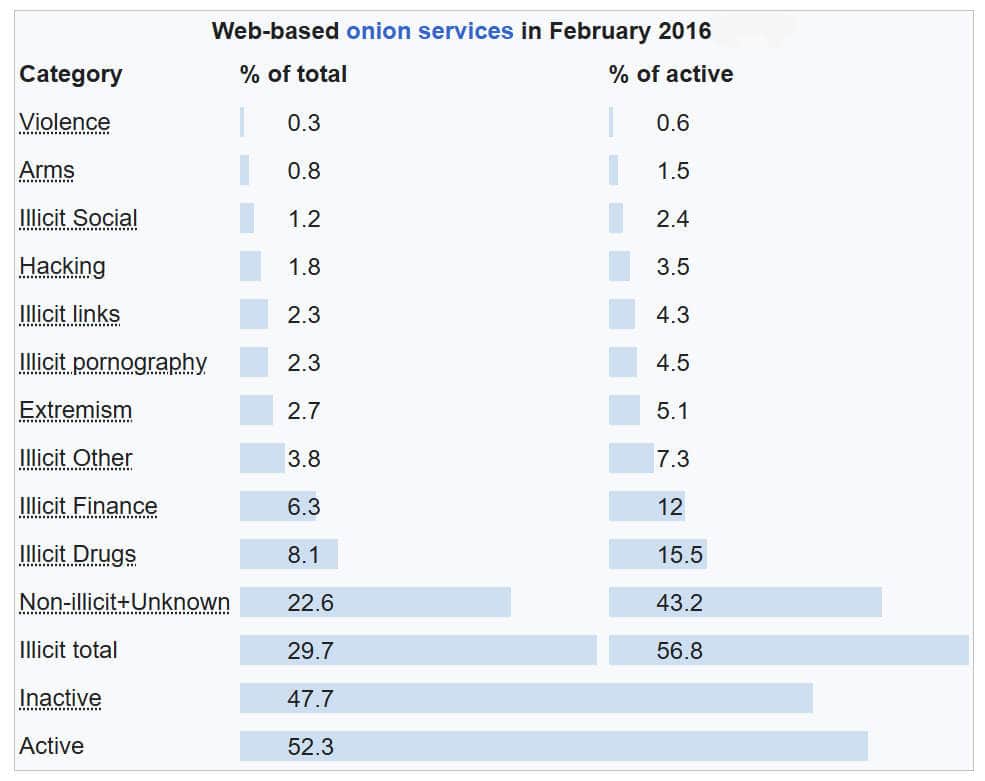
Observação: the figures above have now to be taken for relative comparison only, as the number of sites has sky rocketed since, including surface web (www)
Comparison, Including the WWW
In orange below our key takeaways for each:
| Parâmetro | World Wide Web (Surface Web) | Deep Web | Darknet | Dark Web |
|---|---|---|---|---|
| Core Concept Analogy | The public, indexed books in a library’s main reading room. | The library’s entire collection, including private archives and membership-only sections. | The secure, anonymous pneumatic tube system used to request and deliver books from the archives. | The specific, uncatalogued books and documents found only within the library’s most secure archives. |
| Definição | Publicly indexed web pages accessible by standard search engines. | All web content not indexed by search engines. | The overlay network infrastructure providing anonymity (e.g., Tor, I2P). | Websites and services (“hidden services”) hosted on darknets. |
| Size & Scale | Billions of pages, but estimated to be less than 5% of the total web. | The vast majority of the internet, estimated at over 95% of all online content. | A global, distributed network infrastructure. Size measured by nodes (Tor has thousands of relays). | A small, fluctuating subset of the deep web. Estimated in the tens of thousands of active sites at any time. |
| Access Método | Standard web browsers (Chrome, Edge, Firefox). No special configuration needed. | Standard web browsers, but access requires login credentials, a direct URL, or passing a paywall/CAPTCHA. | Requires specific software (e.g., Tor Browser, I2P router) to connect to the network. | Accessed using specific software (like the Tor Browser) to connect to the darknet first. |
| URL Structure | Standard domains (e.g., .com, .org, .gov) resolved by public DNS. | Standard domains, often with long, dynamically generated URLs containing query strings. | Not applicable. It is a network protocol, not a destination with a URL. | Special, non-standard domains (e.g., “.onion”, “.i2p”) resolved within the darknet. |
| Anonymity Level | Low. User IP address is visible to websites, ISPs, and network monitors. | Low. Access is typically tied to a known identity (username, account number). | High. Designed to obscure the user’s IP address from the destination service via multi-layer encryption and relays. | High for both users and hosts. Anonymity is the default and a core feature of the environment. |
| Primary Intent | Public information dissemination, commerce, and communication. | Secure access to private or protected information and services. | To provide an anonymous, censorship-resistant communication channel. | To host services and disseminate information without revealing the identity of the host or users. |
| Typical Content | News, e-commerce, blogs, government portals, social media, marketing content. | Email inboxes, cloud storage, banking portals, medical records, academic journals, corporate intranets. | Content-neutral network traffic (encrypted data packets). | Black markets, political dissident forums, secure whistleblower dropboxes, privacy blogs, illicit file sharing. |
| Legality of Content | Overwhelmingly legal, though it can link to or describe illegal acts. | Overwhelmingly legal and mundane. | The network technology itself is legal and used for legitimate purposes. | Highly mixed. Contains both legal (e.g., privacy advocacy) and a significant amount of illegal content. |
| Typical User Profile | General public. | Authenticated individuals (e.g., bank customers, employees, students). | Privacy advocates, journalists, law enforcement, political dissidents, security-conscious individuals. | A wide spectrum including criminals, activists, whistleblowers, researchers, and the curious. |
| Hosting Method | Hosted on publicly addressable web servers in data centers. | Hosted on standard web servers, but behind application-level security controls. | A network of volunteer-run nodes (relays) that pass traffic. | Hosted as “hidden services” on servers whose location and identity are obscured by the darknet. |
| Associated Risks | Malware, phishing, tracking cookies, scams, data collection by corporations. | Data breaches of the service provider, phishing attacks targeting login credentials. | Potential for deanonymization through network analysis or software vulnerabilities. Risk of connecting to malicious exit nodes. | Extreme content, sophisticated scams, malware, interacting with law enforcement operations, high risk of financial loss. |
External Links on Internet Laws
Normas internacionais
(Passe o cursor sobre o link para ver nossa descrição do conteúdo)