Product Design, Manufacturing & Innovation Resources
Casa » Protein Denaturation

Protein Denaturation

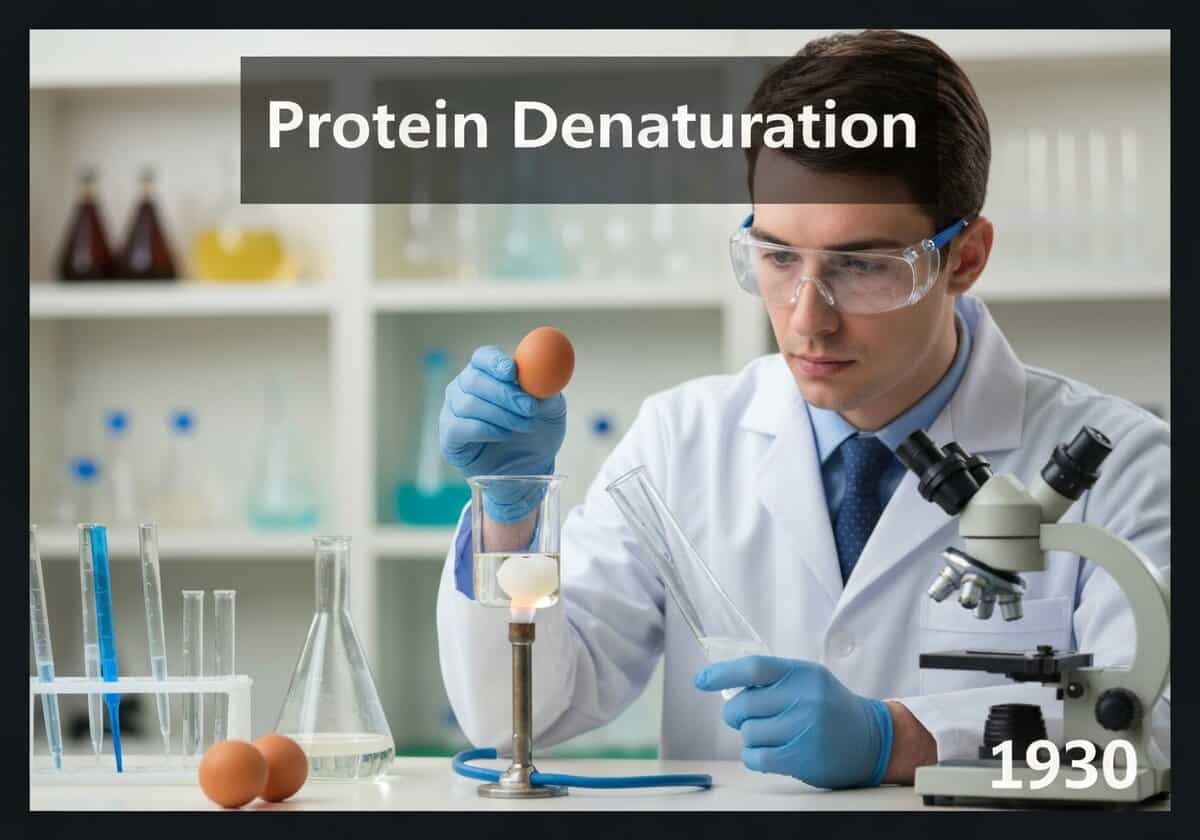
1930
Biochimico che dimostra la denaturazione delle proteine in un laboratorio.

(Immagine generata a solo scopo illustrativo)

La denaturazione delle proteine è il processo in cui una proteina perde la sua struttura tridimensionale nativa. Questa interruzione delle strutture secondarie, terziarie e quaternarie è causata da fattori di stress esterni come calore, pH estremo, solventi organici o radiazioni. Mentre la sequenza primaria degli aminoacidi rimane intatta, la perdita di forma comporta la perdita della funzione biologica della proteina.
Denaturation disrupts the weak, non-covalent interactions that stabilize a protein’s native conformation. These include idrogeno bonds, hydrophobic interactions, and ionic bonds. For example, heat increases the kinetic energy of atoms, causing vibrations that break these weak bonds. Extreme pH alters the protonation state of acidic and basic amino acid side chains, disrupting salt bridges and hydrogen bonds. Organic solvents can disrupt the hydrophobic core that is crucial for the stability of many globular proteins. In some cases, denaturation is reversible; if the denaturing agent is removed and conditions are returned to physiological norms, some proteins can spontaneously refold into their native state, a process called renaturation, as demonstrated in Anfinsen’s experiments. However, for many proteins, especially large ones, denaturation is irreversible, often leading to aggregation where the unfolded hydrophobic regions stick together non-specifically. This aggregation is a hallmark of several neurodegenerative diseases, such as Alzheimer’s and Parkinson’s disease.

Understanding denaturation is critical in both biology and biotechnology. It explains why organisms must maintain a stable internal environment (homeostasis) and is a key consideration in the purification, storage, and handling of protein-based drugs and enzymes to maintain their activity.

UNESCO Nomenclature: 2401
- Biochimica

Tipo

Processo chimico

Interruzione

Sostanziale

Utilizzo

Uso diffuso

Precursori

  • observation of food cooking and coagulation (e.g., egg whites)
  • early studies on protein solubility by hofmeister and others
  • development of the concept of a specific 3d protein structure
  • understanding of non-covalent interactions like hydrogen bonds and hydrophobic effects

Applicazioni

  • cooking food (e.g., frying an egg, where heat denatures albumin)
  • sterilizzazione di apparecchiature mediche con l'uso di calore o di sostanze chimiche per denaturarle microbico proteine
  • use of alcohol as a disinfectant, which denatures bacterial proteins
  • permanent hair waving, which uses chemicals to break and reform disulfide bonds in keratin
  • biochemical assays that use denaturing agents (e.g., sds-page) to analyze proteins by mass

Brevetti:

NA

Idee e potenziali innovazioni

  • sviluppo di ‘chaperoni chimici’ per stabilizzare le proteine contro la denaturazione nelle malattie genetiche
  • engineering highly stable enzymes for industrial processes that operate at high temperatures or extreme ph
  • creating food products with novel textures by controlling protein denaturation and aggregation
  • designing smart polimeri that undergo reversible denaturation-like transitions in response to stimuli
  • developing methods for disaggregating and refolding proteins from inclusion bodies in biotech production
  • creating heat-shock sensors based on the denaturation of a reporter protein
  • using controlled denaturation to create protein-based hydrogels for drug delivery
  • developing cosmetic products that protect hair and skin proteins from environmental denaturation (e.g., uv radiation)
  • using cold denaturation for cryopreservation of biological samples
  • designing assays to screen for drugs that prevent pathological protein aggregation
Correlato a: denaturazione, ripiegamento delle proteine, struttura delle proteine, dispiegamento, aggregazione, omeostasi, attività enzimatica, albumina, calore, ph.

Contesto storico

Protein Denaturation

1902
1920
1928
1930
1940
1950
1950
1900
1910
1921
1930
1930
1940
1950
1951

(se la data è sconosciuta o non rilevante, ad esempio "meccanica dei fluidi", viene fornita una stima approssimativa della sua notevole comparsa)

decimo anno anniversario

Le immagini a grandezza naturale e i download sono disponibili, gratuitamente al 100%, solo per gli utenti registrati.

> Login <