Product Design, Manufacturing & Innovation Resources
Casa » Percorso di trasduzione del segnale dell'insulina

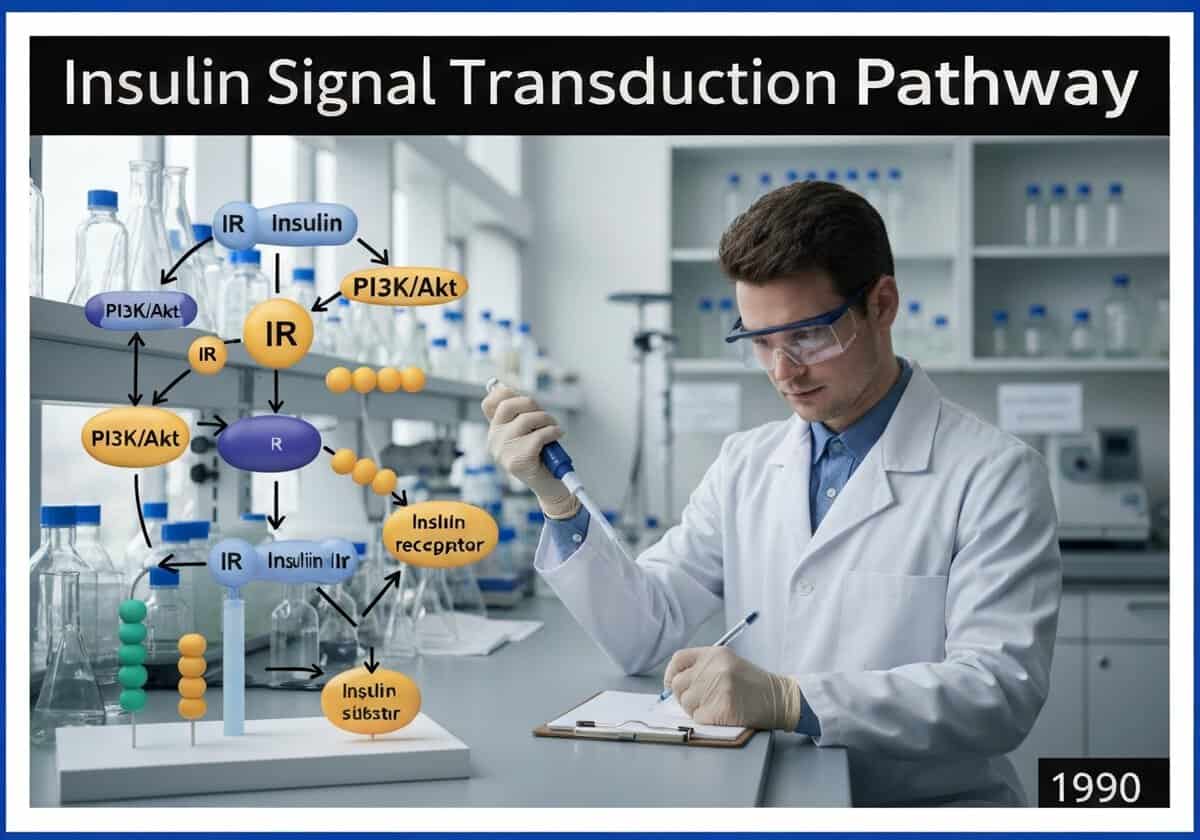
Percorso di trasduzione del segnale dell'insulina

1990
Scena di laboratorio che illustra la via di trasduzione del segnale dell'insulina con il recettore e gli effetti a valle.

(Immagine generata a solo scopo illustrativo)

Insulin initiates its effects by binding to the insulin receptor (IR), a receptor tyrosine kinase. This binding triggers autophosphorylation of the receptor, creating docking sites for insulin receptor substrate (IRS) proteins. Phosphorylated IRS proteins then activate downstream pathways, primarily the PI3K/Akt pathway, which mediates most of insulin’s metabolic effects, including the translocation of GLUT4 glucose transporters to the cell membrane.
IL insulina signaling cascade is a complex and highly regulated network that controls cellular growth, survival, and metabolism. It begins when insulin binds to the extracellular alpha subunits of the insulin receptor (IR). This causes a conformational change, activating the tyrosine kinase domain located on the intracellular beta subunits. The activated kinase phosphorylates specific tyrosine residues on the opposing beta subunit, a process called autophosphorylation. These phosphotyrosine sites act as recruitment platforms for various adapter proteins, most notably the insulin receptor substrate (IRS) family (IRS1-4). Once docked, IRS proteins are themselves phosphorylated by the IR kinase. This creates binding sites for other signaling molecules containing SH2 domains, such as phosphatidylinositol 3-kinase (PI3K). The recruitment of PI3K to the plasma membrane is a critical step. Activated PI3K phosphorylates the lipid [latex]PIP_2[/latex] (phosphatidylinositol 4,5-bisphosphate) to generate [latex]PIP_3[/latex] (phosphatidylinositol 3,4,5-trisphosphate). [latex]PIP_3[/latex] acts as a second messenger, recruiting and activating other kinases, including PDK1 and Akt (also known as Protein Kinase B). Activated Akt is a central node in the pathway, phosphorylating a multitude of downstream targets to mediate insulin’s effects. A key action of Akt is to promote the translocation of vesicles containing the glucose transporter GLUT4 from the cell’s interior to the plasma membrane in muscle and adipose tissue. This insertion of GLUT4 allows for the rapid uptake of glucose from the bloodstream, lowering blood sugar levels. Akt also promotes glycogen synthesis, sintesi proteica, and lipid synthesis, while inhibiting processes like gluconeogenesis and apoptosis.

UNESCO Nomenclature: 2403
- Biologia cellulare

Tipo

Sistema astratto

Interruzione

Fondamento

Utilizzo

Uso diffuso

Precursori

  • discovery of protein phosphorylation as a regulatory mechanism by edwin g. krebs and edmond h. fischer
  • concept of second messengers by earl sutherland, jr.
  • identification and cloning of the insulin receptor gene
  • discovery of tyrosine kinases and sh2 domains

Applicazioni

  • development of drugs for type 2 diabetes that target components of the signaling pathway (e.g., metformin, tzds)
  • cancer research, as the pi3k/akt pathway is often dysregulated in tumors
  • understanding the molecular basis of insulin resistance
  • research into aging and longevity, as this pathway is linked to durata regolamento
  • development of therapies for metabolic syndrome

Brevetti:

NA

Idee e potenziali innovazioni

  • development of pi3k inhibitors for cancer treatment
  • akt-targeted therapies for various diseases
  • high-throughput screening for modulators of the insulin pathway
  • optogenetic tools to control specific steps of the signaling cascade in real-time
  • systems biology models to predict pathway behavior in health and disease
  • development of drugs that specifically enhance insulin sensitivity in peripheral tissues
  • therapies targeting downstream effectors like mtor for anti-aging purposes
  • biomarkers based on phosphorylation status of pathway components for diagnosing insulin resistance
  • gene therapies to correct defects in the insulin signaling pathway
  • nanoparticle delivery systems for targeted drug action within the cascade
Le proteine ​​IRS fosforilate attivano quindi le vie a valle, principalmente la via PI3K/Akt, che media la maggior parte degli effetti metabolici dell’insulina, inclusa la traslocazione dei trasportatori del glucosio GLUT4 alla membrana cellulare.

Contesto storico

Percorso di trasduzione del segnale dell'insulina

1977
1983
1987
1990
1990
1990
1997
1975
1979
1983
1988
1990
1990
1997
2000

(se la data è sconosciuta o non rilevante, ad esempio "meccanica dei fluidi", viene fornita una stima approssimativa della sua notevole comparsa)

decimo anno anniversario

Le immagini a grandezza naturale e i download sono disponibili, gratuitamente al 100%, solo per gli utenti registrati.

> Login <