Product Design, Manufacturing & Innovation Resources
Home » Software as a Medical Device (SaMD)

Software as a Medical Device (SaMD)

2013
  • International Medical Device Regulators Forum (IMDRF)
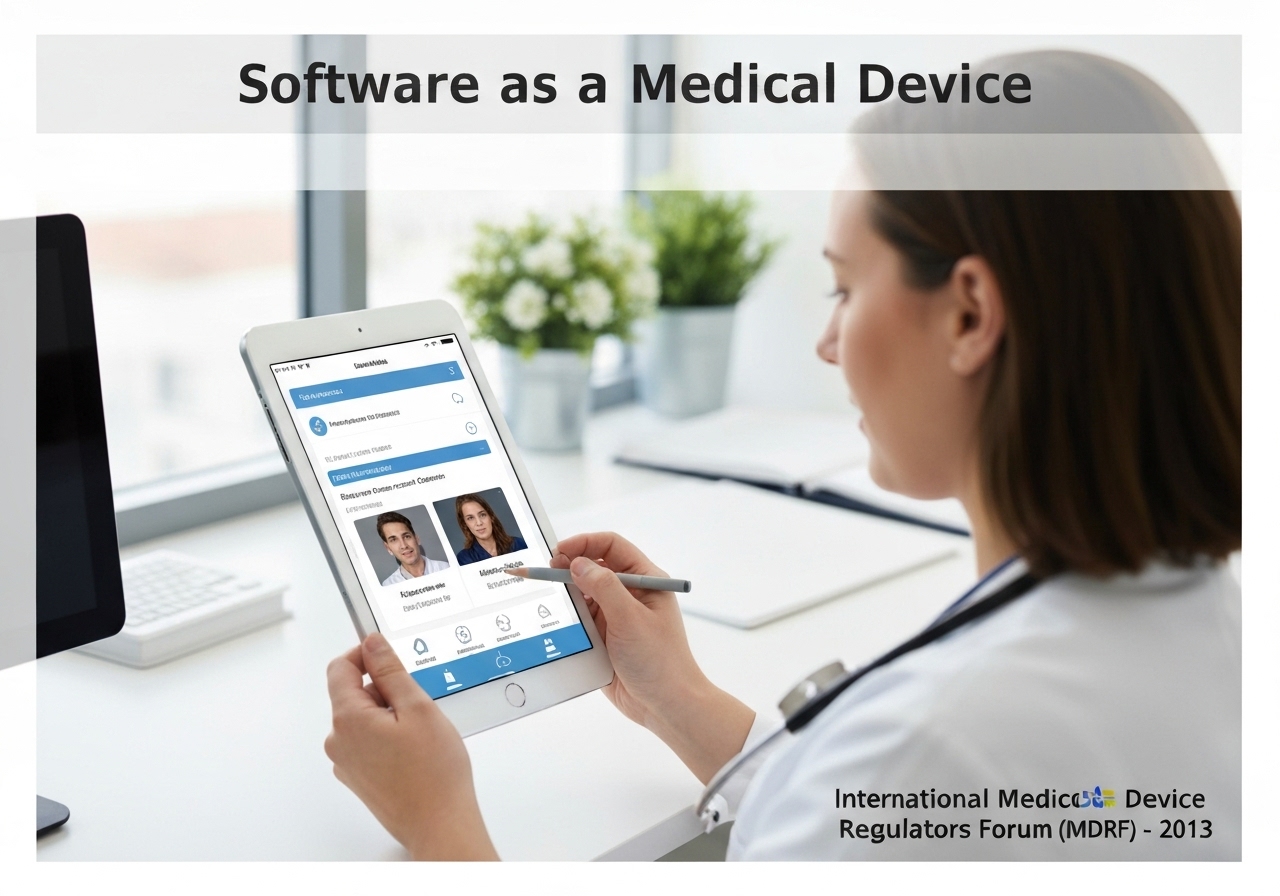
Healthcare professional using diagnostic software for skin cancer detection.

(generated image for illustration only)

Software as a Medical Device (SaMD) is defined as software intended for medical purposes that functions without being part of a hardware medical device. Governed by bodies like the International Medical Device Regulators Forum (IMDRF), SaMD is categorized based on the criticality of the information it provides and the healthcare situation, influencing its regulatory requirements.


The concept of Software as a Medical Device (SaMD) emerged to address the growing role of software in healthcare that operates independently from traditional medical hardware. The IMDRF’s foundational document, ‘Software as a Medical Device (SaMD): Key Definitions,’ clarified that SaMD is a medical device itself and must be regulated as such. This distinguishes it from software that is integral to a physical device (known as ‘software in a medical device’) or software that simply manages general health and wellness.

The regulatory framework for SaMD is risk-based, similar to hardware devices, but adapted for the unique nature of software. The risk categorization considers two main factors: the significance of the information provided by the SaMD for healthcare decisions (e.g., to treat, diagnose, drive clinical management) and the state of the healthcare situation or condition (e.g., critical, serious, non-serious). This creates a matrix to determine the device’s overall risk level, which in turn dictates the required level of regulatory scrutiny, including the need for clinical evidence and robust quality management systems. This framework allows regulators to oversee everything from low-risk diagnostic aids to high-risk software that directly informs life-or-death treatment decisions, ensuring patient safety in the rapidly evolving digital health landscape.

UNESCO Nomenclature: 3305
– Computer systems

Type

Software/Algorithm

Disruption

Incremental

Usage

Widespread Use

Precursors

  • development of personal computers and smartphones
  • creation of medical imaging software (e.g., for ct/mri)
  • rise of electronic health records (ehrs)
  • advances in machine learning and artificial intelligence
  • establishment of the international medical device regulators forum (imdrf)

Applications

  • diagnostic mobile apps that analyze images for skin cancer
  • software that analyzes mri scans to detect tumors
  • treatment planning software for radiation therapy
  • apps that use smartphone sensor data to monitor chronic conditions like diabetes or asthma
  • clinical decision support software integrated into electronic health records

Patents:

NA

Potential Innovations Ideas

Due to scrapping bot traffic, currently more than 40k per day, this content is reserved to community members.
> Login < or > Register < (100% free) to access this, so as all other restricted content and tools.

Related to: SaMD, software as a medical device, digital health, medical informatics, imdrf, fda, mobile medical applications, health software, clinical decision support, regulatory framework.

Historical Context

2000
2002
2010
2013
2000
2000
2003
2010
2013-09-24

(if date is unknown or not relevant, e.g. "fluid mechanics", a rounded estimation of its notable emergence is provided)

Related Invention, Innovation & Technical Principles

Full size images and downloads are only available, 100% free, for registered members.

> Login <