Hormonal Control of Pigment Translocation
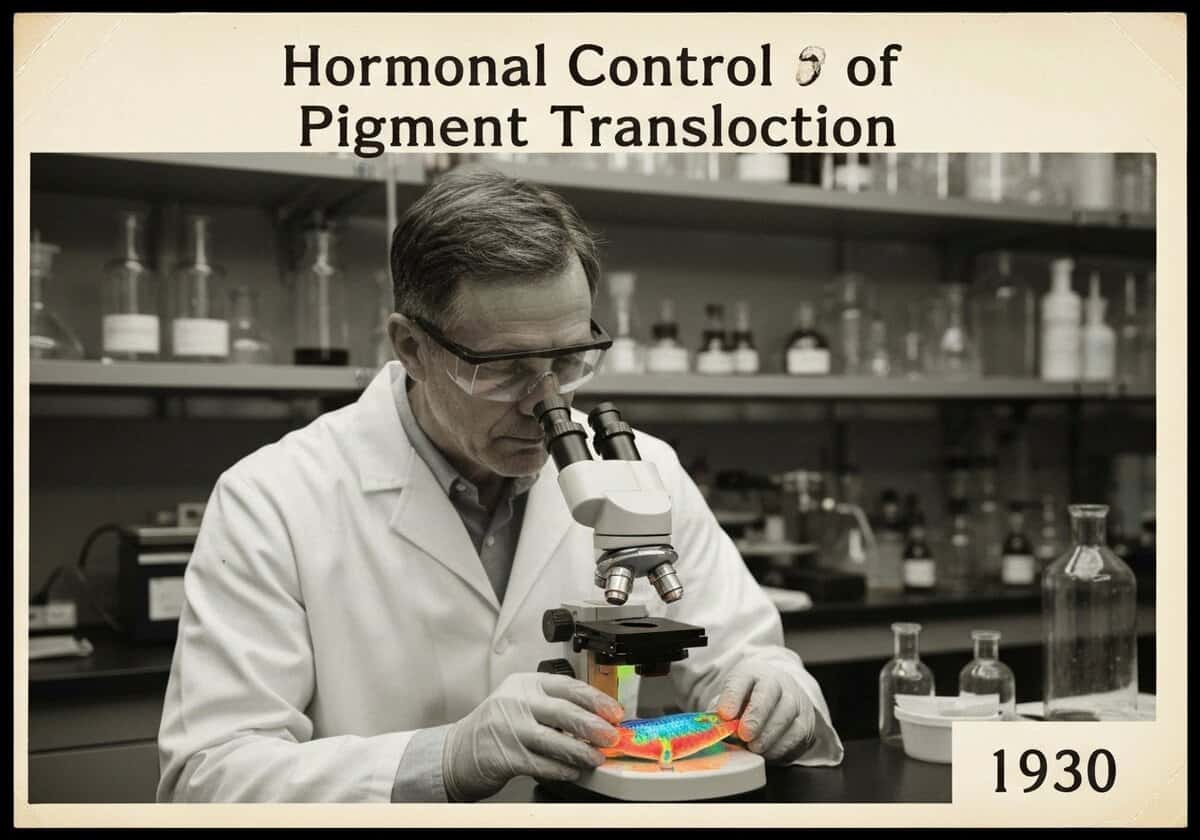
In many ectothermic vertebrates like fish and amphibians, color change is a slower, physiological process regulated by hormones. Pigment granules within chromatophores are translocated along a microtubule cytoskeleton. Hormones such as melanocyte-stimulating hormone (MSH) cause pigment dispersion (darkening), while melatonin or melanocyte-concentrating hormone (MCH) trigger aggregation (lightening), adapting the animal’s color to its environment over minutes to hours.
This mechanism, known as physiological color change, relies on the movement of pigment-containing organelles (melanosomes in melanophores) within the cell’s cytoplasm. The cell itself does not change shape. Instead, a complex network of cytoskeletal tracks, primarily microtubules, guides the transport of these organelles. Motor proteins, such as dynein and kinesin, act as the engines for this transport. Hormonal signals, received by G-protein coupled receptors on the chromatophore’s surface, initiate a signaling cascade. For example, melanocyte-stimulating hormone (MSH) binding leads to an increase in intracellular cyclic AMP (cAMP). Elevated cAMP activates protein kinase A (PKA), which in turn phosphorylates motor proteins, leading to the dispersion of pigment granules from the cell center to the periphery, thus darkening the skin. Conversely, melanocyte-concentrating hormone (MCH) or melatonin binding leads to a decrease in cAMP, causing the motor proteins to reverse direction and aggregate the pigments in the center of the cell, lightening the skin. This entire process is reversible and allows the animal to adapt its coloration to the background, light levels, or social signals, albeit on a much slower timescale (minutes to hours) compared to the neuromuscular control in cephalopods.
UNESCO Nomenclature: 2401
– Animal biology (Zoology)
Type
Biological Mechanism
Precursors
- discovery of hormones and the endocrine system by starling and bayliss
- identification of the cytoskeleton’s role in intracellular structure and transport
- discovery of the pituitary gland as a source of signaling molecules
- characterization of motor proteins like kinesin and dynein
Applications
- development of diagnostic assays using pigment aggregation (e.g., pregnancy tests)
- pharmacological research into g-protein coupled receptors (gpcrs) targeted by these hormones
- toxicology screening, as pollutants can disrupt this sensitive hormonal pathway
- basic research into intracellular transport mechanisms
Potential Innovations Ideas
Due to scrapping bot traffic, currently more than 40k per day, this content is reserved to community members.
> Login < or > Register < (100% free) to access this, so as all other restricted content and tools.
Related to: hormonal control, msh, mch, pigment translocation, microtubule, ectotherm, fish, amphibian, physiological color change, endocrinology.