Product Design, Manufacturing & Innovation Resources
Home » Earth’s Geodynamo Theory

Earth’s Geodynamo Theory

1940
  • Walter M. Elsasser
  • Edward Bullard
  • Eugene Parker
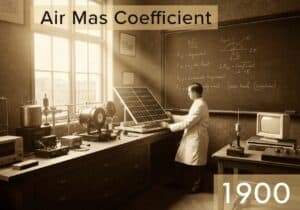
Geophysicist studying Earth's geodynamo mechanism and magnetic field generation.

(generated image for illustration only)

Earth’s magnetic field is generated by the geodynamo mechanism. Convection currents of electrically conductive molten iron in the outer core, influenced by the Coriolis effect from Earth’s rotation, create a self-sustaining system of electric currents. These currents produce the planet’s large-scale magnetic field, behaving like a giant electromagnet. This process is described by magnetohydrodynamics (MHD).

The geodynamo theory is the accepted scientific model for the generation of Earth’s magnetic field. The process requires three key elements: an electrically conductive fluid medium (the molten iron-nickel alloy of the outer core), kinetic energy provided by planetary rotation, and an internal energy source to drive convection. The energy source is thought to be a combination of thermal and compositional convection. As the Earth cools, iron solidifies onto the inner core, releasing latent heat and lighter elements like sulfur and oxygen. This buoyant, lighter fluid rises, creating convection currents.

The Coriolis force, resulting from Earth’s rotation, organizes these convective flows into helical or spiral patterns. This twisting motion of the conductive fluid acts like a dynamo, converting kinetic energy into magnetic energy. An existing weak magnetic field (perhaps from the Sun initially) interacts with the moving fluid, inducing electric currents via Faraday’s law of induction. These electric currents, in turn, generate their own magnetic field. If the fluid motion is complex enough, this induced field can reinforce the original field, creating a self-sustaining positive feedback loop. This process is governed by the equations of magnetohydrodynamics (MHD), which combine fluid dynamics with Maxwell’s equations of electromagnetism.

UNESCO Nomenclature: 2505
– Geophysics

Type

Theory

Disruption

Foundational

Usage

Widespread Use

Precursors

  • William Gilbert’s discovery that Earth is a magnet (1600)
  • Hans Christian Ørsted’s discovery of the link between electricity and magnetism (1820)
  • Michael Faraday’s discovery of electromagnetic induction (1831)
  • Development of fluid dynamics and thermodynamics

Applications

  • understanding planetary core dynamics
  • predicting space weather
  • modeling long-term climate change
  • informing studies of other celestial bodies with magnetic fields

Patents:

NA

Potential Innovations Ideas

Due to scrapping bot traffic, currently more than 40k per day, this content is reserved to community members.
> Login < or > Register < (100% free) to access this, so as all other restricted content and tools.

Related to: geodynamo, outer core, convection, Coriolis effect, magnetohydrodynamics, Earth’s magnetic field, molten iron, electric currents, planetary science, geophysics.

Historical Context

Earth’s Geodynamo Theory

1852
1900
1912
1940
1940
1950
1950
1838
1872
1910
1940
1940
1946
1950
1960

(if date is unknown or not relevant, e.g. "fluid mechanics", a rounded estimation of its notable emergence is provided)

Related Invention, Innovation & Technical Principles

Full size images and downloads are only available, 100% free, for registered members.

> Login <