Product Design, Manufacturing & Innovation Resources
Home » Carbonaceous and Nitrogenous Biochemical Oxygen Demand (cBOD and nBOD)

Carbonaceous and Nitrogenous Biochemical Oxygen Demand (cBOD and nBOD)

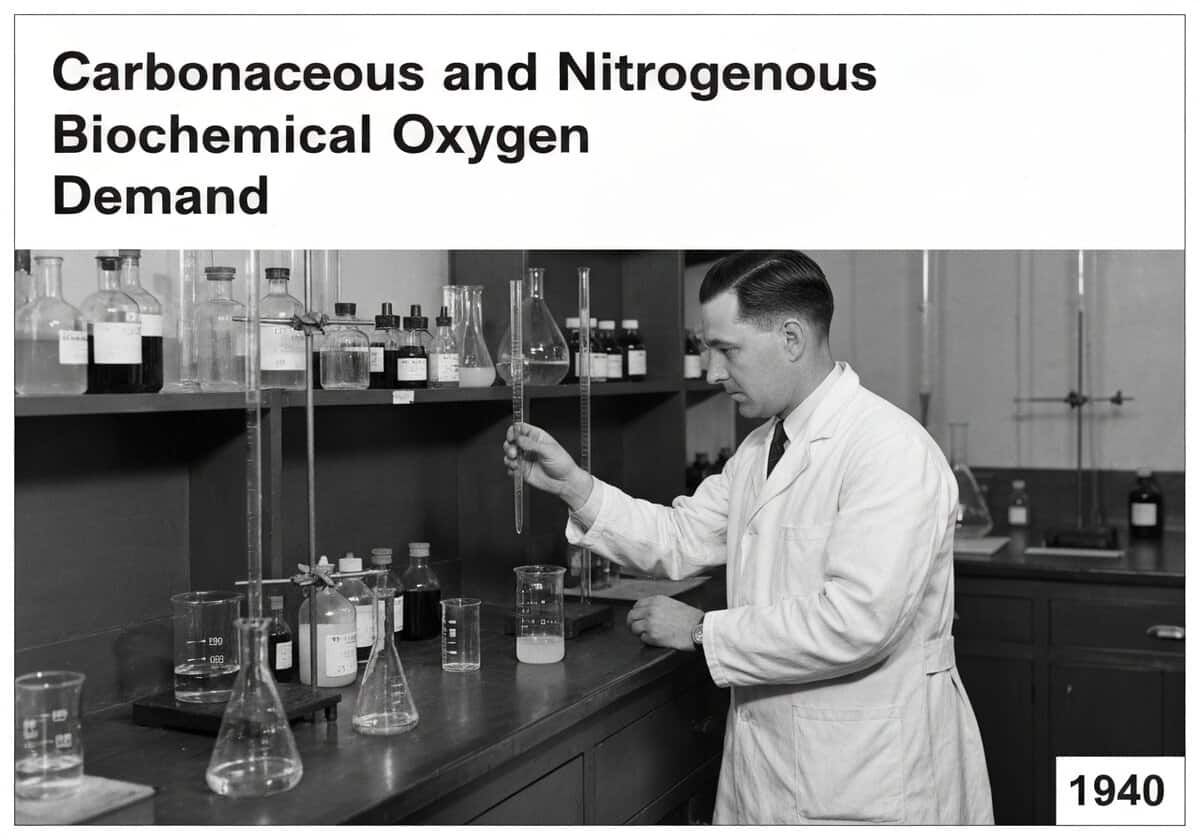
1940
Laboratory analysis of carbonaceous and nitrogenous biochemical oxygen demand in wastewater treatment.

(generated image for illustration only)

Total Biochemical Oxygen Demand (BOD) is the sum of two main processes: Carbonaceous BOD (cBOD) and Nitrogenous BOD (nBOD). cBOD is the oxygen consumed by microorganisms to oxidize organic carbon compounds. nBOD is the oxygen used in the later-stage oxidation of nitrogenous compounds, primarily ammonia (nitrification), by specific autotrophic bacteria. Distinguishing between them is important for advanced wastewater treatment.

The standard BOD5 test primarily measures cBOD because the nitrifying bacteria responsible for nBOD have a longer lag phase and slower growth rates. Significant nitrification typically begins after 5-8 days of incubation. Therefore, a standard 5-day test may underestimate the total oxygen demand of an effluent rich in ammonia. To measure cBOD exclusively, a nitrification inhibitor (e.g., allylthiourea) is added to the sample, which suppresses the activity of nitrifying bacteria. The resulting measurement is denoted as cBOD5. The nBOD can then be calculated by subtracting the cBOD from the total BOD measured in a parallel, uninhibited sample, often over a longer period (e.g., 20 days). The stoichiometry of nitrification is well-defined: approximately 4.57 mg of O2 are consumed for every 1 mg of ammonia-nitrogen oxidized to nitrate. This high oxygen demand makes controlling nBOD a critical objective in modern wastewater treatment to prevent severe oxygen depletion and protect aquatic life in receiving water bodies.

UNESCO Nomenclature: 2501
– Chemistry

Type

Chemical Process

Disruption

Incremental

Usage

Widespread Use

Precursors

  • discovery of nitrification as a biological process by Sergei Winogradsky (late 19th century)
  • understanding of microbial metabolism and respiration
  • development of the standard BOD test, which revealed discrepancies later explained by nitrification
  • chemical methods for measuring ammonia and nitrate concentrations

Applications

  • design of advanced wastewater treatment plants with nutrient removal stages
  • assessing the full oxygen-depleting potential of effluents on receiving waters
  • monitoring and controlling the nitrification process in biological reactors
  • diagnosing operational problems in activated sludge systems

Patents:

NA

Potential Innovations Ideas

Due to scrapping bot traffic, currently more than 40k per day, this content is reserved to community members.
> Login < or > Register < (100% free) to access this, so as all other restricted content and tools.

Related to: cBOD, nBOD, carbonaceous BOD, nitrogenous BOD, nitrification, wastewater treatment, ammonia, autotrophic bacteria, nutrient removal, allylthiourea.

Historical Context

Carbonaceous and Nitrogenous Biochemical Oxygen Demand (cBOD and nBOD)

1900
1912
1940
1940
1950
1950
1960
1872
1910
1940
1940
1946
1950
1960
1970

(if date is unknown or not relevant, e.g. "fluid mechanics", a rounded estimation of its notable emergence is provided)

Related Invention, Innovation & Technical Principles

Full size images and downloads are only available, 100% free, for registered members.

> Login <