Cytotoxicity
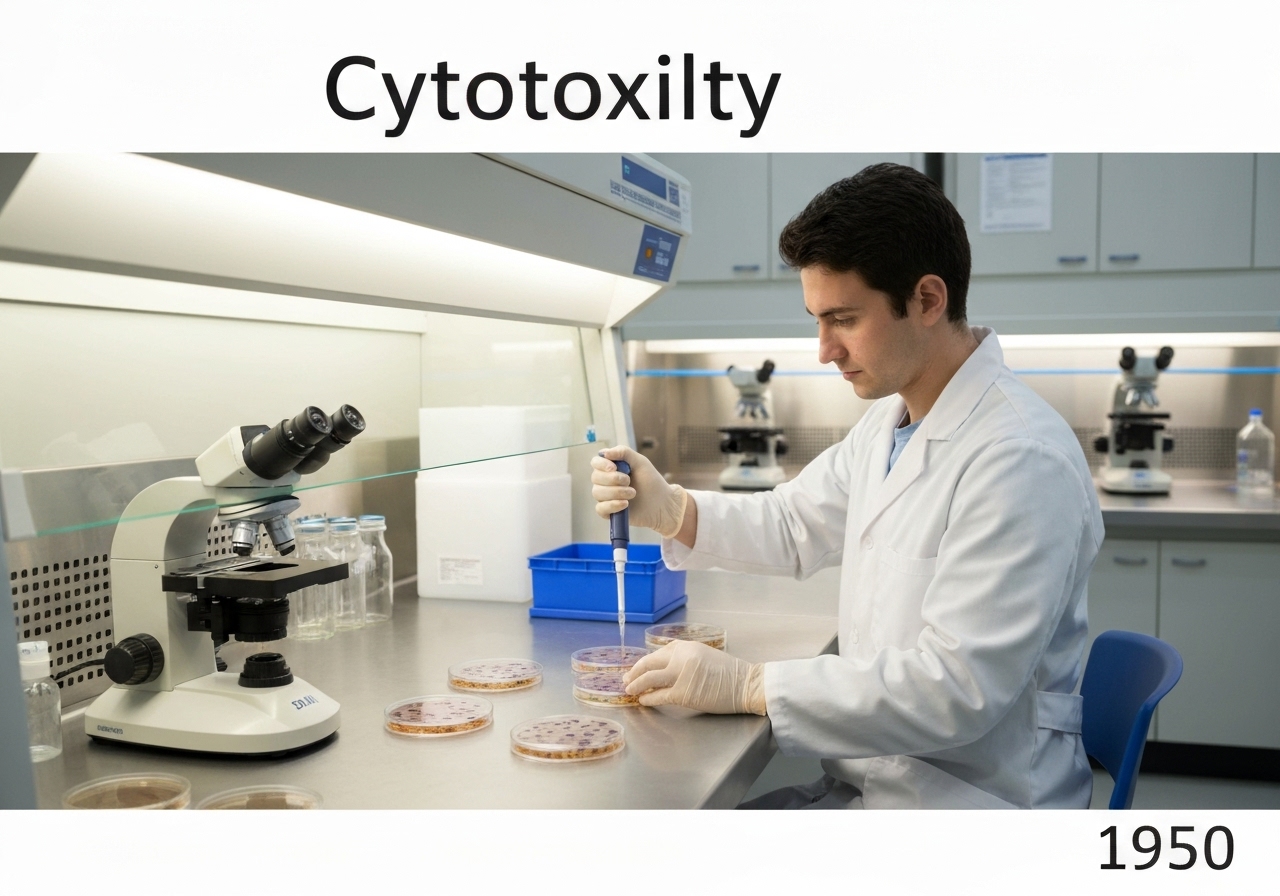
Cytotoxicity is the quality of a substance or cell being toxic to other cells. Cytotoxic agents can induce cell death through necrosis, where the cell membrane loses integrity leading to lysis and inflammation, or apoptosis, a controlled, programmed cell death process. This is distinct from cytostatic agents, which only inhibit cell division without directly causing cell death.
Cytotoxicity is a fundamental concept in toxicology, pharmacology, and immunology. It describes the ability of certain chemical compounds, physical agents, or biological cells to damage or kill other cells. The outcome of a cytotoxic event depends on the agent, its concentration, and the target cell type. The two primary pathways of cell death are necrosis and apoptosis.
Necrosis is a traumatic form of cell death resulting from acute cellular injury. It involves the swelling of the cell and its organelles, loss of membrane integrity, and the uncontrolled release of intracellular contents into the surrounding environment. This release triggers an inflammatory response, which can cause further damage to neighboring tissues. In contrast, apoptosis is a highly regulated and programmed process. It is characterized by cell shrinkage, chromatin condensation, nuclear fragmentation, and the formation of apoptotic bodies, which are then phagocytosed by other cells without inducing inflammation. Many modern cancer therapies are designed to specifically induce apoptosis in tumor cells while sparing healthy ones.
Understanding the distinction between cytotoxic and cytostatic effects is crucial in drug development. A cytotoxic drug kills cancer cells, while a cytostatic drug prevents them from proliferating. Both can be effective, but their mechanisms and potential side effects differ significantly.
UNESCO Nomenclature: 2406
– Biology of the cell
Precursors
- discovery of cells by robert hooke (1665)
- cell theory by schleiden and schwann (1839)
- development of cell culture techniques (early 20th century)
- discovery of chemical warfare agents and their effects on tissues (wwi)
- early work on chemotherapy by paul ehrlich (early 1900s)
Applications
- cancer chemotherapy
- drug safety screening
- immunotherapy development
- pesticide and herbicide formulation
- environmental toxicology studies
Potential Innovations Ideas
Due to scrapping bot traffic, currently more than 40k per day, this content is reserved to community members.
> Login < or > Register < (100% free) to access this, so as all other restricted content and tools.
Related to: cytotoxicity, cell death, apoptosis, necrosis, toxicology, pharmacology, cytostatic, cell viability, chemotherapy, cell lysis.