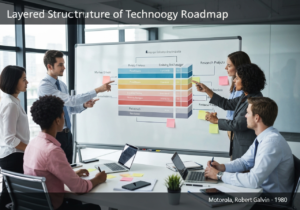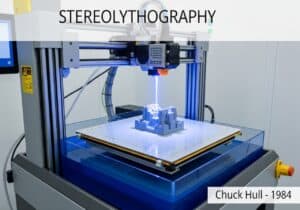
“भविष्य उन्हीं का है जो आज से इसकी तैयारी करते हैं।” – मैल्कम एक्स
In our tech world, making a technology roadmap for product development is key. It’s like a map that guides innovation and aligns projects with your goals. Through a technology roadmap, companies see the big picture, noting important goals and how to use resources.
इससे प्राथमिकताएं तय करने और समझदारी भरे फैसले लेने में मदद मिलती है। हम इस रोडमैप को बनाने के सर्वोत्तम तरीकों पर विचार करेंगे। इससे आपकी तकनीक आपके काम में आसानी से घुलमिल जाएगी और आपको बेहतर सफलता मिलेगी।
मुख्य बातें
- Technology roadmaps include various types like project plan roadmaps, product roadmaps, and platform roadmaps.
- एक अच्छे प्रौद्योगिकी रोडमैप में स्मार्ट लक्ष्य, समयसीमा और अन्य आवश्यक कार्य शामिल होते हैं। गैंट चार्टप्रमुख उपलब्धियों और जोखिमों की जांच।
- Creating one means setting strategic goals, checking current tech, involving stakeholders, and choosing what to work on first.
- Keeping a roadmap useful needs teamwork across departments and constant updates.
What is a Technology Roadmap in Product Development?
A technology roadmap guides companies in using tech to reach their goals. It helps them focus on tech projects that matter, avoid wasting resources, and embrace new tech chances.
Definition and Purpose
यह एक ऐसी योजना है जो दर्शाती है कि कोई कंपनी अपने लक्ष्यों को पूरा करने के लिए प्रौद्योगिकी का उपयोग कैसे करेगी। यह रोडमैप तकनीकी नियोजन को आसान बनाता है। यह तकनीकी परियोजनाओं को कंपनी के लक्ष्यों और निवेशों के साथ संरेखित करता है। यह स्पष्ट योजना हितधारकों की भागीदारी को बढ़ाती है और तकनीकी निवेश के विवेकपूर्ण विकल्पों का मार्गदर्शन करती है।
Types of Technology Roadmaps
There are many kinds of technology roadmaps, each with a special focus:
- Product roadmaps: these are short-term, looking ahead 6 to 12 months. They aim to quickly adapt to market and customer changes.
- Technical roadmaps: 1 से 3 वर्षों की अवधि को कवर करते हुए, वे कंपनी के तकनीकी लक्ष्यों को प्राप्त करने के लिए उठाए जाने वाले कदमों का विस्तृत विवरण देते हैं। इससे संसाधनों का बेहतर उपयोग और तकनीकी दृष्टिकोण का साझाकरण सुनिश्चित होता है।
- Platform roadmaps: वे कंपनी के तकनीकी ढांचे में प्रमुख तकनीकी प्लेटफार्मों के विकास और उनके एकीकरण की रूपरेखा तैयार करते हैं।
- Application roadmaps: they plan the life and updates of key business software.
- IT Systems roadmaps: focus on big systems planning like CRM and ERP. They make sure these support important business activities.
The different roadmaps help manage tech debt by planning for updates and improvements. This keeps the tech stack stable and growable. They also link tech teams with company goals, aiding in smart tech and architecture choices.
The strategic alignment provided by a tech roadmap enables organizations to adapt efficiently to new technological trends and market demands.
| Type of Roadmap | Timeframe | केंद्र |
|---|---|---|
| Product Roadmap | 6-12 months | Customer needs and market trends |
| Technical Roadmap | 1-3 years | Resources, skills, and technologies |
| Platform Roadmap | चर | Key platform development and integration |
| Application Roadmap | चर | Software lifecycle and updates |
| IT Systems Roadmap | चर | Major systems and their functionality |
प्रभावी तकनीकी योजना के लिए एक ठोस तकनीकी रोडमैप अत्यंत महत्वपूर्ण है। यह अल्पकालिक और दीर्घकालिक दोनों परियोजनाओं के लिए डिजिटल लक्ष्यों की दिशा में चरणबद्ध दृष्टिकोण का समर्थन करता है। यह कंपनी की तकनीकी संरचना की नींव है। यह कंपनी को तकनीकी प्रगति और रणनीतिक विकास में मार्गदर्शन प्रदान करता है।
Assessing Current Manufacturing Plant Capabilities
भविष्य में होने वाली तकनीकी प्रगति के लिए अपने विनिर्माण संयंत्र की क्षमताओं का आकलन करना अत्यंत महत्वपूर्ण है। इसमें आपके वर्तमान सिस्टम और उपकरणों की जांच करना शामिल है। इससे आपकी मजबूतियों और सुधार के क्षेत्रों को पहचानने में मदद मिलती है।
Conducting a Technology Audit
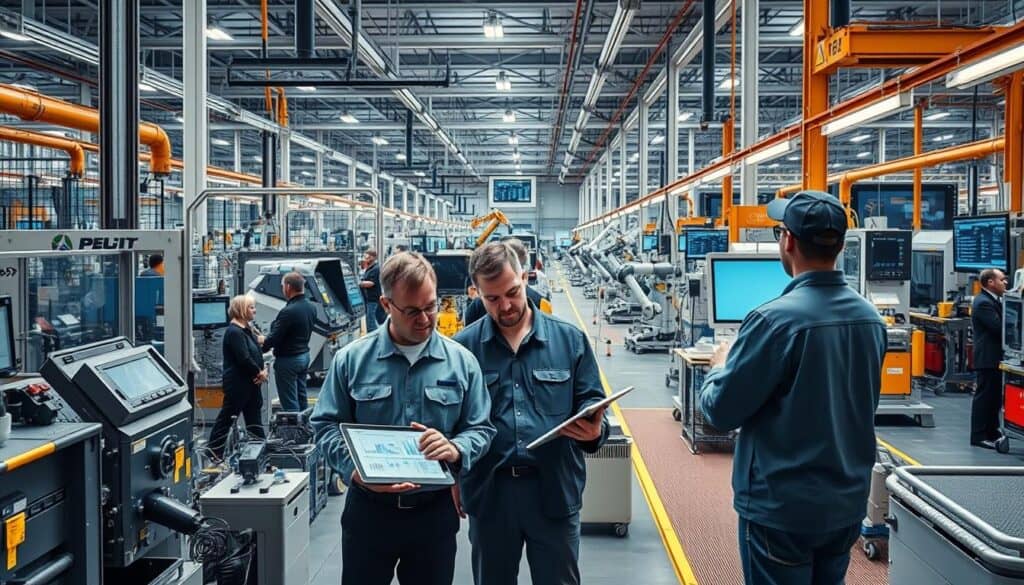
A technology audit is crucial for grasping the current state of tech. It requires listing your systems, checking their functions, and spotting weaknesses. A 2023 Deloitte report says 86% of manufacturing leaders think smart factory tech will boost competitiveness in the coming years. This shows the importance of a thorough technology assessment, making sure your plant is set for a digital makeover.
Moving from a Traditional Stage of manual work to a Digital-First Stage needs strategic planning. It calls for investing in new tech and often, changing the company culture. These stages rely on continuous innovation and advanced tech like analytics, AI, and machine learning.
| Stage | Characteristics | उदाहरण |
|---|---|---|
| Traditional Stage | Manual processes, traditional methods | Basic manufacturing setups |
| Emergent Stage | Starting to use digital tech | Digital inventory management, basic automation |
| Digital-First Stage | Constant innovation, advanced tech use | AI, machine learning in processes |
User Interviews and Surveys
डिजिटल परिपक्वता के विभिन्न चरणों में बदलाव उपयोगकर्ता की प्रतिक्रिया से सीखने पर भी निर्भर करता है। इससे तकनीक के प्रभाव की वास्तविक समय की जानकारी मिलती है और यह पता चलता है कि किन चीजों में सुधार की आवश्यकता है। उद्योग विशेषज्ञों का कहना है कि डिजिटल परिवर्तन केवल नई तकनीक के बारे में नहीं है। यह एक विस्तृत योजना के बारे में है जो परिचालन और उपयोगकर्ता की आवश्यकताओं को पूरा करती है।
Defining Project and Future Manufacturing Plant Goals
In today’s world, it’s key to define your project goals and the aims of your future manufacturing plant clearly. By setting SMART goals, your projects become specific, measurable, achievable, relevant, and time-bound. These goals must align with your organization’s overall strategy.
Setting SMART Goals
Creating SMART goals means carefully looking at what your manufacturing can now do and what it will need to do. Goals need to be clear to provide a roadmap. They must include ways to measure success, be achievable, fit with the wider business aims, and have deadlines. This method ensures goals help your strategy and are practical.
Aligning with Strategic Objectives
Aligning with strategic objectives is crucial for turning plans into real results. By matching your goals with the business’s main aims, your efforts are more united. This makes departments work better together, helps use resources well, and tackles key areas like keeping the business going, making processes automatic, and updating systems.
Setting project goals in line with strategy helps manage changes and surprises. It makes your organization more flexible and strong.
| Key Areas | Objectives |
|---|---|
| Strategy and Systems Assessment | Align business and system goals, support growth or cost reduction |
| साइबर सुरक्षा | Ensure data protection and business continuity |
| Business Continuity | Maintain operations during disruptions, market pivots |
| Process Automation and Improvement | Increase efficiency, reduce operational costs |
Investing Resources in Research rather than in Current Development
Putting money into research and current development keeps companies ahead. They must manage resources well. This means balancing new ideas with improving what they already have. A crucial part of this is investing smartly in technology. Funds should go to projects with great promise.

Balancing Innovation and Improvement
Managing resources well means finding a middle ground. It’s about funding tech that’s cutting-edge and improves existing processes. Take the infrastructure bill as an example. It put $9.5 billion into clean hydrogen and $10 billion into कार्बन कैप्चर. These projects mix new tech with upgrades, showing a strategic approach to innovation.
संसाधनों का आवंटन
Deciding which projects get money is key in planning tech investments. It’s about judging their potential payoff and how important they are. For instance, $12 billion is going towards advanced nuclear reactors. Also, the National Science Foundation will get $3.5 billion for research and upgrades. Allocating resources this way helps companies grow sustainably.
Dealing with challenges like shifting goals and focusing too much on resources can be improved. It requires an integrated tech roadmap. This starts with setup and is followed by refinement. Here, managers choose priorities that fit the company’s strategy. They also check if they have everything needed to succeed. This organized strategy in managing resources can spark efficient, impactful innovations.
Creating a Technology Planning Framework
Building a strong technology planning framework is key for success. It helps align tech efforts with the goals of the organization. At the same time, it ensures resources are used well and stakeholders stay involved.
Key Components
A good planning framework has clear goals, and identifies needs for resources and training. Goals must be SMART: specific, measurable, achievable, relevant, and time-bound. This makes sure everyone knows the purpose behind tech projects.
Identifying new system capabilities and noting potential risks are critical steps. This complete view helps predict challenges and improve efficiency. It aids in boosting productivity across various departments.
सर्वोत्तम प्रथाएं
Following best practices for roadmap creation is vital for a strong technology framework. It’s important to include different teams in making the roadmap. Such collaboration sparks innovation and links tech strategies to business goals.
 It keeps communication clear and ensures everyone is on the same page. Laying out a release schedule, prioritizing tasks, and setting a timeline are key for success.
| लाभ | विवरण |
|---|---|
| Clear Direction | Provides a strategic framework for guiding technology initiatives, enhancing business processes. |
| संसाधनों का आवंटन | Enables effective allocation of resources by prioritizing projects based on impact and feasibility. |
| Risk Mitigation | Outlines potential risks and dependencies, facilitating proactive management and risk mitigation. |
| Stakeholder Engagement | Encourages input and buy-in from cross-functional teams, fostering collaboration and alignment. |
| Evaluation and Adaptation | Utilizes performance metrics for continuous evaluation and adaptation of the roadmap. |
Stakeholder Engagement and Collaboration
Effective stakeholder engagement is key for tech roadmap development. It involves different groups like top bosses, IT experts, and users. This means everyone understands the plans and feels they have a part in them.
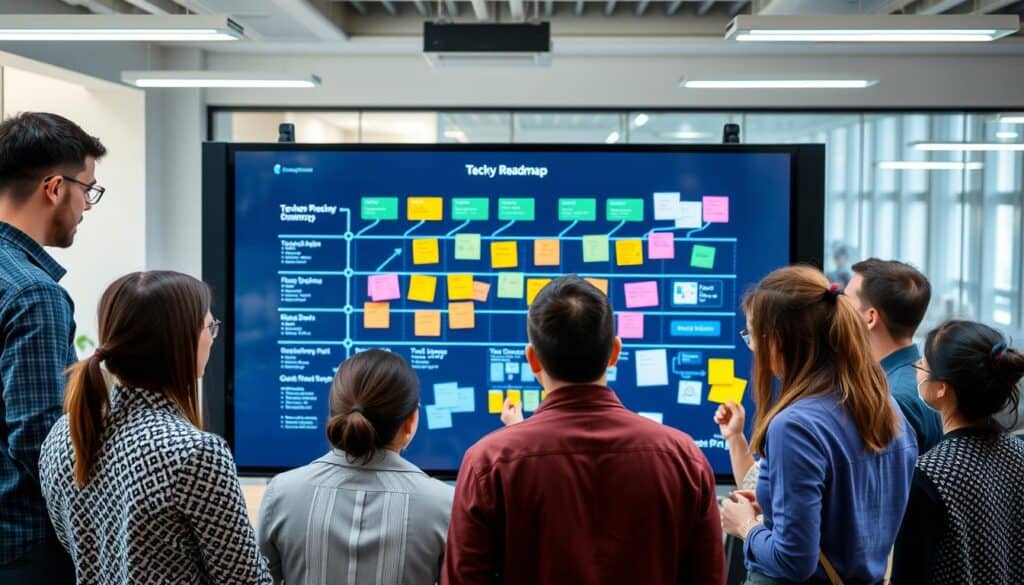
A good technology roadmap is like a guide. It shows what needs to be done and why, in line with the company’s goals. It talks about the tech we have, our aims, plans, progress, resources, challenges, and timelines. This way, everyone involved knows what’s expected and works together well.
Asking for ideas from the team helps make the roadmap suit their needs. This makes the plan better and more likely to succeed in bringing change.
| Benefits of stakeholder engagement | विवरण |
|---|---|
| Alignment with Business Objectives | Ensures technology initiatives are in line with strategic goals. |
| Enhanced Collaboration | Facilitates input from diverse teams for a more comprehensive roadmap. |
| Resource Efficiency | Promotes optimal allocation of resources and minimizes duplicate efforts. |
| Improved Communication | Ensures all stakeholders are aware of their roles and the roadmap’s direction. |
It’s vital to share the tech roadmap with everyone involved. Break down the goals so they’re clear and measurable. Use KPIs to see how things are going. Tech roadmaps are crucial for meeting the company’s big picture goals, making sure tech investments help us reach our vision.
Developing a Timeline for Implementation
Creating a realistic timeline is key to a successful technology plan. It’s important to look at several factors to make a good timeline. This includes checking resource availability, market trends, and what the organization needs.
Factors to Consider
When making a timeline, you need to think about:
- Resource Availability: It’s critical to know what human, financial, and tech resources are available to meet deadlines.
- Market Conditions: Understanding current and upcoming market trends can help adjust the timeline to grab opportunities and avoid risks.
- Organizational Priorities: The timeline should match the organization’s goals to ensure the tech plan helps the business.
Using Gantt Charts
गैंट charts are great for showing the project schedule. They make it easy to see project steps and how they depend on each other. Here’s why Gantt charts are helpful:
| लाभ | विवरण |
|---|---|
| Clear Visualization | Gantt charts show the project timeline clearly, helping everyone understand key moments and how tasks are linked. |
| Enhanced Communication | With Gantt charts, teams can share the project schedule clearly, making sure all understand the plan. |
| Realistic Scheduling | Gantt charts allow for making schedules that really fit with available resources and timelines, avoiding impossible deadlines. |
Using Gantt charts helps in planning and managing tech projects better. They support a more organized and clear way of working. This approach minimizes problems and supports steady progress and growth.
Prioritizing Technology Initiatives
It’s key to get technology initiatives in order for a great tech roadmap. We’ll look at how to weigh both the impact and the effort needed. We’ll also consider the risks. Picking the right projects to start with helps make sure we’re going for the ones that help most.
Impact vs. Effort
It’s crucial to match each initiative’s impact with the effort it requires. We need to see how these efforts help achieve business goals and better the tech setup.
- High Impact, Low Effort: these projects are top priority. They offer big benefits for little input.
- High Impact, High Effort: these need more resources but are worth it for their alignment with company goals.
- Low Impact, Low Effort: these can wait or be scheduled for later.
- Low Impact, High Effort: requires lots of work for minimal returns. Think carefully before committing resources here.
Risk Assessment
Assessing risks along with impact and effort is key. Understanding potential hurdles lets us plan how to overcome them. This way, we can keep projects on track and aim for success.
| Risk Factor | विवरण | Mitigation Strategy |
|---|---|---|
| Technical Challenges | Potential technical hurdles that could delay implementation. | Thorough testing and flexible project plans. |
| Resource Constraints | Limited human or financial resources to execute the project. | Effective resource allocation and continuous monitoring. |
| Market Changes | Shifts in market conditions that affect project relevance. | Dynamic and responsive roadmap adjustments. |
Using these methods for picking initiatives and managing risks helps shape doable tech roadmaps. It tackles IT problems while improving the tech setup for success in both strategy and operation.
Monitoring and Adapting the Technology Roadmap
Keeping a technology roadmap up to date is crucial for success. Using project tracking tools is key. These tools give teams immediate updates. This lets them change the roadmap quickly as needed.
Project Tracking Tools
Tools like Jira, Asana, or Trello are great for watching technology projects closely. They make it easy to update everyone on progress. And they help make sure tasks are clearly assigned.
They come with Gantt charts and can track milestones. This keeps teams focused on near and far-off goals.
| Timeframe | विवरण |
|---|---|
| Short-term | Projects planned for the next few months to a year. |
| Medium-term | Initiatives scheduled for one to three years. |
| Long-term | Tech initiatives spanning beyond three years. |
Adjusting for Changes
Being able to adapt is key in adaptive planning. Technology and business change fast. So, technology roadmaps need regular updates. Using project tracking tools helps teams shift things like resources and goals with ease.
Teams should check on milestones and possible risks often. It’s also smart to keep talking to stakeholders. This way, the roadmap stays relevant and useful.
Summary of Technology Roadmap Best Practices
To create a successful technology roadmap, focusing on technology planning excellence is key. Organizations should follow key best practices to build an effective roadmap strategy.
Setting clear goals is crucial. It’s important to outline goals, timelines, key milestones, and performance metrics. By matching these goals with business objectives, firms can link their vision to practical plans in the roadmap.
Starting with a detailed current state assessment helps identify tech needs. This includes looking at current systems, processes, and tech setups. Engaging stakeholders through interviews and surveys adds valuable insights.
Being flexible in planning is vital. Roadmaps should list projects by importance, urgency, and doability. It’s essential to think about using money, people, and tech wisely. Including strategies for handling risks, like laying out plans for problems and monitoring, is also key.
Employing strong tools like Jira makes managing the roadmap easier. These tools help by providing visual guides, focusing on objectives, and allowing for quick changes. Also, updating the roadmap regularly keeps it current with new trends or needs.
| तत्व | विवरण |
|---|---|
| Goal Setting | Defines clear objectives, timelines, milestones, and performance metrics aligned with strategic business goals. |
| Current State Assessment | Evaluates existing systems, processes, and technology stack for comprehensive understanding. |
| Stakeholder Engagement | Gathers input through interviews, workshops, surveys, and questionnaires for a well-rounded perspective. |
| संसाधनों का आवंटन | Consideration of financial, human, and technological resources for project implementation. |
| जोखिम प्रबंधन | Includes risk identification, mitigation strategies, contingency planning, and performance monitoring. |
| Project Tracking Tools | Utilizes tools like Jira for visual roadmaps, real-time visibility, and agile planning. |
| Regular Reviews and Updates | Ensures the roadmap remains dynamic and responsive to changing business needs. |
Following these best practices helps companies build a strong technology planning excellence. This leads to smarter tech investments and uses.
निष्कर्ष
In our fast-paced tech world, having a good technology roadmap is key. It helps plan out our tech needs in line with the best standards. This plan makes sure we use our resources well, boosting our work and new ideas.
Creating this roadmap starts with a detailed tech check and setting clear, smart goals. Each step is vital for bringing in new tech smoothly. It helps everyone understand why we’re spending on new tech. This unity is key for getting the support needed to meet our goals.
With set timelines and costs, companies can plan better. This makes sure everyone moves together in a well-thought-out way towards tech changes.
Tech roadmaps look at the big and small picture, making them useful on many levels. Keeping them up-to-date lets companies stay on track with their tech and business plans. It leads to smarter choices and lets everyone do their best, pushing growth and new ideas.
पूरक पठन सामग्री एवं विधियाँ
- Strategic planning: स्वोट विश्लेषण (शक्तियाँ, कमजोरियाँ, अवसर, खतरे), परिदृश्य योजना
- Change management: Kotter’s 8-Step Process, ADKAR Model
- Market analysis: पेस्टल विश्लेषण, पोर्टर के पांच बल
- Product Lifecycle Management (PLM): stage-gate process, lean product development
- Business model innovation: बिजनेस मॉडल कैनवास, मूल्य प्रस्ताव डिज़ाइन
- Digital transformation: Digital Maturity Model, Cloud Computing Integration
- Trend analysis: PEST Analysis (Political, Economic, Social, Technological)
अक्सर पूछे जाने वाले प्रश्न
What is a technology roadmap in product development?
A technology roadmap is a strategic plan that uses tech to meet business goals. It spots tech opportunities while preventing wasted resources. This keeps companies agile and focused.
What types of technology roadmaps exist?
Many types of technology roadmaps are used, such as project plan and product roadmaps. Others include platform, technical, and application roadmaps. Each type has a special focus to help industries and companies succeed.
How does one conduct a technology audit?
टेक्नोलॉजी ऑडिट करने के लिए, सबसे पहले अपने तकनीकी सिस्टमों की एक सूची बनाएं। देखें कि वे क्या अच्छा करते हैं और क्या नहीं। इससे आपको यह जानने में मदद मिलेगी कि आपके पास कौन सी तकनीक है और आप उसमें सुधार की योजना बना सकते हैं।
Why are user interviews and surveys important in tech audits?
User interviews and surveys give feedback directly from end-users. They highlight how technology performs and where it can get better. This makes sure your tech plans are on the right track.
How should resources be allocated between innovation and current development?
Balancing resources means looking at what your operations need now and what innovations could bring. Choose projects that offer both value and align with your strategy. This way, you support existing services while exploring new ideas.
What are the key components of a technology planning framework?
एक सुदृढ़ तकनीकी नियोजन ढांचे में स्पष्ट लक्ष्य, संसाधन योजनाएं और सफलता के मापदंड शामिल होते हैं। विभिन्न क्षेत्रों की टीमों के साथ मिलकर काम करना भी महत्वपूर्ण है ताकि विचारों और समर्थन की विविधता प्राप्त की जा सके।
How can stakeholder engagement be ensured in tech roadmap development?
To get everyone involved in tech planning, hold workshops and interviews. Work together. This approach builds a shared commitment and ensures the tech roadmap works for everyone.
How can technology initiatives be prioritized?
Deciding what tech to focus on means looking at how much effort something needs versus its potential benefits. Identifying risks up front helps you tackle challenges early on.
How important is ongoing monitoring in a technology roadmap?
Constantly watching how things are going with your tech roadmap is key. Using tools to track progress lets you adjust to new tech, business shifts, or changes in what customers want.
प्रयुक्त शब्दों की शब्दावली
Conversion Rate (CR): किसी वेबसाइट या लैंडिंग पेज पर आने वाले आगंतुकों का वह प्रतिशत जो वांछित कार्रवाई पूरी करते हैं, जैसे खरीदारी करना या न्यूज़लेटर के लिए साइन अप करना, इसकी गणना रूपांतरणों की संख्या को कुल आगंतुकों की संख्या से विभाजित करके की जाती है।
Customer Relationship Management (CRM): एक कंपनी की वर्तमान और संभावित ग्राहकों के साथ बातचीत का प्रबंधन करने वाली एक प्रणाली, जो व्यावसायिक संबंधों को बेहतर बनाने, ग्राहक प्रतिधारण बढ़ाने और बिक्री वृद्धि को बढ़ावा देने के लिए डेटा विश्लेषण का उपयोग करती है। यह विभिन्न संचार चैनलों को एकीकृत करता है और ग्राहक जुड़ाव को सुव्यवस्थित करने के लिए प्रक्रियाओं को स्वचालित करता है।
Enterprise Resource Planning (ERP): एक ऐसा सॉफ्टवेयर समाधान जो वित्त, मानव संसाधन, विनिर्माण और आपूर्ति श्रृंखला सहित प्रमुख व्यावसायिक प्रक्रियाओं को एक एकीकृत प्रणाली में एकीकृत करता है, ताकि संचालन को सुव्यवस्थित किया जा सके, डेटा की सटीकता में सुधार किया जा सके और पूरे संगठन में निर्णय लेने की क्षमता को बढ़ाया जा सके।
Key Performance Indicator (KPI): a measurable value that demonstrates how effectively an organization is achieving key business objectives, often used to evaluate success at reaching targets.
Product Lifecycle Management (PLM): उत्पाद के जीवनचक्र को उसकी शुरुआत से लेकर, इंजीनियरिंग डिजाइन और विनिर्माण, सेवा और निपटान तक प्रबंधित करने के लिए एक व्यवस्थित दृष्टिकोण, जो उत्पाद की गुणवत्ता में सुधार, बाजार में आने के समय को कम करने और हितधारकों के बीच सहयोग बढ़ाने के लिए लोगों, प्रक्रियाओं, डेटा और प्रौद्योगिकी को एकीकृत करता है।
Specific Measurable Achievable Relevant Timely (SMART): स्पष्ट, मात्रात्मक, प्राप्त करने योग्य, व्यापक लक्ष्यों के अनुरूप और समयबद्ध उद्देश्यों को निर्धारित करने के लिए एक ढांचा, जो प्रगति की प्रभावी योजना और मूल्यांकन को सुगम बनाता है।