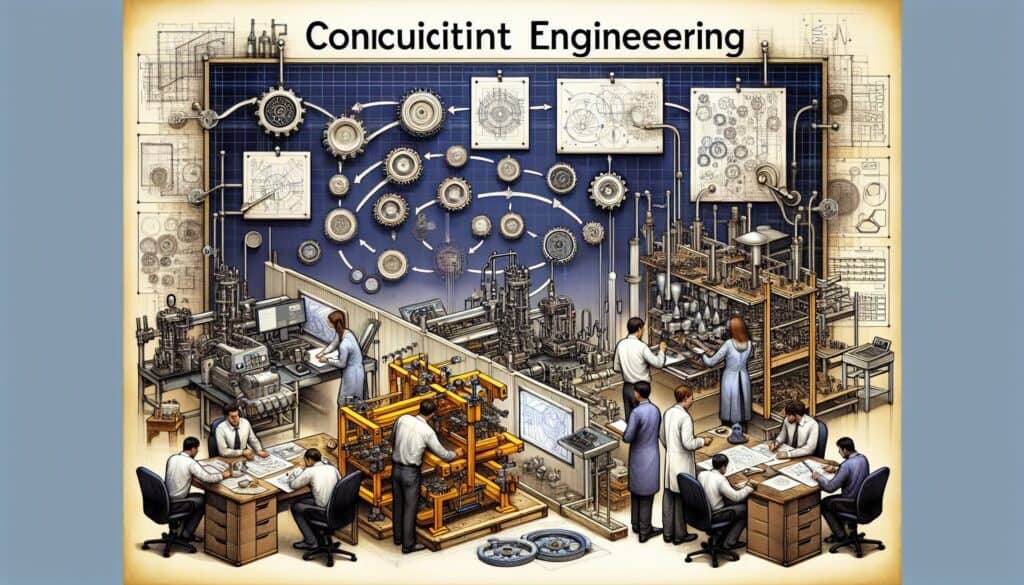
Concurrent Engineering is commonly applied in industries such as aerospace, automotive, consumer electronics, and medical devices, where the intricacies of product design and development demand high levels of collaboration among diverse teams. For instance, in the aerospace sector, manufacturers integrate inputs from design engineers, materials specialists, and manufacturing teams early in the project phase to address weight constraints, safety regulations, and performance metrics concurrently, which significantly contributes to delivering compliant and efficient aircraft. In the automotive industry, cross-functional teams engage from the initial concept through to prototyping, allowing for simultaneous assessment of design feasibility, regulatory compliance, and cost implications. The methodology can be particularly effective during the design phase of projects where time sensitivity and competitive pressures are intense, as it enables real-time feedback loops among engineering, marketing, supply chain, and quality assurance domains. Participation typically includes design engineers, manufacturing specialists, product managers, and marketing professionals, which creates a multidisciplinary environment that supports innovation. This integrated approach not only accelerates development cycles but also minimizes the risk of costly post-launch modifications, thereby enhancing customer satisfaction and loyalty. Furthermore, tools such as computer-aided design (CAD) and product lifecycle management (PLM) software often facilitate these collaborative efforts, allowing teams to share data seamlessly and track project progress in real time.
Die wichtigsten Schritte dieser Methodik
Profi-Tipps
Verschiedene Methoden lesen und vergleichen, Wir empfehlen die
> Umfassendes Methoden-Repository <
zusammen mit den über 400 anderen Methoden.
Ihre Kommentare zu dieser Methodik oder zusätzliche Informationen sind willkommen auf der Kommentarbereich unten ↓ , sowie alle ingenieursbezogenen Ideen oder Links.