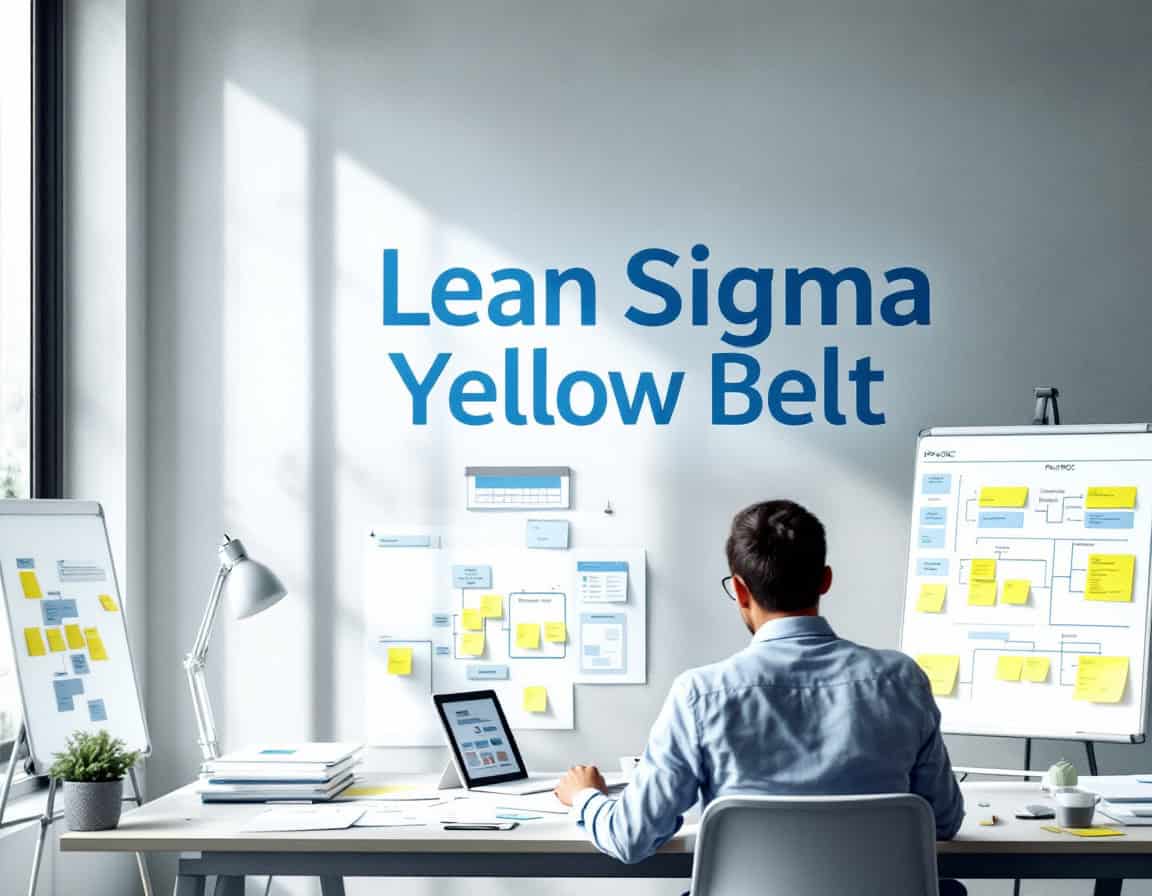
The Lean Sigma Yellow Belt represents the technical rank of the methodology’s hierarchy, connecting basic White-tier awareness with the management remit of a Green-level lead. Practitioners at this stage possess the procedural proficiency to fulfill tactical assignments under the guidance of senior personnel. Rather than overseeing an entire improvement lifecycle, they serve as domain specialists who provide the primary evidence required to validate theoretical models.
Driving efficiency through data analysis and waste reduction in product design processes.
This role preserves the consistency between high-level strategic objectives and the functional realities of routine tasks.
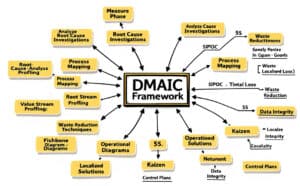
Within the DMAIC framework, these individuals drive the Measure and Analyze phases by conducting root cause investigations and process mapping. They employ tools such as SIPOC, Value Stream Profiling, and Fishbone diagrams to isolate inefficiencies and quantify operational loss. By applying waste-reduction techniques like 5S and Kaizen, they implement localized solutions that stabilize workflows before advanced statistical interventions occur. Their contribution centers on maintaining data integrity and executing the specific control plans that sustain long-term efficiency gains.
The Concepts & Tools to Learn in this Course:
These are the bodies of knowledge that will be assessed in the test below:
Tactical team support: executing specific data collection and process mapping tasks under the guidance of project leads.
Localized waste identification: spotting the 8 types of Muda (waste) within one’s immediate functional work area.
5S workplace organization: applying Sort, Set, Shine, Standardize, and Sustain to routine environments to improve efficiency.
SIPOC scoping: defining high-level process boundaries to prevent project scope creep and align team understanding.
Basic process mapping: visualizing the sequential steps of a functional workflow to identify obvious bottlenecks.
Voice of the Customer (VOC): capturing raw feedback to understand end-user expectations and identify primary pain points.
CTQ translation: converting vague customer desires into specific, measurable performance requirements for the process.
Problem statement drafting: writing concise descriptions of localized operational issues for formal team review.
5 Whys analysis: using iterative questioning to find the direct, non-statistical cause of simple defects.
Fishbone diagramming: categorizing potential root causes into logical groups like Methods, Materials, or Machines.
Pareto prioritization: identifying the “vital few” causes responsible for the majority of process issues.
Spaghetti mapping: tracking the physical path of items or people to reveal hidden motion and transport waste.
Poka-Yoke design: implementing simple physical mistake-proofing devices to prevent human error at the source.
Visual management: using color-coded signals or boards to communicate real-time process status to the team.
Standard work creation: documenting the “best known way” to perform a specific task to ensure consistency.
Value-added assessment: identifying which process steps actually increase the product’s worth from the customer’s perspective.
Go to Gemba (process walk): observing the actual work process firsthand to identify real-world issues rather than relying on reports.
Data integrity maintenance: ensuring the accuracy and reliability of raw data collected directly from the process floor.
Control plan adherence: following the daily monitoring routines required to sustain long-term efficiency gains.
Our Suggested Readings
The list below is a special selection of our original articles, tools and methodologies available on this site.
Tip: the big dot at the start of each title indicates if that post/article has already been read ( ● ), or not ( ○ ). Refresh the page if necessary.
Tip: the reading progress is recorded either in a cookie (if you are not logged in or no account created), or in your site profile. Use the later to be sure not to loose your progression.
As soon as you start a given article, your progress will be indicated on top of each page to help you finish and move on to the next.
Note: for this particular course, we recommend to read the articles in that order.
After you are familiar with the lectures above, so as having done your own readings, we recommend attending the Exam below.
The test consists of 20 questions in random order, out of many more, to insure novelty each time. Each completely correct answer gets you 10 points. You get a full correction at the end of the test.
If the course has different levels, the current test does not include questions of lower levels, making it … hardthat level!
radio-buttons: only 1 correct answer must be selected
check-boxes: 1 or several answers must be checked (with strict all-good-or-nothing grading logic)
Tip: mouse over “Hint” to get an advise for the response.
Only innovation.world members can see it below and attend it.