Product Design, Manufacturing & Innovation Resources
بيت » المعادن غير المتبلورة (الزجاج المعدني)

المعادن غير المتبلورة (الزجاج المعدني)

1960
  • Pol Duwez
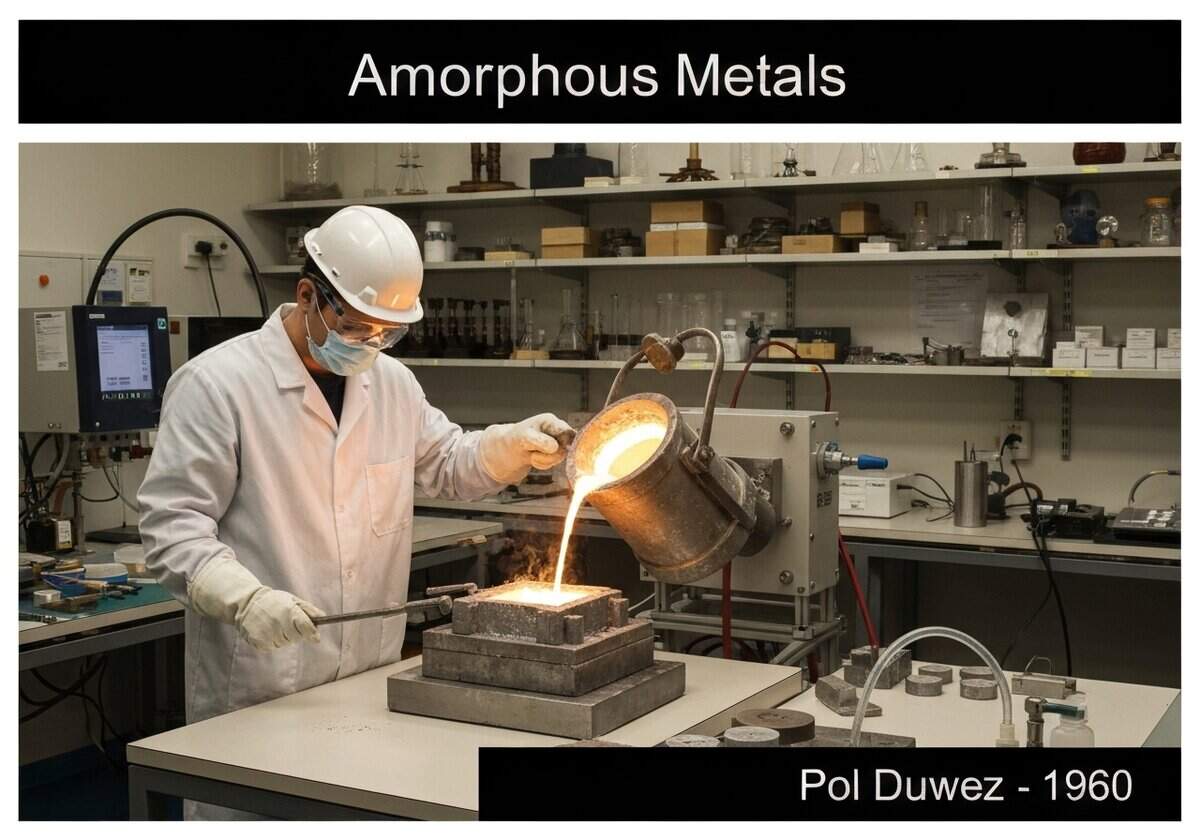
مشهد مختبري يظهر فيه عالم يصب سبيكة منصهرة لدراسة المعادن غير المتبلورة في فيزياء الحالة الصلبة.

(صورة توضيحية فقط)

Amorphous metals, or metallic glasses, are alloys with a disordered, non-crystalline atomic structure, similar to that of common glass. This is achieved by cooling the molten alloy at extremely high rates (e.g., [latex]10^6[/latex] K/s), preventing the atoms from organizing into a regular crystal lattice. Lacking grain boundaries, they exhibit unique properties like high strength, elasticity, and مقاومة التآكل.

يتطلب إنشاء معدن غير متبلور تجاوز التبلور أثناء التصلب. كل سائل، عند تبريده، له الديناميكية الحرارية driving force to crystallize, but this process takes time for atoms to arrange themselves. By cooling the molten alloy faster than this critical rate, the liquid’s disordered structure is ‘frozen’ into the solid state. The first amorphous alloy, Au₇₅Si₂₅, was produced by Pol Duwez’s team using a ‘gun technique’ to propel a molten droplet onto a cold copper substrate, achieving the necessary rapid quenching.

A significant challenge was the limitation to very thin ribbons or foils, as heat could not be extracted quickly enough from thicker sections. This led to the development of Bulk Metallic Glasses (BMGs). BMGs are multi-component alloys (typically 3 or more elements) with large atomic size mismatches, which frustrates the crystallization process and dramatically lowers the required critical cooling rate, allowing for the casting of parts several centimeters thick. Unlike crystalline metals that deform plastically through dislocation motion, metallic glasses deform elastically to much higher strains. Once their elastic limit is exceeded, deformation localizes into narrow regions called shear bands, often leading to catastrophic failure with little to no overall الليونة. This combination of extreme strength but limited toughness is a key area of ongoing research.

UNESCO Nomenclature: 2211
– Solid state physics

يكتب

Material

خلل

Incremental

الاستخدام

Niche/Specialized

مقدمات

  • فهم تكوين الزجاج في السيليكات والبوليمرات
  • تطوير تقنيات التصلب السريع (على سبيل المثال، الغزل المنصهر، إخماد الرش)
  • النظريات الديناميكية الحرارية للنواة ونمو البلورات
  • مفهوم درجة حرارة انتقال الزجاج في البوليمرات

التطبيقات

  • نوى المحولات عالية الكفاءة بسبب انخفاض فقدان الهستيريسيس المغناطيسي
  • السلع الرياضية الراقية مثل رؤوس مضارب الجولف ومضارب البيسبول
  • أغلفة الأجهزة الإلكترونية الاستهلاكية (مثل الهواتف الذكية والساعات)
  • شفرات ومشارط جراحية دقيقة
  • طلاءات مقاومة للتآكل للأجزاء الصناعية

براءات الاختراع:

NA

أفكار ابتكارية محتملة

  • الدعامات الطبية المتوافقة حيوياً والقابلة للامتصاص والتي تذوب بشكل يمكن التحكم فيه بمرور الوقت
  • طلاءات مقاومة للتآكل وذاتية الشحذ لأدوات القطع والآلات الصناعية
  • نوابض متقدمة ذات عائد طاقة شبه مثالي للأدوات عالية الدقة
  • مكونات هيكلية خفيفة الوزن وعالية القوة لصناعات الطيران والدفاع
  • وسائط تخزين البيانات من الجيل التالي باستخدام خصائص مغناطيسية فريدة
  • highly efficient المحفزات with unique surface electronic structures
  • مقذوفات خارقة للدروع ذات قدرات اختراق فائقة
  • corrosion-proof marine hardware and تحلية المياه plant components
  • أغشية خلايا الوقود ذات المتانة والأداء المعززين
  • مكونات صوتية عالية الدقة مثل أغشية مكبرات الصوت وبرامج تشغيل سماعات الرأس
Related to: amorphous metal, metallic glass, non-crystalline, rapid cooling, bulk metallic glass, glass transition, high strength, مقاومة التآكل, solid state physics, shear bands.

السياق التاريخي

المعادن غير المتبلورة (الزجاج المعدني)

1960
1960
1960
1960
1960
1960
1960
1960
1960
1960
1960
1960
1960
1960
1960

(إذا كان التاريخ غير معروف أو غير ذي صلة، على سبيل المثال "ميكانيكا الموائع"، يتم توفير تقدير تقريبي لظهوره الملحوظ)

أحدث الإضافات

أهم المنشورات والمقالات

أفضل الأدوات الأصلية

السنة العاشرة عيد

الصور والتنزيلات بالحجم الكامل متاحة فقط، ومجانية تمامًا، للأعضاء المسجلين.