Product Design, Manufacturing & Innovation Resources
بيت » ديبورا رقم

ديبورا رقم

1960
  • Markus Reiner
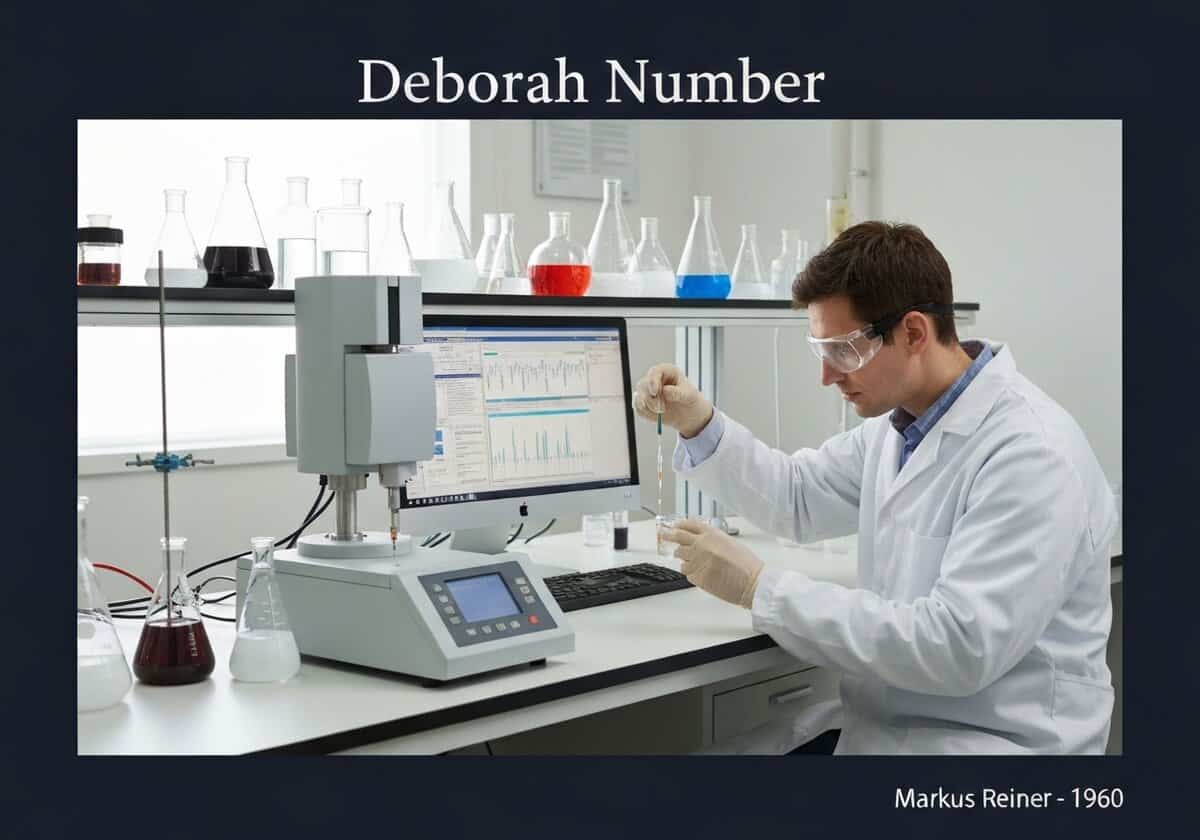
تجربة ريولوجية معملية لقياس رقم ديبورا في المواد السائلة.

(صورة توضيحية فقط)

The Deborah number is a dimensionless quantity in rheology, used to characterize the fluidity of materials. It is the ratio of the relaxation time, which is an intrinsic property of the material, to the characteristic time scale of the experiment or observation. The formula is [latex]De = \frac{t_c}{t_p}[/latex], where [latex]t_c[/latex] is the relaxation time and [latex]t_p[/latex] is the observation time.
يُوفّر رقم ديبورا إطارًا أساسيًا لفهم ما إذا كانت المادة ستتصرف كسائل أم كجسم صلب في ظل ظروف مُحددة. يُشير رقم ديبورا المرتفع (De > 1) إلى سلوك شبيه بالمواد الصلبة، حيث لا يتوفر للمادة وقت كافٍ للاسترخاء والتدفق قبل اكتمال عملية التشوه. في هذه الحالة، تسود الخصائص المرنة للمادة. ومن الأمثلة الكلاسيكية على ذلك معجون السيليكون، الذي يُمكن تمديده ببطء مثل السائل (De < 1).

Conversely, a low Deborah number ([latex]De << 1[/latex]) signifies fluid-like behavior. The observation time is much longer than the material’s relaxation time, allowing molecular chains or particles to rearrange and flow in response to the applied stress. Most common liquids like water have extremely short relaxation times, so their Deborah number is almost always very low in everyday situations, and they behave as simple viscous fluids.

The concept was famously proposed by Markus Reiner, who named it after a line in a song by the prophetess Deborah in the Bible: “The mountains flowed before the Lord”. This poetic reference captures the essence of the concept: even seemingly solid materials like mountains can flow if observed over a sufficiently long timescale (geological time). The Deborah number is fundamental in process engineering, particularly for viscoelastic materials like polymers, where processing speeds (determining [latex]t_p[/latex]) must be carefully controlled relative to the material’s relaxation time ([latex]t_c[/latex]) to avoid defects like melt fracture.

UNESCO Nomenclature: 2203
– Continuum mechanics

يكتب

نظام مجرد

خلل

Substantial

الاستخدام

استخدام واسع النطاق

مقدمات

  • مفهوم اللزوجة (newton)
  • نظرية المرونة (هوك)
  • تطوير ميكانيكا الاستمرارية
  • فهم عمليات الاسترخاء الجزيئية

التطبيقات

  • معالجة البوليمر
  • صناعة الزجاج
  • الجيوفيزياء (الحمل الحراري للوشاح)
  • معالجة الأغذية

براءات الاختراع:

NA

أفكار ابتكارية محتملة

  • طلاءات ذكية تتصلب عند الاصطدام
  • مواد ذاتية الشفاء مع أوقات استرخاء قابلة للضبط
  • أحبار الطباعة ثلاثية الأبعاد المتقدمة التي تحافظ على شكلها بعد البثق
  • مخمدات الزلازل التي تتصرف مثل المواد الصلبة أثناء الزلزال ولكنها تتدفق لإعادة الضبط
  • أنظمة توصيل الأدوية مع إطلاق يتم التحكم فيه بالوقت بناءً على ظروف التدفق
  • القوام الغذائي التكيفي الذي يتغير أثناء المضغ
  • محركات الروبوتات الناعمة القابلة للبرمجة
  • المواد الجيوتقنية لتثبيت التربة ضد الأحمال السريعة
Related to: deborah number, rheology, viscoelasticity, dimensionless number, relaxation time, fluid dynamics, continuum mechanics, markus reiner.

السياق التاريخي

ديبورا رقم

1950
1957
1958
1960
1960
1960
1960
1950
1957
1957
1959-11
1960
1960
1960
1960

(إذا كان التاريخ غير معروف أو غير ذي صلة، على سبيل المثال "ميكانيكا الموائع"، يتم توفير تقدير تقريبي لظهوره الملحوظ)

أحدث الإضافات

أهم المنشورات والمقالات

أفضل الأدوات الأصلية

السنة العاشرة عيد

الصور والتنزيلات بالحجم الكامل متاحة فقط، ومجانية تمامًا، للأعضاء المسجلين.