Product Design, Manufacturing & Innovation Resources
بيت » التحفيز الكهربائي

التحفيز الكهربائي

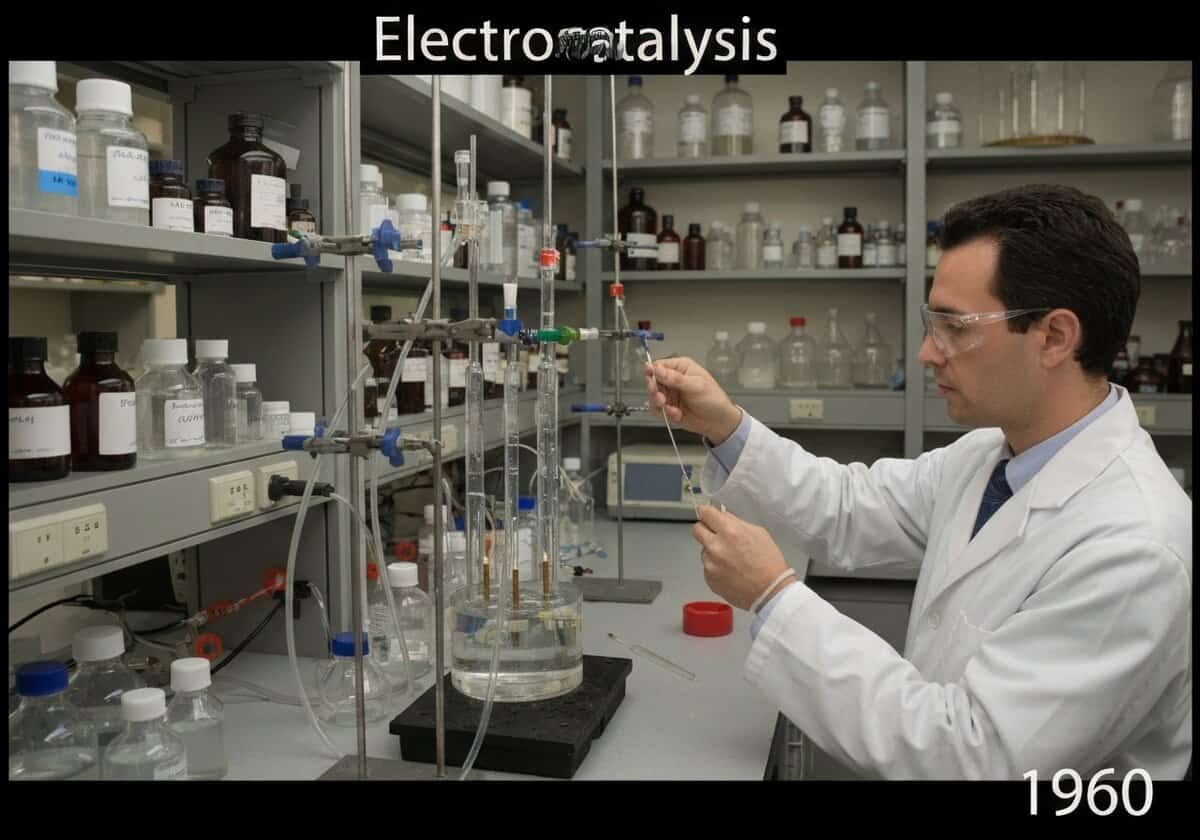
1960
أبحاث التحفيز الكهربائي في مختبر باستخدام إعداد خلية كهروكيميائية.

(صورة توضيحية فقط)

Electrocatalysis is a specific form of catalysis that accelerates the rate of electrochemical reactions occurring at an electrode surface. It is a subfield of both catalysis and electrochemistry. Electrocatalysts are crucial for increasing the efficiency and lowering the overpotential (الجهد الإضافي المطلوب لتشغيل التفاعل بمعدل معقول) لتفاعلات تحويل الطاقة الرئيسية.
Electrocatalysis is fundamentally linked to heterogeneous catalysis but with the added dimension of an applied electrical potential controlling the reaction’s driving force. The المحفز is the electrode material itself or a substance coated onto it. Its function is to lower the activation energy for electron transfer steps. A key performance metric for an electrocatalyst is the overpotential ([latex]\eta[/latex]), defined as the difference between the thermodynamic potential and the actual potential required to achieve a certain current density. An efficient electrocatalyst minimizes [latex]\eta[/latex].

The performance is often analyzed using a Tafel plot, which shows a linear relationship between the logarithm of the current density ([latex]log(j)[/latex]) and the overpotential ([latex]\eta[/latex]). The slope of this plot, the Tafel slope, provides insight into the reaction mechanism. For example, the oxygen evolution reaction (OER) and oxygen reduction reaction (ORR) are notoriously sluggish, requiring large overpotentials. Developing cheap, abundant, and efficient electrocatalysts (e.g., alternatives to platinum) for these reactions is a major goal in renewable energy research, as they are critical for technologies like water electrolyzers, fuel cells, and metal-air batteries. The Sabatier principle also applies here, stating that the ideal catalyst binds intermediates neither too strongly nor too weakly.

UNESCO Nomenclature: 2202
– Physical chemistry

يكتب

Chemical Process

خلل

Substantial

الاستخدام

استخدام واسع النطاق

مقدمات

  • Michael Faraday’s laws of التحليل الكهربائي
  • Walther Nernst’s work on the thermodynamics of electrochemical cells
  • Julius Tafel’s discovery of the relationship between current and overpotential
  • تطوير الجهد الكهربائي للقياسات الكهروكيميائية

التطبيقات

  • خلايا الوقود (على سبيل المثال، تفاعلات أكسدة الهيدروجين واختزال الأكسجين)
  • أجهزة تحليل الماء بالكهرباء لإنتاج الهيدروجين
  • التخليق الكهربائي للمواد الكيميائية
  • منع التآكل
  • أجهزة الاستشعار الكهروكيميائية

براءات الاختراع:

NA

أفكار ابتكارية محتملة

  • non-precious metal المحفزات (e.g., based on iron, cobalt, nickel) for fuel cells
  • محفزات كهربائية أحادية الذرة لتعزيز النشاط والمتانة
  • المحفزات الكهربائية لتحويل ثاني أكسيد الكربون إلى وقود ومواد كيميائية
  • المحفزات الكهربائية المترادفة التي تؤدي خطوات تفاعل متعددة على قطب كهربائي واحد
  • محفزات كهربائية مستوحاة من المواد الحيوية تحاكي المواقع النشطة للإنزيم
  • المحفزات الكهربائية ذاتية الشفاء التي يمكنها إصلاح الضرر أثناء التشغيل
  • high-entropy alloy catalysts for improved performance in complex reaction environments
  • التحفيز الكهربائي بمساعدة الضوء (التحفيز الكهربائي الضوئي) للتفاعلات التي تعمل بالطاقة الشمسية
  • أجهزة استشعار كهروكيميائية مرنة وقابلة للارتداء
  • أنظمة تحفيز كهربائي لتثبيت النيتروجين لإنتاج الأمونيا
ذات صلة بـ: التحفيز الكهربائي، الكيمياء الكهربائية، الجهد الزائد، fuel cell، تحليل الماء، قطب كهربائي، مخطط تافل، تفاعل توليد الأكسجين، انتقال الإلكترون، كثافة التيار.

السياق التاريخي

التحفيز الكهربائي

1960
1960
1960
1960
1960
1960
1961
1960
1960
1960
1960
1960
1960
1960-05-16
1962

(إذا كان التاريخ غير معروف أو غير ذي صلة، على سبيل المثال "ميكانيكا الموائع"، يتم توفير تقدير تقريبي لظهوره الملحوظ)

أحدث الإضافات

أهم المنشورات والمقالات

أفضل الأدوات الأصلية

السنة العاشرة عيد

الصور والتنزيلات بالحجم الكامل متاحة فقط، ومجانية تمامًا، للأعضاء المسجلين.