Product Design, Manufacturing & Innovation Resources
بيت » The Hannover Principles

The Hannover Principles

1992
  • William McDonough
  • Michael Braungart
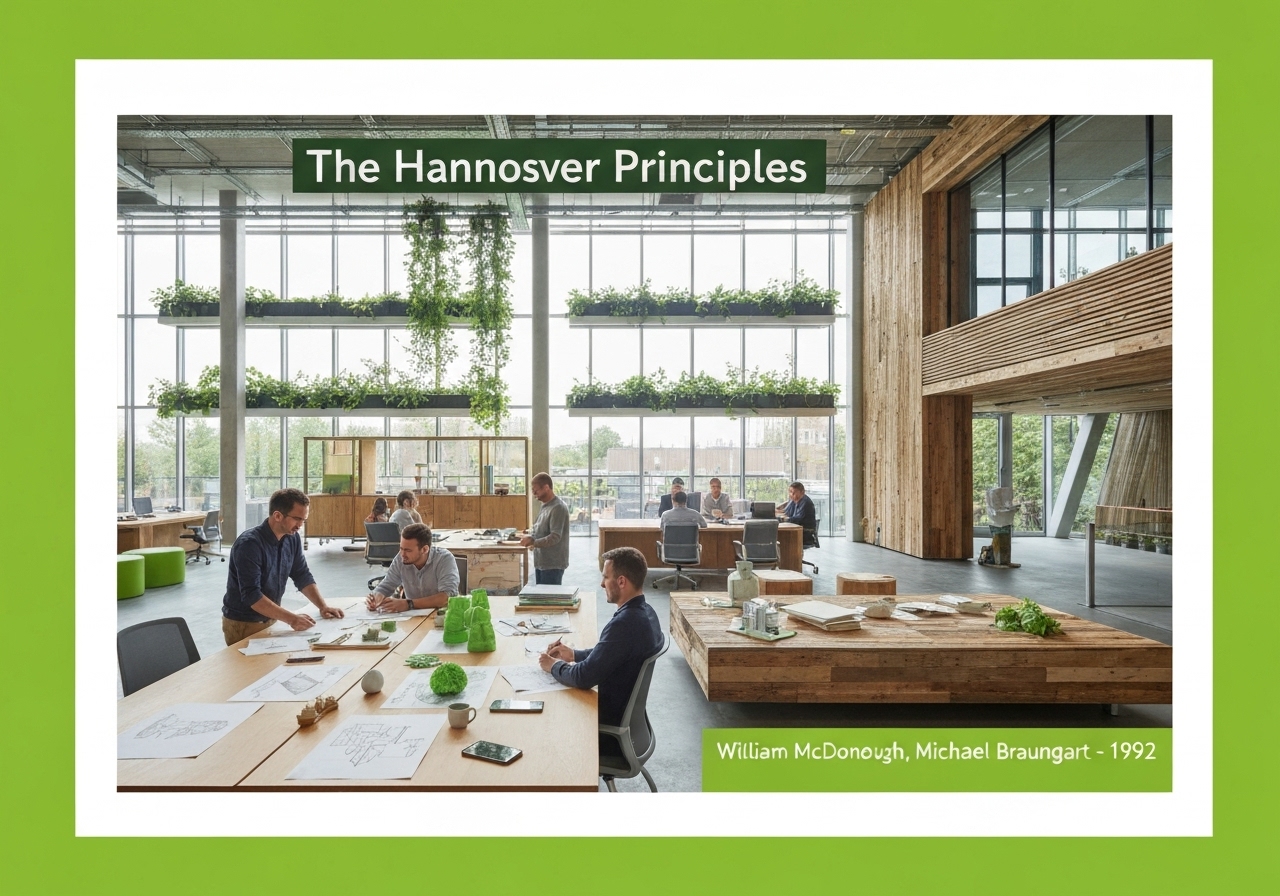
Architectural office demonstrating sustainable design principles from the Hannover Principles.

(صورة توضيحية فقط)

A set of nine foundational principles for التصميم المستدام, developed by William McDonough and Michael Braungart. They advocate for the rights of humanity and nature to coexist, recognize interdependence, respect relationships between spirit and matter, accept responsibility for design consequences, create safe objects of long-term value, eliminate waste, rely on natural energy flows, and understand the limitations of design.

تم وضع مبادئ هانوفر عام ١٩٩٢ بتكليف من مدينة هانوفر الألمانية، لتكون إطارًا توجيهيًا لتصميم معرض إكسبو ٢٠٠٠ العالمي. وقد تعاون المهندس المعماري ويليام ماكدونو والكيميائي مايكل براونغارت لصياغة هذا الإعلان عن الترابط بين التصميم والبيئة. تتجاوز هذه المبادئ مجرد تقليل الضرر (الكفاءة البيئية) إلى فلسفة خلق تأثيرات إيجابية ومتجددة (الفعالية البيئية). إنها ليست قائمة مرجعية إلزامية، بل مجموعة من القيم تهدف إلى إلهام المصممين في جميع التخصصات.

The nine principles are: 1. Insist on the rights of humanity and nature to co-exist. 2. Recognize interdependence. 3. Respect relationships between spirit and matter. 4. Accept responsibility for the consequences of design. 5. Create safe objects of long-term value. 6. Eliminate the concept of waste. 7. Rely on natural energy flows. 8. Understand the limitations of design. 9. Seek constant improvement by sharing knowledge. These principles laid the intellectual groundwork for later concepts like من المهد إلى المهد design, fundamentally shifting the conversation from doing “less bad” to actively doing “more good” through design.

UNESCO Nomenclature: 3301
– Architecture

يكتب

نظام مجرد

خلل

Substantial

الاستخدام

استخدام واسع النطاق

مقدمات

  • Rachel Carson’s “silent spring” (1962)
  • the limits to growth report (1972)
  • Brundtland report “our common future” (1987)
  • principles of industrial ecology
  • early environmental movements of the 1960s and 1970s

التطبيقات

  • expo 2000 in Hannover, Germany
  • ford river rouge complex revitalization
  • Herman Miller “mirra” chair design
  • cradle to cradle certification program

براءات الاختراع:

NA

أفكار ابتكارية محتملة

  • ai-driven design tools that optimize projects against the nine principles
  • a global certification standard for products based on their adherence to the principles
  • educational curricula for k-12 integrating the principles into stem learning
  • urban planning software that simulates the long-term ecological impact of development based on these values
  • a consumer-facing “hannover score” for products and services
  • smart city infrastructure that dynamically manages resources according to natural energy flows
  • corporate sustainability reporting frameworks directly mapped to the principles
  • biomimetic materials designed to eliminate the concept of waste entirely
  • policy frameworks for municipal governments to guide sustainable procurement
  • virtual reality experiences that allow designers to visualize the lifecycle consequences of their choices
Related to: Hannover principles, التصميم المستدام, William McDonough, Michael Braungart, eco-effectiveness, green building, design philosophy, expo 2000, environmental ethics, الاقتصاد الدائري.

السياق التاريخي

The Hannover Principles

1990
1990
1991
1992
1993
1994
1997
1990
1990
1990
1992
1992
1993-07-22
1996
1998

(إذا كان التاريخ غير معروف أو غير ذي صلة، على سبيل المثال "ميكانيكا الموائع"، يتم توفير تقدير تقريبي لظهوره الملحوظ)

أحدث الإضافات

أهم المنشورات والمقالات

أفضل الأدوات الأصلية

السنة العاشرة عيد

الصور والتنزيلات بالحجم الكامل متاحة فقط، ومجانية تمامًا، للأعضاء المسجلين.