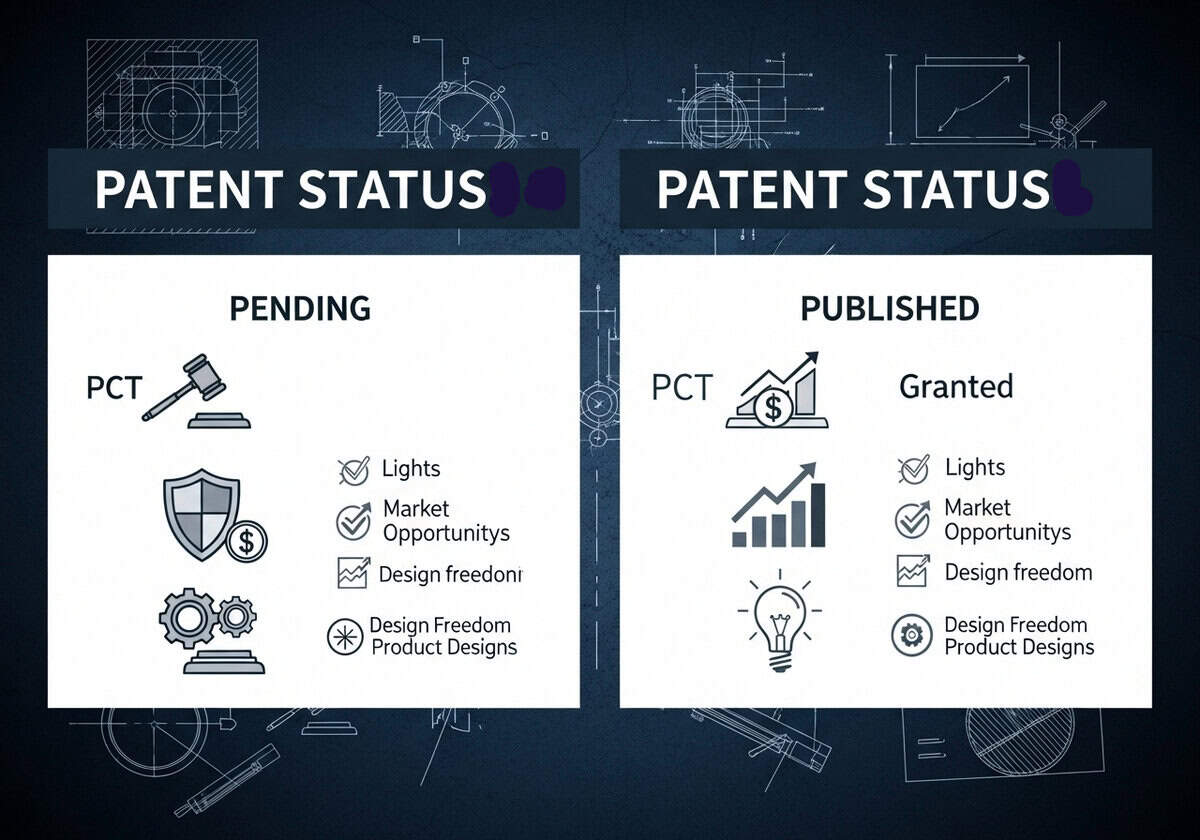
For an engineer or product designer, understanding the specific براءة اختراع status provides direct insight into design freedom and competitive intelligence. A patent’s current stage dictates the level of legal risk, what can be publicly disclosed, and how to position a new product. Mistaking a published application for a granted patent could lead to building a product that will infringe, resulting in costly redesigns or litigation. Conversely, recognizing that a competitor’s patent is only at the PCT application stage reveals a long timeline before any enforceable rights exist, creating a window of opportunity for market entry or the development of alternative, non-infringing solutions. هذه المعرفة تُحدث تحولاً الملكية الفكرية من مجرد تجريد قانوني إلى دليل عملي لاتخاذ القرارات التقنية والاستراتيجية.
Each patent status carries a distinct set of possibilities and limitations described in detail below. The “patent pending” status, for example, allows a company to market an invention and deter copycats while the application is still under review. A “granted patent” shifts the focus to enforcement and marking products with the patent number to secure full damages against infringers.
النقاط الرئيسية
- PCT application enables global patent filing strategy.
- Published applications provide early disclosure for prior art.
- A granted patent confers legal rights for enforcement.
- Understand differences in legal patent status and protection scope.
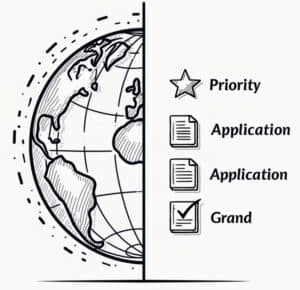
- Follow systematic process from priority to grant efficiently.
The PCT Application as an International Pathway
A Patent Cooperation Treaty (PCT) application serves as an international mechanism for patenting inventions across multiple jurisdictions.

This pathway allows inventors to secure their intellectual property rights in several countries through a single application, which simplifies the initial steps in protecting innovations globally. By filing a PCT application, applicants effectively postpone the high costs associated with filing in individual countries while retaining the option to pursue patents later on in different markets. The PCT has been adopted by 155 contracting states, which increases its importance as a strategic tool for international business and trade.
The PCT application process bifurcates into two main phases: the international phase and the national phase. During the international phase, applicants receive an International Search Report (ISR) that outlines potential prior art. This process enables inventors to evaluate the viability of their inventions before incurring additional expenses in foreign patent offices. Once the ISR is received, applicants can decide in which member states to pursue their patent rights, allowing for strategic market entry decisions.
An important aspect of the PCT system is also its unifying feature, which aggregates data and promotes information sharing among member states, leading to enhanced opportunities for technology licensing.
The early international filing date provided by the PCT is advantageous because it establishes priority, allowing inventors to claim their invention dates before later filings in national jurisdictions.
The traditional approach: consider filing a PCT application if you anticipate wanting patent rights in multiple countries, as it maximizes your options and provides essential time to assess commercial viability before committing to national filings.
نصيحة الخبراء: strategically use the Chapter II demand for International Preliminary Examination to obtain a positive patentability report before entering the national phase.
Many applicants file a PCT application, receive the initial search report and written opinion, and then simply wait for the 30-month deadline to enter the national phase. An expert approach, however, treats the international phase as a dry run for actual examination. If the initial written opinion raises objections, instead of waiting to fight the same battle in ten different countries, you can file a “Chapter II demand.” This allows you to submit arguments and claim amendments directly within the PCT system under Article 34. The goal is to resolve the examiner’s objections and persuade them to issue a positive International Preliminary Report on Patentability (IPRP). A favorable IPRP is a powerful tool; it can be used to accelerate examination and increase the likelihood of allowance in many national offices through the Patent Prosecution Highway (PPH) program, saving immense time and money by solving the core patentability issues once, at a centralized level.
(راجع جدول المقارنة الكبير أدناه للاطلاع على جميع نقاط PCT، براءة اختراع قيد الانتظار(مقارنة بين براءات الاختراع المنشورة والممنوحة)
The Pending Patent Status
A pending patent is a patent application that has been formally filed with a national or regional patent office and is awaiting a final decision. During this period, the application is under review by a patent examiner who determines if the invention meets the legal standards for patentability, such as novelty and non-obviousness.
This examination phase involves a formal dialogue between the applicant and the examiner, where issues are addressed through office actions and responses.
The entire period from the initial filing until the application is either granted or abandoned is known as the pending state.
يتمثل الأثر الرئيسي لوضع براءة الاختراع هذا في أنه يسمح لمقدم الطلب بوضع علامة "براءة اختراع قيد الانتظار" على المنتجات. يُحذر هذا التصنيف المنافسين من وجود طلب للحصول على براءة اختراع، وأن حقوقًا حصرية قد تُمنح في المستقبل. ولا تمنح براءة الاختراع قيد الانتظار أي حق فوري في منع الآخرين من صنع أو بيع الاختراع؛ فهو ليس أداة قانونية ملزمة. مع ذلك، بمجرد نشر الطلب، قد يُنشئ حقوقًا مؤقتة، تُمكّن المالك من المطالبة بتعويضات عن الأنشطة المخالفة التي حدثت خلال فترة المراجعة، ولكن فقط بعد منح براءة الاختراع رسميًا. كما أن بنود الحماية التي تُحدد نطاق الاختراع قابلة للتغيير طوال فترة الفحص هذه.
نصيحة الخبراء: strategically use continuation applications to keep your invention’s subject matter in a pending state, even after an initial patent is granted.
Before you pay the issue fee for an allowed application, file a continuation application. This new application inherits the priority date of the original but remains pending and open for examination. This creates a powerful strategic advantage: it can allow you to pursue a different set of claims if a competitor launches a product that tries to design around your first patent’s claims. You can draft new claims in the continuation, supported by your original disclosure, that are specifically designed to cover that competitor’s product. This tactic transforms a static patent into a dynamic offensive tool, creating a “picket fence” of protection around your core technology and making it significantly harder for others to operate in your space.
(refer to the big comparison table below for all the PCT, pending patent, published patent and granted patent comparison)
Definition of Published Patent Application and Its Role in Prior Art
A published patent application refers to a patent application that has been exposed to the public domain, generally 18 months after the initial filing date. This publication includes the details outlined in the application, such as claims, drawings, and descriptions.
Many jurisdictions require that applications be published to maintain transparency and inform the public on advancements in technology. This publication serves as a critical communication tool for researchers, competitors, and potential licensees in the industry.
One of the primary roles of a published patent application is to establish prior art: prior art is any evidence that your invention already exists, which can be critical when determining the novelty of a patent. Once a patent application is published, it adds to the documented knowledge base that others must reference when filing their own patent applications.
The publication of a patent does not imply that it has been granted; thus, it does not provide legal protection for the applicant’s ideas until a patent is granted. This distinction is important for businesses considering entering markets based on published applications.
نصيحة: always monitor published patents in your industry to stay aware of technological advancements and competitive threats. To optimize their intellectual property management, applicants should maintain a robust portfolio review system that assesses the value and relevance of each patent, considering shifts in technology and market conditions. Regularly updating this strategy can enhance flexibility and responsiveness in innovation management.
(refer to the big comparison table below for all the PCT, pending patent, published patent and granted patent comparison)
The Granted Patent and Its Enforceable Rights
A granted patent status represents a legal recognition by a governmental authority that an invention is novel, non-obvious, and has utility. Upon grant, the inventor obtains exclusive rights to the invention, typically for a duration ranging from 15 to 20 years, depending on the jurisdiction. This protection prohibits others from making, using, selling, or distributing the patented technology without the inventor’s permission.
The exclusive nature of these rights allows the patent holder to control the commercial landscape surrounding their invention.
The enforceability of a granted patent means that the patent holder has clear recourse against unauthorized use. Violation of a granted patent can lead to legal action, where the patent owner may seek remedies such as injunctions or monetary damages. Additionally, in some jurisdictions, a successful infringement suit can result in treble damages—three times the actual damages incurred—further emphasizing the power of a granted patent as a competitive tool in the market.
A granted patent is indispensable for those seeking competitive protection, while a PCT application is suitable for early-stage development and market evaluation.
(refer to the big comparison table below for all the PCT, pending patent, published patent and granted patent comparison)
The Patent Status Timeline
A patent progresses through a series of states from its initial application to the end of its life. These stages reflect the status of the patent application or the granted patent in the records of the relevant patent office, such as the United States Patent and Trademark Office (USPTO).
Pre-Grant States: The Application Process
The journey of a patent begins with the filing of an application, which then undergoes a thorough examination process. During this pre-grant phase, the application can be in one of the following states:
- Provisional application: an initial, less formal application that establishes a filing date for the invention. This allows the inventor to claim “patent pending” status for one year while they refine the invention or seek funding.
- Non-provisional application: the formal patent application that is examined by the patent office. This application must contain a detailed description of the invention and specific claims that define the scope of the protection sought.
- International (PCT) application: the Patent Cooperation Treaty (PCT) provides a unified procedure for filing a single patent application to seek protection in a large number of countries simultaneously. An application filed under the PCT is called an “international application” or “PCT application.” It’s important to note that a PCT application itself does not result in a granted “international patent,” as there is no such thing. Instead, it simplifies the process of seeking patent protection in multiple countries. The PCT application has two main phases: the “international phase” and the “national phase.” During the international phase, a single application is filed, and an international search is conducted. To proceed toward the grant of a patent in specific countries, the applicant must then enter the “national phase,” which involves filing necessary documents and fees with the individual patent offices of the desired countries. This typically must be done within 30 months from the initial priority date, giving applicants more time to decide where to seek protection and to delay costs.
- براءة اختراع قيد الانتظار: this patent status applies once a patent application (including a provisional, non-provisional, or PCT application during its international phase) has been filed. It indicates that an invention is the subject of a pending patent application but does not yet have granted rights.
- Under examination: after filing, a patent examiner reviews the non-provisional application to ensure it meets the requirements for patentability, such as being novel, useful, and non-obvious. This stage often involves communication between the applicant and the examiner, known as “office actions” and responses. When a PCT application enters the national phase, it is also examined by the national or regional patent office according to their specific laws and procedures.
- Published application: many patent applications are published 18 months after the earliest filing date, making the details of the invention publicly available. PCT applications are also typically published after this period.
- Withdrawn application: an applicant may decide to voluntarily withdraw their application before a final decision is made by the patent office.
- Abandoned application: an application can become abandoned if the applicant fails to respond to a requirement from the patent office within the specified time frame, such as not replying to an office action or failing to pay required fees. Abandonment can be unintentional, unavoidable, or intentional. In some cases, an unintentionally abandoned application can be revived. A PCT application will be considered abandoned if the applicant does not enter the national phase in at least one member state before the deadline.
Post-Grant States: The Granted Patent
Once the patent office determines that the invention is patentable, the patent is granted, and it enters the post-grant phase. The states during this period include:
- Issued or granted patent: the patent has been officially granted, and the patent holder now has the exclusive right to prevent others from making, using, selling, or importing the patented invention for a set period.
- Active: a granted patent is considered active as long as it is in force. This requires the payment of periodic maintenance fees.
- Enforceable: an active patent is enforceable, meaning the patent holder can take legal action against infringers.
Inactive and Expired States
A patent’s life eventually comes to an end, at which point it enters the public domain. The states associated with the end of a patent’s term or its premature termination include:
- Lapsed or expired for non-payment of Fees: if the required maintenance or renewal fees are not paid, the patent will lapse and become unenforceable. The terms “lapsed” and “abandoned” are sometimes used interchangeably for patents that are no longer in force due to failure to pay fees.
- Expired: a patent has a limited term, typically 20 years from the earliest filing date of the application. Once this term is over, the patent expires and the invention becomes part of the public domain, free for anyone to use.
- Revoked or invalidated: a granted patent can be challenged in court or through specific administrative proceedings at the patent office. If the challenge is successful, the patent may be revoked or invalidated.
Patent Status Full Comparison
Here is a full comparison table detailing the differences between a PCT application, a pending patent, a published patent, and a granted patent, based on the previously listed criteria:
Legal Status & Enforceability
| PCT Application | Pending Patent | Published Patent | Granted Patent | |
| Current legal status: is it an application, a publication, or a legally enforceable right? | An international application that initiates the process of seeking patent protection in multiple countries. | An application that has been filed with a national or regional patent office but has not yet been granted or abandoned. | A pending application whose technical details have been made publicly available by a patent office. | A legally enforceable intellectual property right granted by a national or regional patent office. |
| Enforceable rights: does it grant the owner the right to sue for infringement and stop others from making, using, or selling the invention? | No enforceable rights It is a filing mechanism, not a right. | No A pending patent is not directly enforceable and cannot be used to sue for infringement while it is pending. | No direct enforceable rights But may confer provisional rights to seek reasonable royalties for infringement that occurs after publication. | Yes It grants the owner the exclusive right to exclude others from making, using, selling, or importing the invention. |
| Provisional rights: are there any rights to claim royalties for infringement that occurs before the patent is granted? | Not directly But once it enters the national phase and is published by a national office, it may establish a basis for provisional rights in that country. | Only after the application is published The “pending” status itself does not confer these rights. | Yes, in many jurisdictions The owner may be entitled to reasonable royalties from an infringer after the patent grants, for infringing activities that occurred post-publication. | NA Full enforceable rights begin from the date of grant. |
| Deterrent effect: how effectively does it discourage potential infringers? | معتدل It signals a serious intent to seek multinational patent protection, which can deter competitors. | معتدل The “patent pending” notice warns competitors that a patent may issue, and they could be liable for infringement retroactively to the publication date. | Moderate to high Public disclosure of the invention puts competitors on notice of the specific technology for which protection is sought. | عالي It is a legally enforceable right, and infringement can lead to significant financial damages, injunctions, and other legal remedies. |
| Guarantee of grant: is the eventual grant of a patent guaranteed? | No It is subject to substantive examination in each national office where protection is sought. | No The application must undergo and pass a substantive examination by the patent office. | No Publication is an administrative step and does not guarantee that the patent will be granted. | NA The patent has already be |
Procedural & Timeline
| PCT Application | Pending Patent | Published Patent | Granted Patent | |
| Stage in patent process: where does it fall in the overall patent lifecycle (e.g., filing, examination, grant)? | An early, international phase that precedes examination by individual national or regional patent offices. | The stage between filing and a final decision (grant or abandonment). It includes the examination period. | A milestone within the “pending patent” stage, typically occurring 18 months after the earliest filing date. | The final stage of a successful patent application, conferring legal rights. |
| Governing body: which organization or national office is responsible for its processing (e.g., WIPO, USPTO, EPO)? | The World Intellectual Property Organization (WIPO) and its designated Receiving Offices and International Searching Authorities. | The specific national or regional patent office where the application was filed (e.g., USPTO, EPO). | The specific national or regional patent office where the application is pending. | The specific national or regional patent office that granted the patent. |
| Next steps for applicant: what actions are required from the applicant to advance the process? | Enter the “national phase” by filing applications in individual countries or regions before the deadline (typically 30/31 months). | Respond to office actions from the patent examiner, pay required fees, and prosecute the application to allowance. | Continue to prosecute the application by responding to office actions until a final decision is reached. | Pay periodic maintenance or renewal fees to keep the patent in force. |
| Timeline to grant: what is the typical duration of this stage? | The international phase lasts up to 30 or 31 months from the priority date, after which the national phase begins. | يمكن أن تستغرق فترة الانتظار بأكملها، من تقديم الطلب حتى الحصول على المنحة، عدة سنوات (على سبيل المثال، متوسط 32 شهرًا في الولايات المتحدة). | تتم عملية النشر بعد 18 شهرًا من تاريخ الأولوية؛ ويمكن أن تتراوح المدة من النشر إلى المنحة بين 1-3 سنوات أو أكثر. | NA تبلغ مدة براءة الاختراع عادة 20 عامًا من تاريخ تقديم الطلب الأول. |
| المواعيد النهائية المرتبطة: هل هناك مواعيد نهائية حاسمة للإجراءات المستقبلية (على سبيل المثال، الدخول في المرحلة الوطنية)؟ | Yes موعد نهائي حاسم (عادة 30/31 شهرًا من تاريخ الأولوية) للدخول إلى المرحلة الوطنية في البلدان المرغوبة. | Yes مواعيد نهائية للرد على إجراءات المكتب (عادةً ما تكون من 3 إلى 6 أشهر) لتجنب التخلي عنها. | Yes مثل براءة الاختراع المعلقة؛ حيث تستمر المواعيد النهائية للرد على إجراءات المكتب بعد النشر. | Yes المواعيد النهائية لدفع رسوم الصيانة (على سبيل المثال، عند 3.5، و7.5، و11.5 سنة في الولايات المتحدة). |
| حالة براءة الاختراع للفحص: هل خضع الطلب لفحص موضوعي من قبل مكتب براءات الاختراع؟ | لا يتم إجراء فحص موضوعي لقابلية الحصول على براءة اختراع، ولكن يتم إصدار تقرير بحث دولي ورأي مكتوب بشأن قابلية الحصول على براءة اختراع. | إنه في انتظار الفحص الموضوعي أو يخضع حاليًا للفحص الموضوعي من قبل فاحص براءات الاختراع. | إنه إما قيد الدراسة الموضوعية أو قيدها. النشر خطوة سابقة منفصلة. | Yes وقد اجتازت بنجاح الفحص الموضوعي وتبين أنها تلبي جميع متطلبات قابلية الحصول على براءة اختراع. |
النطاق والجغرافيا
| PCT Application | Pending Patent | Published Patent | Granted Patent | |
| التغطية الجغرافية: هل ينطبق على بلد واحد، أم منطقة، أم مجموعة من البلدان؟ | يُتيح سبيلاً مُحتملاً للحماية في أكثر من 155 دولة عضو. وهي ليست براءة اختراع عالمية بحد ذاتها. | ينطبق فقط على البلد أو المنطقة المحددة التي تم تقديم الطلب فيها (على سبيل المثال، براءة اختراع أمريكية معلقة تغطي الولايات المتحدة فقط). | ينطبق فقط على اختصاص مكتب براءات الاختراع الناشر. | ينطبق فقط على البلد أو المنطقة التي منحت براءة الاختراع. |
| نطاق الحماية: كيف يتم تعريف وتحديد نطاق حماية الاختراع؟ | ويتم تحديد النطاق المحتمل من خلال المطالبات الواردة في الطلب، والتي سيتم فحصها لاحقًا في المرحلة الوطنية. | ويتم تحديد النطاق المحتمل من خلال المطالبات، والتي تكون عرضة للتعديل والتضييق أثناء الفحص. | ويتم تحديد النطاق المحتمل من خلال المطالبات كما تم نشرها، والتي لا تزال خاضعة للتعديل. | ويتم تحديد النطاق القانوني للحماية بدقة من خلال المطالبات الممنوحة. |
| طبيعة الحماية: هل هو عنصر نائب لتاريخ الأولوية، أو طلب معلق في بلدان محددة، أو حق حصري؟ | إنه إجراء تقديم مبسط ووسيلة لتأخير الموعد النهائي للتقديم في بلدان متعددة. | وهو عبارة عن طلب معلق في بلد معين، مما يؤدي إلى تحديد تاريخ الأولوية والسماح باستخدام عبارة "براءة اختراع معلقة". | وهو عبارة عن طلب معلق معلن عنه علناً، وقد يؤدي إلى إنشاء حقوق مؤقتة. | هو حق قانوني حصري لمنع الآخرين من ممارسة الاختراع. |
| التطبيق الدولي: هل يشكل أساسًا لطلب حماية براءة الاختراع في بلدان أخرى؟ | Yes وهذا هو غرضه الأساسي. | نعم، إذا تم تقديم الطلب خلال 12 شهرًا من تاريخ تقديم الطلب ذي الأولوية يمكن استخدامه للمطالبة بالأولوية للتقديمات في بلدان أخرى (بما في ذلك طلبات PCT). | مثل براءة الاختراع المعلقة | No براءة الاختراع الممنوحة في بلد ما لا تمنح تلقائيًا حقوقًا في بلد آخر. يجب تقديم طلبات منفصلة. |

Outro

إن التفاعل بين طلبات معاهدة التعاون بشأن البراءات وبراءات الاختراع المنشورة وبراءات الاختراع الممنوحة يؤكد أهميتها في حماية الابتكارات وتعزيز الميزة التنافسية في اقتصاد اليوم.
مع سعي المنظمات إلى ترسيخ مكانتها في سوق تنافسية عالمية، تصبح إدارة الملكية الفكرية أمراً بالغ الأهمية.
من خلال اتخاذ القرارات الصحيحة في كل مرحلة من مراحل عملية طلب براءة الاختراع، لا يستطيع المخترعون حماية اختراعاتهم فحسب، بل يمكنهم أيضًا فتح فرص قيّمة في ترخيص التكنولوجيا والتعاون في مجال البحث والتطوير، مما يؤدي في النهاية إلى دفع التقدم والنجاح في مجالاتهم المعنية.
مواضيع ذات صلة
- المعاهدات الدولية للبراءات: فهم الاتفاقيات التي تسهل حماية براءات الاختراع في العديد من البلدان.
- متطلبات الدخول للمرحلة الوطنية: المعايير اللازمة لدخول المراحل الوطنية في مختلف الولايات القضائية.
- إجراءات فحص براءات الاختراع: نظرة عامة على كيفية فحص البلدان المختلفة لطلبات براءات الاختراع.
- عمليات البحث عن الفن السابق: طرق لتقييم التقنيات الحالية التي قد تؤثر على قابلية الحصول على براءة اختراع.
- رسوم صيانة براءة الاختراع: فهم التكاليف المرتبطة بالحفاظ على صلاحية براءة الاختراع الممنوحة.
- الاعتبارات الجغرافية في براءات الاختراع: العوامل المؤثرة على استراتيجية براءات الاختراع بناءً على مواقع السوق.
- قضايا انتهاك براءات الاختراع: نظرة عامة على العمليات والاعتبارات في نزاعات براءات الاختراع.
- استراتيجيات براءات الاختراع البديلة: استكشاف الخيارات التي تتجاوز براءات الاختراع التقليدية، مثل الأسرار التجارية.
- ممارسات الابتكار المفتوح: النهج التعاوني للابتكار الذي قد ينطوي على تبادل براءات الاختراع.
- اتفاقيات نقل التكنولوجيا: آليات نقل حقوق التكنولوجيا بين الكيانات.
- اتجاهات السوق العالمية في براءات الاختراع: analysis of how global economic factors influence طلبات براءات الاختراع.
التعليمات
ما هو طلب PCT؟
يُعدّ طلب معاهدة التعاون بشأن البراءات (PCT) بمثابة مسار دولي لتقديم طلبات براءات الاختراع، حيث يسمح لمقدم الطلب بطلب الحماية في عدة دول من خلال عملية تقديم طلب واحدة.
ما هو طلب براءة الاختراع المنشور وما هو الدور الذي يلعبه في الفن السابق؟
طلب براءة الاختراع المنشور هو إفصاح عن الاختراع قبل منحه. يدخل هذا الإفصاح المجال العام، ويمكن اعتباره فنًا سابقًا مقارنةً بطلبات براءات اختراع أخرى.
ما الذي يشكل حالة براءة الاختراع الممنوحة وما هي الحقوق التي تمنحها؟
تمنح براءة الاختراع الممنوحة حاملها حقوقًا قابلة للتنفيذ، مما يسمح له بمنع الآخرين من صنع أو استخدام أو بيع الاختراع. وتستمر هذه الحماية عادةً لمدة 20 عامًا من تاريخ تقديم الطلب.
ما هو التدفق العام للعملية من الأولوية إلى المنحة؟
تتبع العملية عادةً التسلسل التالي: تاريخ الأولوية، تقديم طلب معاهدة التعاون بشأن البراءات، دخول المرحلة الوطنية، الفحص، وأخيرًا منح براءة الاختراع. كل خطوة حاسمة للحصول على حقوق براءة الاختراع.
كيف يؤثر الفن السابق على عملية طلب براءة الاختراع؟
يمكن أن يكون الفن السابق أي دليل على أن الاختراع كان معروفًا قبل تاريخ تقديم براءة الاختراع. وقد يؤثر ذلك على أهلية طلب الحصول على براءة اختراع، وهو بالغ الأهمية أثناء فحص مكاتب براءات الاختراع.
ما هو الدور الذي تلعبه براءة الاختراع الممنوحة في ترخيص التكنولوجيا؟
تُعدّ براءة الاختراع الممنوحة أصلًا قانونيًا يُمكن ترخيصه للآخرين، مما يُوفر مصدر دخل مع منح حقوق استخدام الاختراع أو تسويقه. وهذا أمرٌ أساسيٌّ لتحقيق الربح من الابتكارات.
ما الفرق بين طلب براءة اختراع منشور وبراءة اختراع ممنوحة؟
الطلب المنشور هو وثيقة تم نشر نصها للعموم، عادةً بعد 18 شهرًا من تاريخ تقديم الطلب أو تاريخ الأولوية، ولكنه لا يمنح أي حقوق قابلة للتنفيذ. أما براءة الاختراع الممنوحة فهي وثيقة اجتازت الفحص وتسمح لمالكها باستبعاد الآخرين. وكلاهما وثيقتان عامتان، ولكن براءة الاختراع الممنوحة فقط هي القابلة للتنفيذ.
ماذا يعني مصطلح "براءة اختراع قيد الانتظار"؟
يشير هذا إلى تقديم طلب براءة اختراع، وعدم منحه أو التخلي عنه بعد. ولا يمنح هذا الحق في منع الآخرين، ولكنه يحذر المنافسين من إمكانية منحهم حقوقًا لاحقًا. ويُعدّ استخدام هذه العبارة دون وجود طلب براءة اختراع غير قانوني في بعض الدول، بما فيها الولايات المتحدة.
هل يمكنني رفع دعوى قضائية بتهمة انتهاك براءة الاختراع أثناء انتظار البت في طلبي؟
لا، لا يُمكن إنفاذ سوى براءة الاختراع الممنوحة. بعد منح البراءة، تسمح بعض الدول بالتعويض عن الاستخدام بعد النشر، شريطة أن تتطابق المطالبات الممنوحة مع المطالبات المنشورة. استشر محامي براءات اختراع لمعرفة كيفية تطبيق ذلك في كل دولة.
ما هي مدة صلاحية براءة اختراع التصميم؟
في الولايات المتحدة، تبلغ مدة صلاحية البراءة 15 عامًا من تاريخ منحها للطلبات المقدمة في 13 مايو 2015 أو بعده، و14 عامًا من تاريخ المنح للطلبات المقدمة قبل ذلك. لا توجد رسوم صيانة، ولا يمكن تجديد مدة البراءة.
كيف يمكنني معرفة ما إذا كانت براءة الاختراع الممنوحة لا تزال سارية المفعول؟
تأكد من عدم انتهاء مدة براءة الاختراع، والتي عادةً ما تكون 20 عامًا من تاريخ تقديم الطلب الأولي لبراءات الاختراع، ومن سداد رسوم الصيانة أو التجديد. في الولايات المتحدة، تُستحق رسوم براءات الاختراع بعد 3.5 و7.5 و11.5 عامًا من تاريخ منح البراءة. ثم تحقق من الأحداث القانونية في السجل الوطني أو موقع Espacenet، حيث يمكن إلغاء براءة الاختراع أو إبطالها.
ما هو وضع طلب براءة الاختراع بموجب معاهدة التعاون بشأن البراءات (PCT) بعد تقديمه؟
خلال المرحلة الدولية، يُقدَّم طلب براءة اختراع بموجب معاهدة التعاون بشأن البراءات (PCT): حيث يُبحث عنه ويُنشر، ويمكن إخضاعه لفحص أولي اختياري. وللحصول على براءة اختراع، يجب أن ينتقل الطلب إلى المرحلة الوطنية أو الإقليمية، عادةً بعد 30 شهرًا من تاريخ الأولوية، أو 31 شهرًا في مكتب براءات الاختراع الأوروبي. ولا تُمنح أي براءة اختراع قبل ذلك.
هل يوجد شيء اسمه براءة اختراع دولية؟
لا. يُسهّل طلب براءة الاختراع بموجب معاهدة التعاون بشأن البراءات (PCT) عملية التقديم في العديد من البلدان، ولكنه لا يُمنح براءة اختراع. تُمنح براءات الاختراع من قبل مكاتب وطنية أو مكاتب إقليمية مثل مكتب براءات الاختراع الأوروبي، ويُطبق كل منها فقط في نطاق اختصاصه الإقليمي.
كيف يمكنني التحقق من حالة طلب PCT؟
ابحث عن رقم الطلب في قاعدة بيانات براءات الاختراع التابعة للمنظمة العالمية للملكية الفكرية (WIPO PATENTSCOPE) للاطلاع على وثائق المرحلة الدولية. بعد دخول المرحلة الوطنية، تحقق من كل مكتب وطني أو إقليمي على حدة، لأن كل مكتب يقوم بالفحص واتخاذ القرار بشكل مستقل.
ما الذي يمنحني إياه الطلب المؤقت؟
تاريخ تقديم الطلب وحق استخدام براءة الاختراع قيد الانتظار لمدة 12 شهرًا في الولايات المتحدة. لا يتم فحصها ولا تصبح براءة اختراع تلقائيًا. خلال 12 شهرًا، يجب عليك تقديم طلب غير مؤقت أو طلب بموجب معاهدة التعاون بشأن البراءات (PCT) للمطالبة بتاريخ تقديم الطلب.
ما هي الحالات الأخرى التي يمكن أن يتخذها الطلب؟
مُجاز: تمت الموافقة، مع استحقاق الرسوم قبل منح الموافقة. مُهمل: توقف مقدم الطلب عن الرد أو الدفع، مع إمكانية إعادة تفعيل بعض الطلبات المهملة. مسحوب: سحب مقدم الطلب طلبه. مرفوض: رفض المكتب الطلب نهائيًا.
هل يمكنني استخدام اختراع موصوف في طلب براءة اختراع منشور؟
لا يُنشئ النشر وحده أي حق قابل للتنفيذ، لذا لا يُعدّ الاستخدام انتهاكًا في هذه المرحلة. إذا مُنحت براءة اختراع تتضمن مطالبات تُغطي منتجك، فقد تكون مُلزمًا بدفع تعويضات عن تاريخ منح البراءة، وفي بعض الدول عن تاريخ النشر. اقرأ المطالبات كاملةً، وليس الملخص، وتابع حالة براءة الاختراع قبل الاستثمار، واستشر محامي براءات اختراع.
هل براءة الاختراع الممنوحة صالحة في جميع أنحاء العالم؟
لا. براءات الاختراع إقليمية: براءة الاختراع الأمريكية تغطي التصنيع والاستخدام والبيع والاستيراد داخل الولايات المتحدة فقط. أما بالنسبة للأسواق الأخرى، فأنت بحاجة إلى براءات اختراع ممنوحة هناك، إما على المستوى الوطني أو من خلال مكتب إقليمي.
ما هي عائلة براءات الاختراع ولماذا هي مهمة لتحديد الوضع القانوني؟
تُعرف عائلة براءات الاختراع بأنها مجموعة الطلبات المُقدمة في دول مختلفة لنفس الاختراع، وتتشارك تاريخ أولوية واحد. قد يختلف وضع كل طلب: مُنح في دولة، قيد الانتظار في أخرى، ومرفوض في ثالثة. تحقق من كل طلب في قاعدة بيانات Espacenet أو السجلات الوطنية.
كم من الوقت يستغرق الحصول على براءة اختراع؟
غالباً ما يستغرق الأمر من سنتين إلى أربع سنوات من تاريخ تقديم الطلب، لكن هذه المدة تختلف باختلاف البلد والتكنولوجيا وسرعة استجابة مقدم الطلب لمراسلات المكاتب. وتقدم العديد من المكاتب برامج تسريع الإجراءات للطلبات المؤهلة.
مسرد المصطلحات المستخدمة
Computed Tomography (CT): تقنية تصوير طبي تستخدم الأشعة السينية والمعالجة الحاسوبية لإنشاء صور مقطعية للجسم، مما يتيح تصورًا دقيقًا للهياكل والأنسجة الداخلية. تُعزز هذه التقنية قدرات التشخيص من خلال توفير صور ثلاثية الأبعاد من بيانات ثنائية الأبعاد.
Initial Public Offering (IPO): عملية تقوم من خلالها شركة خاصة بعرض أسهمها على الجمهور لأول مرة، مما يسمح لها بجمع رأس المال من المستثمرين العموميين أثناء تداولها علنًا في بورصة الأوراق المالية.
Public Domain: وضع قانوني يُشير إلى تحرر الأعمال من قيود حقوق النشر، مما يسمح لأي شخص باستخدامها وتعديلها وتوزيعها دون إذن أو مقابل. قد ينشأ هذا الوضع نتيجة انتهاء صلاحية حقوق النشر، أو إهداء صريح من المُبدع، أو عدم أهلية العمل لحقوق النشر.
Unique Selling Point (USP): ميزة أو فائدة مميزة تجعل المنتج أو الخدمة متميزًا عن المنافسين، وتهدف إلى جذب العملاء من خلال معالجة احتياجات أو تفضيلات محددة.
United States Patent & Trademark Office (USPTO): الوكالة الفيدرالية المسؤولة عن منح براءات الاختراع وتسجيل العلامات التجارية في الولايات المتحدة، وتشجيع الابتكار وحماية حقوق الملكية الفكرية. تفحص الطلبات، وتصدر براءات الاختراع، وتحتفظ بقاعدة بيانات للعلامات التجارية المسجلة.
Work in Progress (WIP): العناصر التي تُنجز جزئيًا في عملية الإنتاج، بما في ذلك المواد الخام والعمالة والتكاليف العامة المتكبدة حتى نقطة معينة. هذه الأصول ليست منتجات جاهزة بعد، وهي ضرورية لتتبع كفاءة الإنتاج وإدارة المخزون.