Address: Rua Marquês de São Vicente, 225 – Gávea, Rio de Janeiro – RJ, 22451-900, Brazil
Engineering, Computer Vision, Project Management
PUC-Rio, founded in 1940, is a prestigious private university known for its research and high-quality teaching in engineering, computer science and social sciences.
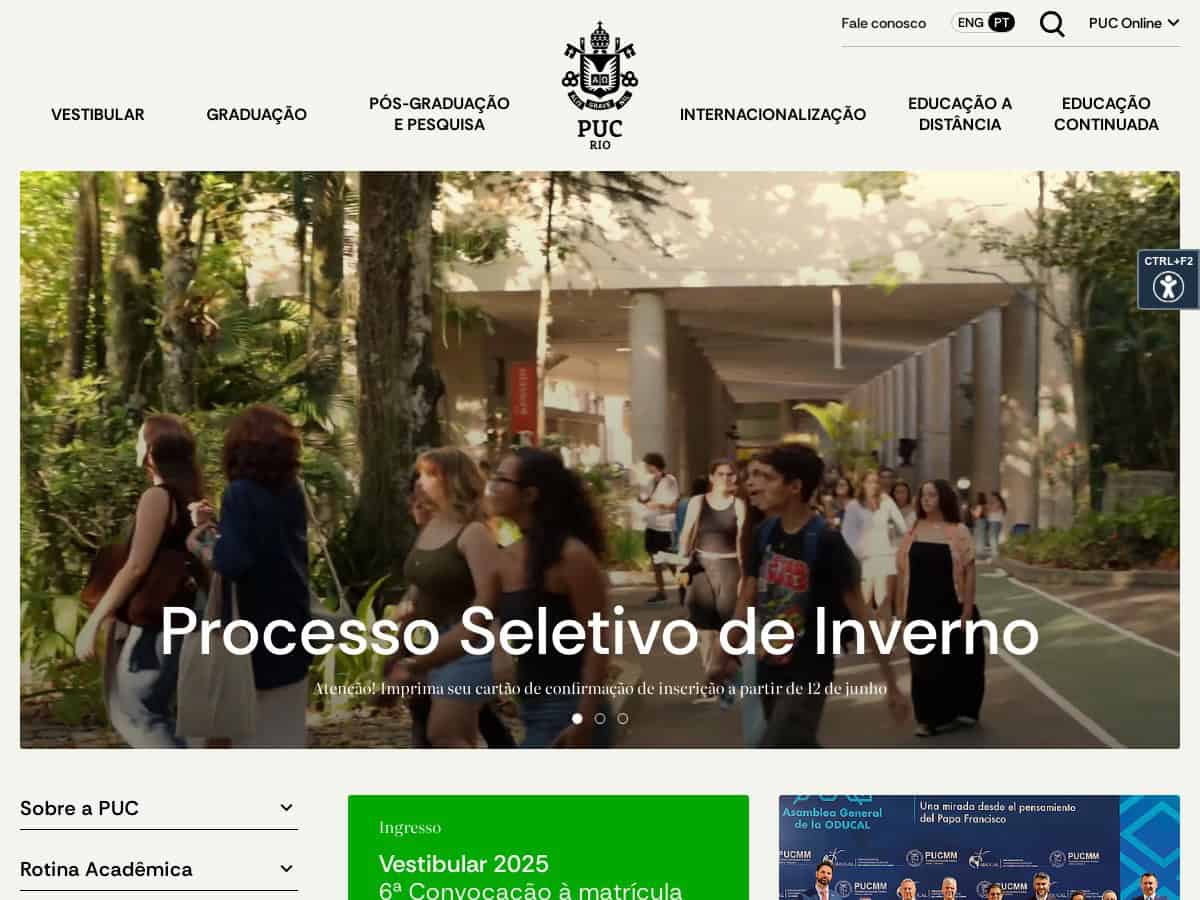
PUC-Rio is a private, non-profit Catholic university run by the Jesuits, located in the Gávea district in the south of Rio de Janeiro. It has about 12,000 students and 2,000 staff, which is far smaller than the federal and state universities in this list. Its campus sits between the botanical garden and the Lagoa, on the slopes of the Morro dos Dois Irmãos.
The university is best known in engineering, informatics, law and the social sciences. Its Department of Informatics is a respected centre in Brazil, and the Tecgraf institute, created with the oil company Petrobras, works on graphics and simulation software. The programming language Lua was created at Tecgraf in 1993 by Roberto Ierusalimschy, Luiz Henrique de Figueiredo and Waldemar Celes, and it is now used in games, embedded systems and tools around the world.
Research programmes in computing, engineering and the social sciences benefit from partnerships with industry and from a global network of academic agreements. Civil, mechanical and materials engineering work closely with the energy sector, and the university’s graduate programmes are among those regularly rated highly by the Brazilian education authorities.
As a private university PUC-Rio charges tuition, but it also runs a large scholarship programme, including grants for students from low-income families and for high-achieving applicants. Admission is by entrance exam or by ENEM results. Courses are in Portuguese, with English-language options available to exchange students and in some graduate programmes.
Gávea is one of the more expensive neighbourhoods of Rio, and many students live in other zones and commute by metro and bus. About 90,000 people have graduated from PUC-Rio, and its alumni are well represented in law firms, oil and gas, banking and the media. The university incubator, Instituto Gênesis, supports start-ups founded by students and alumni in technology and design.
Domains taught:
Computer Vision, Engineering, Project Management
Diplomas*:
Bachelor, Doctor, Master
Status:
Private
Partnerships:
Global academic partnerships and industry collaborations
Research:
Strong research programs in computing, engineering, and social sciences
Where this university leans on project management, computer vision and engineering, Pontifical Catholic University of Campinas does the same, and it is also a private institution, and teaches at the same levels, namely bachelor's, master's and doctoral.
Anyone who wants a second school in the same country with a similar spread of project management and engineering can consider Pontifical Catholic University of Minas Gerais, and it teaches at the same levels, namely bachelor's, master's and doctoral, and covers life sciences as well.
Pontifical Catholic University of Rio Grande do Sul works in much the same fields, chiefly computer vision and engineering, and it runs the same bachelor's, master's and doctoral programmes, and covers life sciences as well.
Anyone who wants a second school in the same country with a similar spread of computer vision and engineering can consider Pontifical Catholic University of Paraná, and it covers life sciences as well, and has almost the same size, at about 11,000 students.
Federal Institute of Rio de Janeiro follows much the same lines as this university, with project management, computer vision and engineering as common ground, and it also offers diploma programmes, and is larger, enrolling about 20,000 students against roughly 12,000 here.
Most Similar Schools Abroad
Chung-Ang University, based in South Korea, is built around project management, computer vision and engineering much like this institution, and it is larger, enrolling about 21,000 students against roughly 12,000 here, and is also a private institution.
Beyond national borders, Kookmin University stands out as a comparable school for project management, computer vision and engineering; it does not run the doctoral programmes found here, and has almost the same size, at about 13,000 students.
If this university is on your list for project management, Georgetown University in the United States deserves a comparison, because it is also a private institution and also offers mba programmes.
London School of Economics and Political Science in the United Kingdom pursues a similar profile in project management, and it is public, whereas this institution is private, and runs the same bachelor's, master's and doctoral programmes.
Harvard University, in the United States, takes a similar route through engineering; it is larger, enrolling about 21,200 students against roughly 12,000 here, and is also a private institution.
*our own picks (our criteria: a mix between domains, diploma delivered, reputation and size), but obviously too many criteria for an apple-to-apple ranking.
FAQ
Where is PUC-Rio?
The main campus is at Rua Marquês de São Vicente 225 in the Gávea district of Rio de Janeiro.
Is PUC-Rio public or private?
It is a private, non-profit Catholic university run by the Jesuits.
How large is PUC-Rio?
About 12,000 students and 2,000 staff.
What does it cost?
PUC-Rio charges tuition, but it also operates a scholarship programme for students with limited means and for strong applicants. Ask the admissions office for current fees.
How do you apply?
Through the university's own entrance exam or through ENEM results. Check the current process on the admissions page.
What language is used for teaching?
Portuguese, with English-language options for exchange students and in some graduate programmes.
What is PUC-Rio known for?
Engineering, informatics, law, social sciences and strong graduate programmes.
What is Tecgraf?
Tecgraf is a research institute at PUC-Rio working on graphics and simulation software, created with Petrobras.
Which programming language was created at PUC-Rio?
Lua was created in 1993 at Tecgraf by Roberto Ierusalimschy, Luiz Henrique de Figueiredo and Waldemar Celes.
Is the neighbourhood expensive?
Gávea is one of the pricier districts in Rio, so many students live elsewhere and commute.
Artificial Intelligence (AI), Engineering, Innovation, Project Management, Research and Development, Software Engineering
*: without any judgment of the quality, readers are strongly encouraged to check the official status of the exact diploma envisioned as many universities have a mix of recognized diplomas, not recognized, “co-delivered,” “equivalent to”, “some pathways” (…), can change over time, and can be named differently from one country to another.
**: international reputation: is based on some criteria that do not mean much in some domains or specialties (number of researchers, of scientific publications, on budget ….). Our approximate 1-4 scale:
known locally
known locally and internationally
is listed in some of the world university’s classifications
is listed among the 20 firsts in some of world university’s classifications
***: estimated numbers, based on online sources and/or feedbacks. The numbers can vary greatly depending on school organisation (ex.: school is part of a group, it employs internal staff or external consultants or has public staff without employing them …). Refer to all the links provided to have accurate and updated numbers.
Innovation.world is not affiliated with this school/university. We recommend to contact them directly on their website for any special request.
To complete or correct any information here or share your opinion, please comment below or > send us a direct message <.