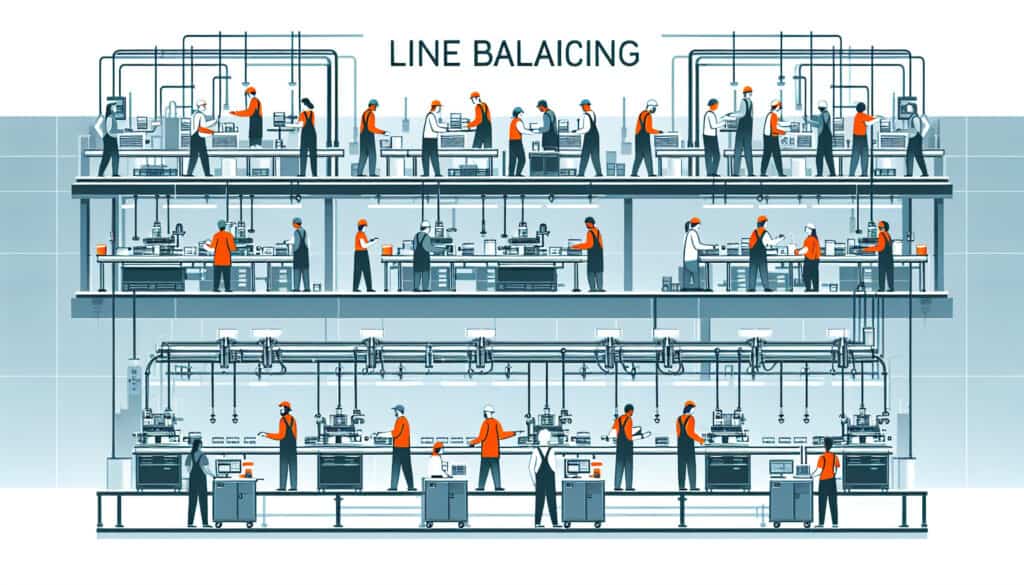
Line balancing is widely utilized in various manufacturing sectors such as automotive, electronics, and consumer goods, where assembly lines are prevalent. This methodology is particularly beneficial during the design and improvement phases of production processes, where understanding the flow of tasks across multiple workstations is crucial. Participants typically include production managers, process engineers, and assembly line workers, who collaborate to identify the most effective distribution of tasks based on cycle times and resource availability. Tools such as simulation software, workflow analysis, and time studies are frequently employed to visualize and assess the current state of production lines, enabling teams to experiment with configurations that eliminate bottlenecks and reduce worker fatigue. For instance, the automotive industry applies line balancing to maintain a constant flow of vehicle assembly while minimizing the downtime associated with machine maintenance or part shortages. Additionally, the practice is important in 精益制造 initiatives, where the focus is on maximizing value while minimizing waste, thereby driving not only operational efficiency but also improvements in product quality. By continuously monitoring performance metrics and gathering feedback, organizations can iteratively refine their assembly processes, facilitating a culture of ongoing improvement that responds to changing market demands and technological advancements.