Product Design, Manufacturing & Innovation Resources
家 » 工作场所组织的5S框架

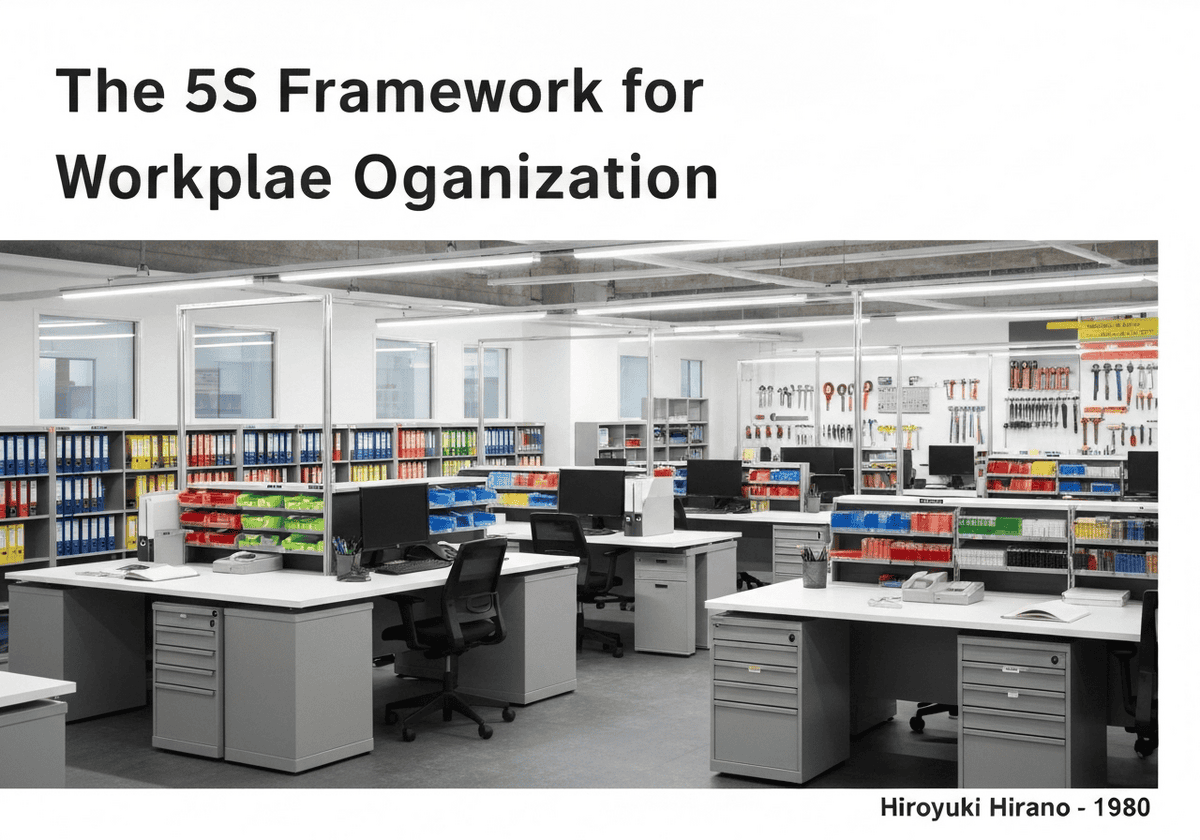
工作场所组织的5S框架

1980
  • Hiroyuki Hirano
井然有序的办公空间,体现了5S管理框架带来的效率提升。

(图片仅供参考)

5S 是一种工作场所整理方法,它使用五个日语词汇:整理(Seiri)、整顿(Seiton)、清扫(Seisō)、清洁(Seiketsu)和 志付 (Sustain). This system aims to improve efficiency and eliminate waste by organizing a workspace for effectiveness. It is a foundational component of Kaizen and 精益制造, creating the stable environment necessary for improvement.
这 5S framework is a systematic approach that enables teams to organize their workplaces in the safest and most efficient manner. Each ‘S’ represents a step in the process. ‘Seiri’ (Sort) involves going through all items in a workspace and removing anything that is not needed for current operations. This declutters the area and frees up space. ‘Seiton’ (Set in Order) is the process of arranging the necessary items in a logical way so they can be easily located and retrieved. The principle ‘a place for everything, and everything in its place’ is central to this step. ‘Seisō’ (Shine) involves cleaning the workspace and equipment regularly. This is not just about aesthetics; it helps in identifying potential problems like leaks, cracks, or misalignments that might be hidden by dirt. ‘Seiketsu’ (Standardize) establishes the procedures and schedules to ensure the repetition of the first three ‘S’ practices. This creates consistency and makes the improvements part of the normal routine. It often involves visual controls, checklists, and clear instructions. ‘Shitsuke’ (Sustain) is the most challenging step. It involves making 5S a habit and embedding it into the organizational culture. This requires ongoing training, communication, and management commitment to maintain the standards and continue the improvement cycle. By implementing 5S, organizations create a visual, clean, and organized environment where deviations from the standard become immediately obvious, facilitating quicker problem-solving and preventing waste.

UNESCO Nomenclature: 5311
管理层

类型

抽象系统

中断

重大的

用法

广泛使用

前体

  • 丰田生产系统 (每秒交易量)原则
  • 亨利·福特的流水线生产理念体现了秩序和效率
  • 弗雷德里克·温斯洛·泰勒的《科学管理原则》

应用程序

  • 精益生产实施
  • 医疗设施管理(例如,组织手术室)
  • 软件开发(例如,#5S 代表代码)
  • 办公室和行政流程改进
  • 仓库和物流管理

专利:

NA

潜在创新理念

  • AR 应用程序可在物理工作空间中叠加 5S 指令和布局
  • smart shelves and bins that monitor item usage for automated ‘seiri’ (sort) suggestions
  • gamified 5S audit apps to encourage team participation in ‘shitsuke’ (sustain)
  • 5S 用于数字工作空间、组织文件、电子邮件和云存储
  • robotics for automated ‘seiso’ (shine) in large industrial facilities
  • IoT sensors that trigger alerts when items are not returned to their ‘seiton’ (set in order) location
  • 将5S原则应用于个人数据管理和数字安全
  • developing sustainable 5S programs that incorporate recycling and waste reduction (‘green 5S’)
相关内容:5S、精益制造、工作场所组织、整顿、整顿、精整、清洁、施助。

历史背景

工作场所组织的5S框架

1960
1965
1970
1980
1980
1983
1990
1960
1960
1970
1980
1980
1982
1986
1990

(如果日期未知或不相关,例如“流体力学”,则提供其显著出现的近似估计)

第十年 周年纪念日

只有注册会员才能免费获得 100% 的全尺寸图片和下载。.

> 登录 <