Product Design, Manufacturing & Innovation Resources
집 » 직장 정리를 위한 5S 프레임워크

직장 정리를 위한 5S 프레임워크

1980
  • Hiroyuki Hirano
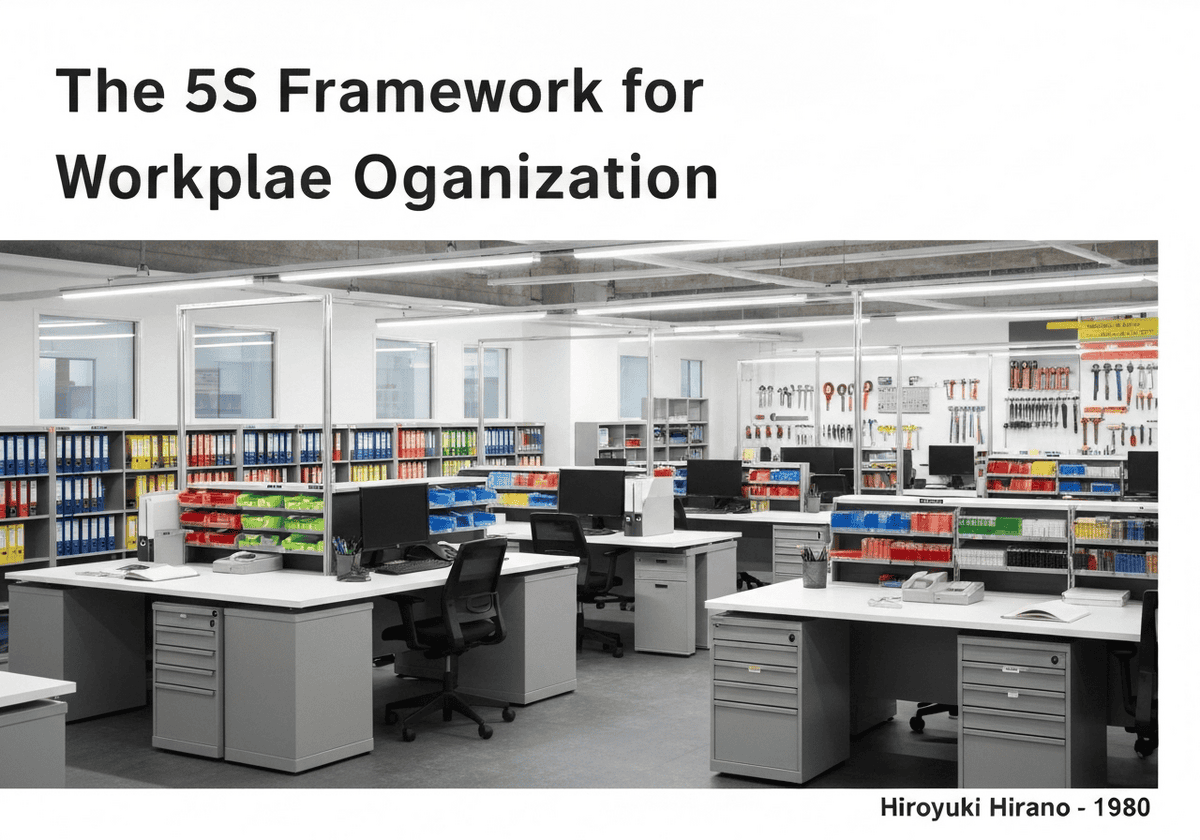
효율적인 경영을 위한 5S 프레임워크를 보여주는 정돈된 사무실 작업 공간.

(설명을 위한 생성된 이미지입니다)

5S is a workplace organization method that uses a list of five Japanese words: Seiri (Sort), Seiton (Set in Order), Seisō (Shine), Seiketsu (Standardize), and 시츠케 (Sustain). This system aims to improve efficiency and eliminate waste by organizing a workspace for effectiveness. It is a foundational component of Kaizen and 린 제조, creating the stable environment necessary for improvement.

그만큼 5S framework is a systematic approach that enables teams to organize their workplaces in the safest and most efficient manner. Each ‘S’ represents a step in the process. ‘Seiri’ (Sort) involves going through all items in a workspace and removing anything that is not needed for current operations. This declutters the area and frees up space. ‘Seiton’ (Set in Order) is the process of arranging the necessary items in a logical way so they can be easily located and retrieved. The principle ‘a place for everything, and everything in its place’ is central to this step. ‘Seisō’ (Shine) involves cleaning the workspace and equipment regularly. This is not just about aesthetics; it helps in identifying potential problems like leaks, cracks, or misalignments that might be hidden by dirt. ‘Seiketsu’ (Standardize) establishes the procedures and schedules to ensure the repetition of the first three ‘S’ practices. This creates consistency and makes the improvements part of the normal routine. It often involves visual controls, checklists, and clear instructions. ‘Shitsuke’ (Sustain) is the most challenging step. It involves making 5S a habit and embedding it into the organizational culture. This requires ongoing training, communication, and management commitment to maintain the standards and continue the improvement cycle. By implementing 5S, organizations create a visual, clean, and organized environment where deviations from the standard become immediately obvious, facilitating quicker problem-solving and preventing waste.

UNESCO Nomenclature: 5311
�8211; 경영

유형

추상 시스템

분열

상당한

용법

널리 사용됨

전구체

  • 도요타 생산 시스템 (tps) 원칙
  • 헨리 포드의 조립 라인 개념은 질서와 효율성에 관한 것이다.
  • 프레드릭 윈슬로 테일러의 과학적 관리 원칙

응용 프로그램

  • 린 제조 구현
  • 의료 시설 관리 (예: 수술실 운영)
  • 소프트웨어 개발 (예: 코드 개발을 위한 '5S')
  • 사무 및 행정 프로세스 개선
  • 창고 및 물류 관리

특허:

NA

잠재적 혁신 아이디어

  • AR applications to overlay 5S instructions and layouts in a physical workspace
  • smart shelves and bins that monitor item usage for automated ‘seiri’ (sort) suggestions
  • gamified 5S audit apps to encourage team participation in ‘shitsuke’ (sustain)
  • 5S for digital workspaces, organizing files, emails, and cloud storage
  • robotics for automated ‘seiso’ (shine) in large industrial facilities
  • IoT sensors that trigger alerts when items are not returned to their ‘seiton’ (set in order) location
  • applying 5S principles to personal data management and digital security
  • developing sustainable 5S programs that incorporate recycling and waste reduction (‘green 5S’)
관련 항목: 5S, 린 제조, 직장 조직, seiri, seiton, seiso, seiketsu, Shissuke.

역사적 맥락

직장 정리를 위한 5S 프레임워크

1960
1965
1970
1980
1980
1983
1990
1960
1960
1970
1980
1980
1982
1986
1990

(날짜를 알 수 없거나 관련이 없는 경우, 예를 들어 "유체역학"의 경우, 주목할 만한 등장 시기를 대략적으로 추정하여 제공합니다.)

10년차 기념일

고화질 이미지 및 다운로드는 등록된 회원에게만 100% 무료로 제공됩니다.

> 로그인 <