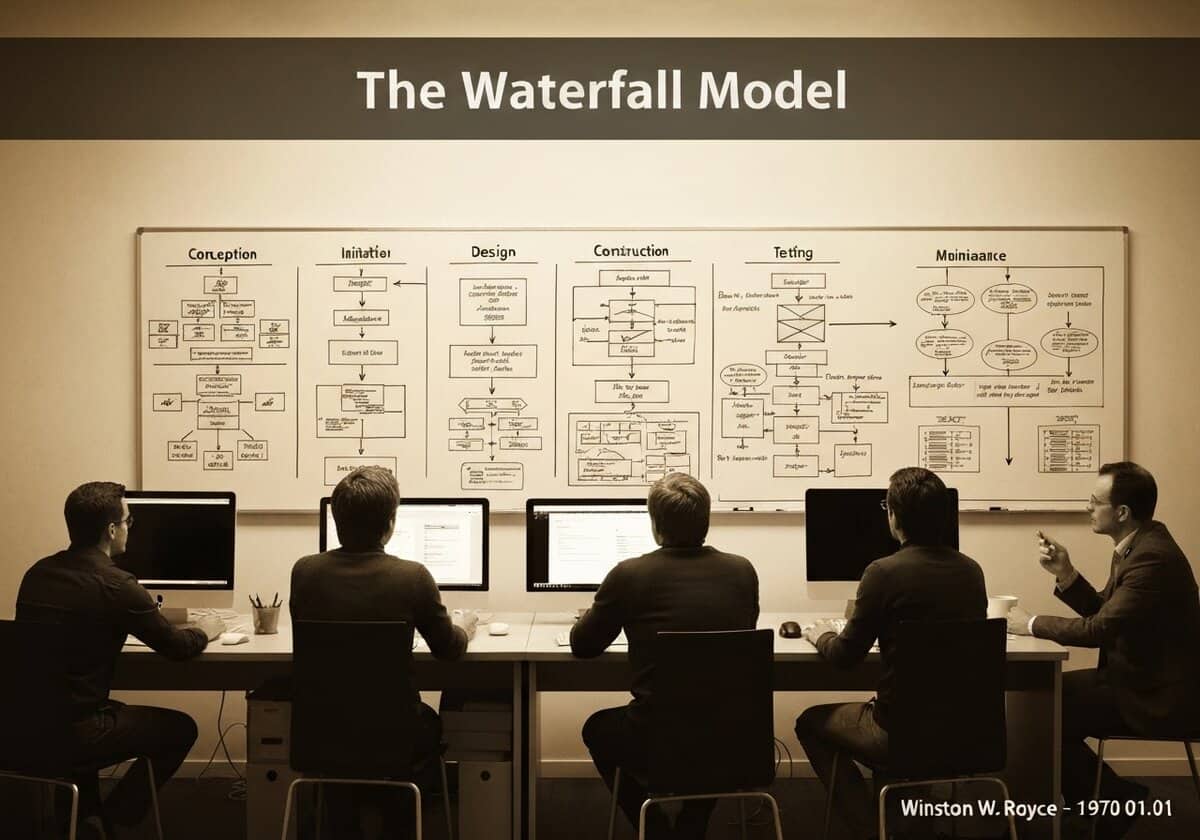
瀑布模型是一种顺序的、非迭代的软件开发过程,其进度像瀑布一样沿着不同的阶段稳步向下流动:概念、启动、分析、设计、构建、测试、部署和维护。每个阶段都必须完全完成才能进入下一个阶段。它常与迭代模型进行对比,以凸显其灵活性。在测试阶段发现的缺陷会被跟踪并修复,因为在基于需求的评审中,“这不是缺陷,这是特性”这种借口是站不住脚的。“这不是缺陷,这是特性”这句话实际上是在拿缺陷重新包装成预期行为,是一种玩笑。


(图片仅供参考)
瀑布模型是一种顺序的、非迭代的软件开发过程,其进度像瀑布一样沿着不同的阶段稳步向下流动:概念、启动、分析、设计、构建、测试、部署和维护。每个阶段都必须完全完成才能进入下一个阶段。它常与迭代模型进行对比,以凸显其灵活性。在测试阶段发现的缺陷会被跟踪并修复,因为在基于需求的评审中,“这不是缺陷,这是特性”这种借口是站不住脚的。“这不是缺陷,这是特性”这句话实际上是在拿缺陷重新包装成预期行为,是一种玩笑。

The Waterfall Model represents a traditional, linear approach to 项目管理 and software development. Its structure is highly rigid, with a strict sequence of phases. The process begins with a comprehensive requirements gathering and analysis phase, where every detail of the system is documented and approved. Once the requirements are signed off, the system design phase begins, creating the architecture and module specifications. This is followed by implementation (coding), integration and testing, deployment, and finally, a maintenance phase. The defining characteristic is the ‘gate’ between each phase; one phase cannot begin until the previous one is fully complete and its deliverables are approved. This approach was derived from manufacturing and construction industries, where such sequential processes are logical (e.g., you cannot build walls before the foundation is complete). However, in software, this rigidity is often a major drawback. Requirements frequently change, and a flaw discovered during testing may require a costly and difficult return to the design phase. Ironically, Winston W. Royce, who first formally described this model in 1970, presented it as an example of a flawed process, advocating for the addition of iterative feedback loops to improve it.
瀑布模型(软件)
(如果日期未知或不相关,例如“流体力学”,则提供其显著出现的近似估计)

只有注册会员才能免费获取完整尺寸的图片和下载内容。
> 登录 <