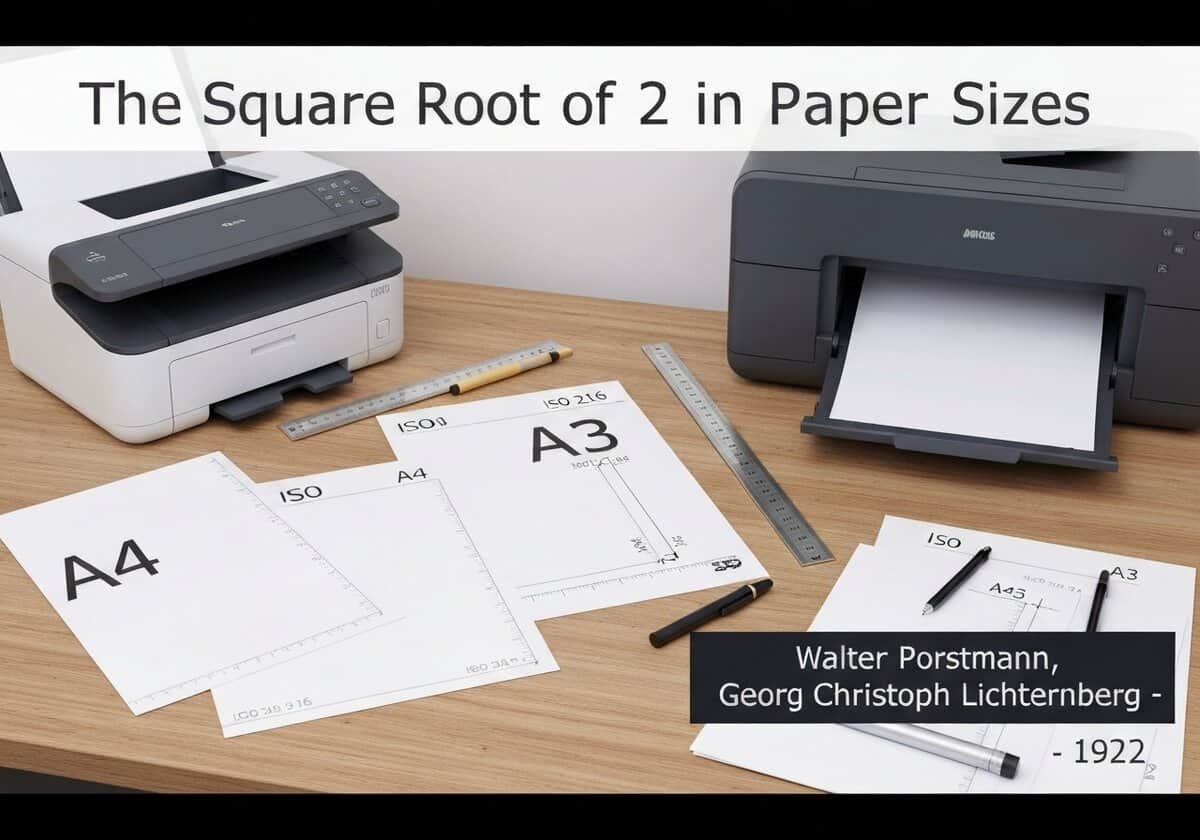
Each subsequent size in the A series (A1, A2, A3, A4, etc.) is created by halving the previous size along its longer dimension. For example, cutting an A3 sheet in half produces two A4 sheets. Because of the [latex]\sqrt{2}[/latex] aspect ratio, these new A4 sheets have the same proportions as the original A3 sheet. This elegant mathematical property is incredibly practical. It allows for easy scaling of documents on photocopiers and printers (e.g., enlarging from A4 to A3 is a simple 141% or [latex]\sqrt{2}[/latex] magnification) without cropping or leaving empty margins. This efficiency and simplicity have led to its near-universal adoption worldwide, with the notable exceptions of the United States and Canada.