Product Design, Manufacturing & Innovation Resources
家 » 临床试验阶段

临床试验阶段

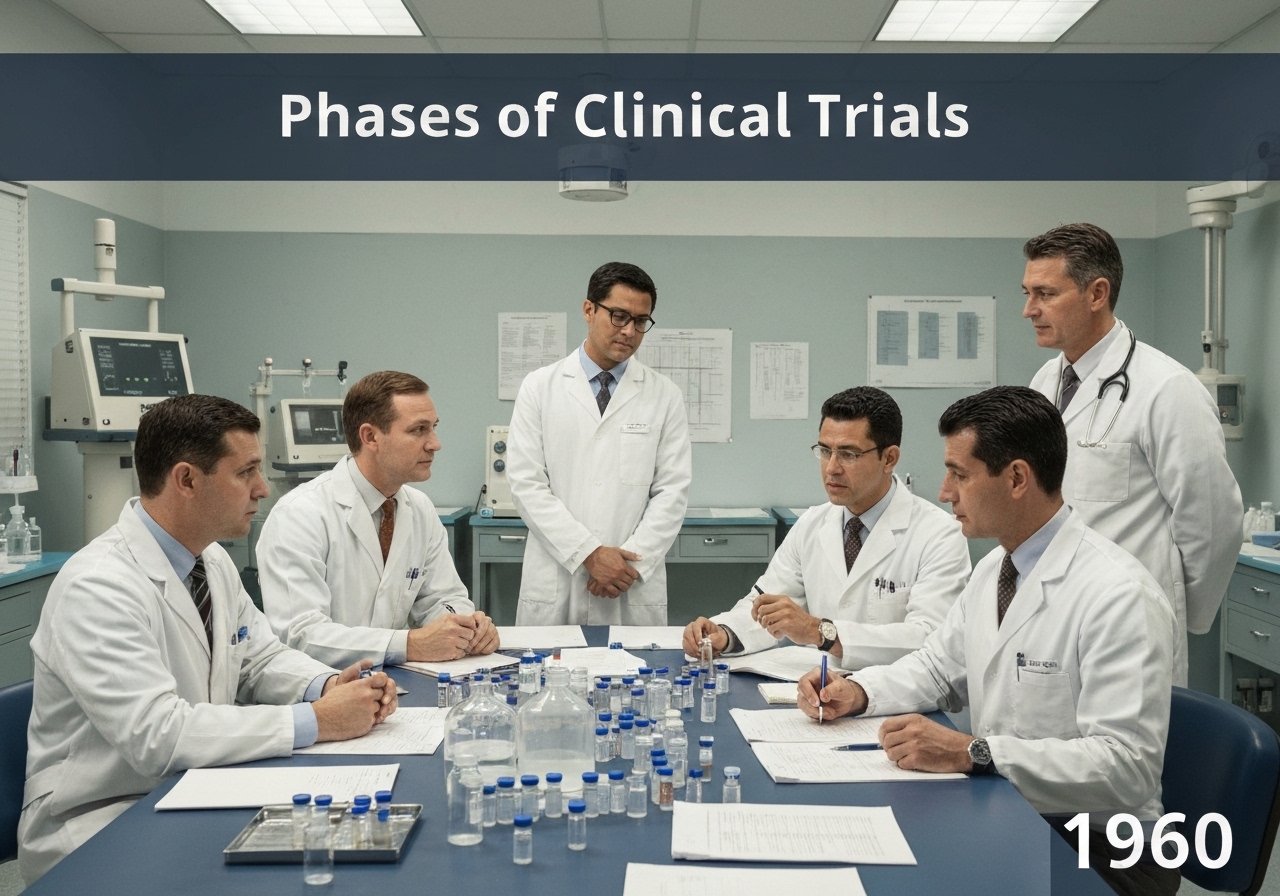
1960
Clinical trial setting with researchers discussing drug development processes in pharmacology.

(图片仅供参考)

Clinical trials for new drugs are conducted in a structured, multi-phase process. Phase I assesses safety and dosage in a small group of healthy volunteers. Phase II evaluates efficacy and side effects in a larger group of patients. Phase III confirms efficacy, monitors side effects, and compares it to standard treatments in a large patient population before regulatory submission. Each phase refines the risk benefit ratio of the treatment, and a trial can be stopped when that ratio becomes unfavorable.


现代临床试验体系是循证医学的基石,旨在在新型治疗干预措施广泛应用之前对其进行安全性和有效性的严格测试。该流程始于对动物和体外模型进行广泛的临床前研究表明某种化合物具有良好前景之后。 第一阶段 trials are the first-in-human studies, typically involving 20-100 healthy volunteers. The primary goal is to determine the drug’s safety profile, including the safe dosage range and identifying acute side effects. Pharmacokinetics (how the body absorbs, distributes, metabolizes, and excretes the drug) is also a key focus. 第二阶段 trials expand the study to several hundred patients who have the condition the drug is intended to treat. This phase aims to provide a preliminary assessment of the drug’s efficacy and to further evaluate its safety. Often, Phase II studies are randomized and include a placebo or standard treatment control group. 第三阶段 III期临床试验是涉及数百至数千名患者的大规模关键性研究。这些通常是多中心、随机、双盲、对照试验,旨在提供药物疗效和安全性的确凿证据,以获得监管部门的批准。III期临床试验收集的数据用于将新药与现有疗法或安慰剂进行比较。如果试验成功,药物申办方即可提交新药申请(NDA)。NDA与FDA等监管机构合作。 第四阶段, or post-marketing surveillance, occurs after the drug is approved and on the market. These studies monitor the drug’s long-term safety and effectiveness in a broad, diverse population, and can identify rare or long-term side effects not seen in the earlier, more controlled trials.

UNESCO Nomenclature: 3209
– Pharmacology

类型

Medical Procedure

中断

Foundational

用法

广泛使用

前体

  • james lind’s 1747 scurvy trial, one of the first controlled clinical experiments
  • 纽伦堡法典(1947年)确立了人体实验的伦理原则
  • 《赫尔辛基宣言》(1964年)为涉及人类受试者的医学研究提供伦理指导
  • 1962 年《联邦食品、药品和化妆品法案》的凯福弗·哈里斯修正案,要求提供功效证明

应用程序

  • 所有现代处方药的开发
  • approval process for 疫苗
  • 新医疗器械测试
  • 上市后监测研究(第四阶段)

专利:

NA

潜在创新理念

  • 根据中期数据修改参数的自适应临床试验设计
  • 使用电子健康记录中的真实世界证据(rwe)来补充试验数据
  • decentralized clinical trials (dcts) using wearable tech and telemedicine
  • 人工智能驱动的患者招募和数据分析,以加快试验速度
  • development of ‘digital twin’ patient models to simulate trial outcomes
  • 平台试验同时测试针对单一疾病的多种药物
  • 篮子试验测试一种药物对具有共同生物标志物的多种疾病的作用
  • 整合基因组数据以实现个性化试验招募
  • use of 区块链 for secure and transparent trial data management
  • 使用传感器的数字生物标记物开发新的终点
Related to: clinical trials, phase i, phase ii, phase iii, drug development, fda, efficacy, safety, pharmacology, new drug application.

历史背景

临床试验阶段

1960
1960
1969
1976-05-28
1980
1990
1960
1965
1970
1980
1980
1990

(如果日期未知或不相关,例如“流体力学”,则提供其显著出现的近似估计)

第十年 周年纪念日

只有注册会员才能免费获取完整尺寸的图片和下载内容。

> 登录 <