Physics, Radiophysics and Electronics, Computer Science
Established in 1804, Karazin University is one of the oldest classical universities in Eastern Europe. It has strong traditions in natural sciences (physics, chemistry, biology), mathematics, and computer science.
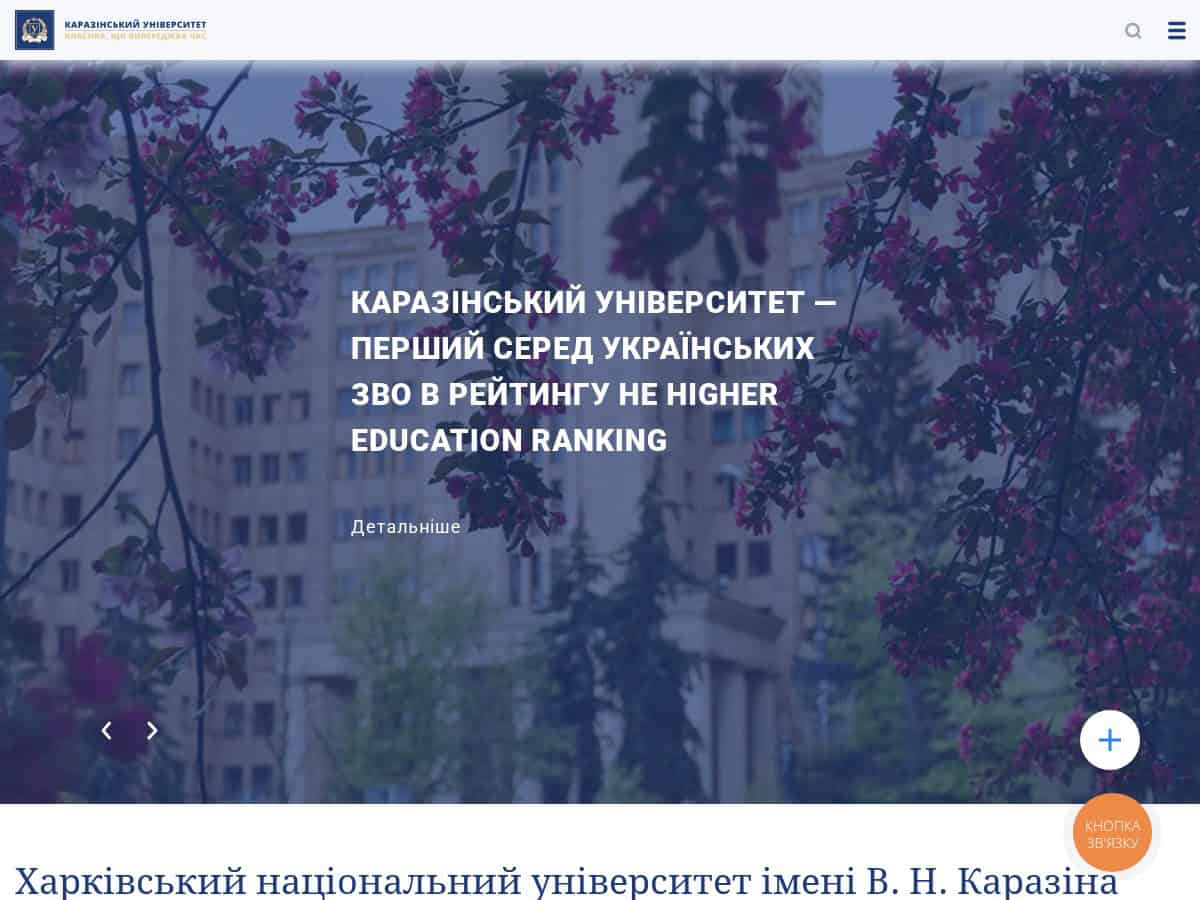
V. N. Karazin Kharkiv National University is one of the oldest and most important universities in Ukraine. Vasyl Karazin, a public figure and scientist, convinced Emperor Alexander I to authorise it in 1804, and it opened in 1805 as the Imperial University of Kharkiv. It has about 15,000 students and 3,000 staff, and around one student in ten comes from abroad. The main building stands on Svobody Square, one of the largest city squares in Europe, in the centre of Kharkiv.
The university became a centre of science in the nineteenth century. Ilya Mechnikov, who received the 1908 Nobel Prize in Physiology or Medicine for work on immunity, graduated from Kharkiv, and the physicist Lev Landau taught here in the 1930s and organised a school of theoretical physics. The mathematician Aleksandr Lyapunov was a professor in the late nineteenth century, and the Kharkiv school of mathematics has a long record in analysis and differential equations.
Today the university has about twenty faculties, including physics and technology, radiophysics, biomedical engineering and computer science, mathematics and informatics, chemistry, biology, geology, geography, philology, history, philosophy, law, economics, international economic relations, sociology and psychology. The Karazin Business School is one of the best known in Ukraine. The university also operates a botanical garden and an astronomical observatory.
Ukrainian applicants enter through the national multi-subject test and compete for state-funded places or pay contract fees. Foreign students normally pay a contract fee, and many begin with a preparatory year in Ukrainian. Fees vary by programme, so check the current tariff. Teaching is in Ukrainian, with a number of programmes in English. Since 2022, parts of the campus have been damaged and teaching has combined online and in-person formats, so check the current situation before applying.
Kharkiv is the second-largest city in Ukraine, with a large student population and lower costs than Kyiv. The metro serves the main campus.
Domains taught:
Chemistry, Electrical and Electronics, Life Sciences, Materials, Mathematics, Physics, Software Engineering
Diplomas*:
Bachelor, Doctor, Master
Status:
Public
Partnerships:
Collaborates with over 150 foreign universities and organizations; participates in international research and educational programs.
Research:
Research in theoretical and experimental physics, radio physics, materials science, chemistry, biology, and computer science. Hosted three Nobel laureates.
Famous Alumnis:
Lev Landau, Simon Kuznets, Élie Metchnikoff
International recognition**:
Number of staff***:
3000
Current students***:
15000
Foreign students***:
10%
Cumulative former students***:
250000
Pros
Long history of academic excellence, strong scientific schools, significant contributions to research, known for Nobel laureates.
Cons
Located in a city affected by conflict, older facilities in some departments.
Also strong in chemistry, physics and mathematics, Oles Honchar Dnipro National University makes a sensible second look at home; it is also a public institution, and runs the same bachelor's, master's and doctoral programmes.
Anyone who wants a second school in the same country with a similar spread of chemistry, physics and mathematics can consider Yuriy Fedkovych Chernivtsi National University, and it is also a public institution, and teaches at the same levels, namely bachelor's, master's and doctoral.
Uzhhorod National University follows much the same lines as this institution, with chemistry, physics and electrical and electronics as common ground, and it is also a public institution, and teaches at the same levels, namely bachelor's, master's and doctoral.
Vasyl Stefanyk Precarpathian National University is the closest domestic counterpart for chemistry, physics and mathematics; it is slightly smaller, at about 12,000 students against roughly 15,000 here, and is also a public institution.
On content, Ivan Franko National University of Lviv and this institution are close, as both teach chemistry, physics and mathematics; it is also a public institution, and runs the same bachelor's, master's and doctoral programmes.
Most Similar Schools Abroad
For a study option in China with a comparable spread of chemistry, physics and mathematics, Northwest University Xi'an is the reference point: it covers geotechnics as well, and is slightly larger, at about 18,000 students against roughly 15,000 here.
For a study option in Germany with a comparable spread of chemistry, physics and mathematics, University of Regensburg is the reference point: it covers microbiology and genetics and data analytics as well, and is slightly larger, at about 21,088 students against roughly 15,000 here.
University of Oslo in Norway pursues a similar profile in chemistry, physics and mathematics, and it teaches at the same levels, namely bachelor's, master's and doctoral, and covers astroscience and geotechnics as well.
For chemistry, physics and mathematics outside the home country, National Research Tomsk State University in Russia is a natural reference; it covers optics and ecology and sustainability as well, and is slightly larger, at about 17,000 students against roughly 15,000 here.
University of Szeged in Hungary shares the chemistry, physics and mathematics orientation of this university, and it covers microbiology and genetics and optics as well, and is larger, enrolling about 22,693 students against roughly 15,000 here.
*our own picks (our criteria: a mix between domains, diploma delivered, reputation and size), but obviously too many criteria for an apple-to-apple ranking.
FAQ
Where is Karazin University?
The main building is at 4 Svobody Square in Kharkiv, Ukraine.
When was it founded?
It was authorised in 1804 and opened in 1805, thanks to Vasyl Karazin.
How large is it?
About 15,000 students and 3,000 staff.
What is Svobody Square?
One of the largest city squares in Europe, where the main building stands.
Who studied or taught there?
Ilya Mechnikov, Nobel laureate of 1908, graduated from Kharkiv, and Lev Landau taught there in the 1930s.
One of the best known business schools in Ukraine.
How do foreign students enter?
They normally pay a contract fee, and many begin with a preparatory year in Ukrainian. Check the current tariff.
In which language are courses taught?
Mainly in Ukrainian, with a number of programmes in English.
How has the war affected the university?
Since 2022, parts of the campus have been damaged, and teaching has combined online and in-person formats. Check the current situation before applying.
Biology, Chemistry, Environmental Engineering, Innovation, Mathematics, Physics, Research and Development, Sustainable Development
*: without any judgment of the quality, readers are strongly encouraged to check the official status of the exact diploma envisioned as many universities have a mix of recognized diplomas, not recognized, “co-delivered,” “equivalent to”, “some pathways” (…), can change over time, and can be named differently from one country to another.
**: international reputation: is based on some criteria that do not mean much in some domains or specialties (number of researchers, of scientific publications, on budget ….). Our approximate 1-4 scale:
known locally
known locally and internationally
is listed in some of the world university’s classifications
is listed among the 20 firsts in some of world university’s classifications
***: estimated numbers, based on online sources and/or feedbacks. The numbers can vary greatly depending on school organisation (ex.: school is part of a group, it employs internal staff or external consultants or has public staff without employing them …). Refer to all the links provided to have accurate and updated numbers.
Innovation.world is not affiliated with this school/university. We recommend to contact them directly on their website for any special request.
To complete or correct any information here or share your opinion, please comment below or > send us a direct message <.