Address: 235 West Daxue Road, Saihan District, 010021 Hohhot, Inner Mongolia, China
Life Sciences (Grassland Ecology), Chemistry & Materials Science, Computer Science
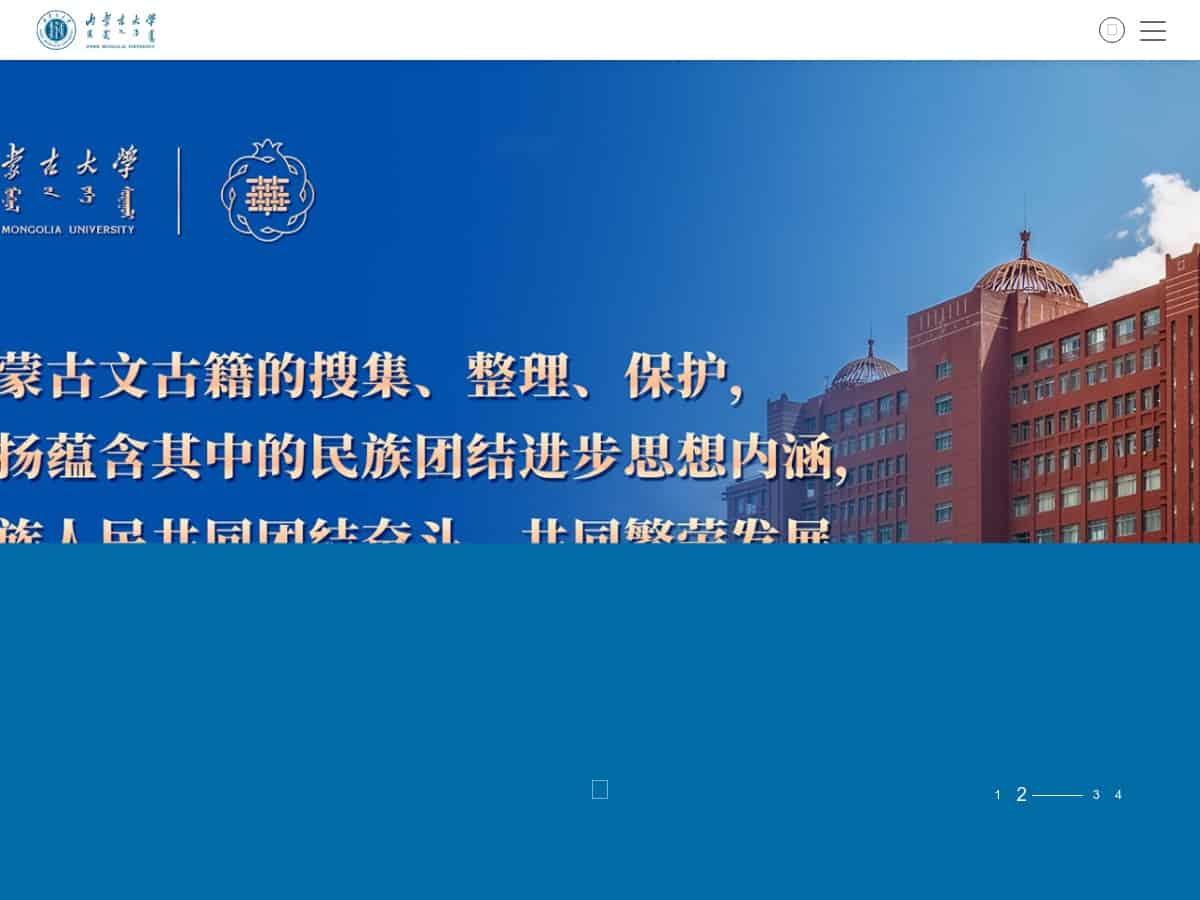
Set up in 1957 in Hohhot, the capital of the Inner Mongolia Autonomous Region, Inner Mongolia University is a comprehensive university in northern China. Its location in the regional capital ties it to the language and culture of the region around it.
In 1997 it was among the universities selected for key construction under Project 211. Its teaching colleges cover Mongolian studies, humanities, foreign languages, economics and management, law, science and technology, and the arts, and its academic structure spans literature, economics, management, law, science, engineering and art.
Hohhot is the regional capital of the Inner Mongolia Autonomous Region in northern China, where the university stands. Applicants can find current programme lists, entry requirements and information for international students on the official website.
Domains taught:
Agriculture, AI and Machine Learning, Bioengineering, Bioinformatics, Chemistry, Computer Vision, Data Analytics, Ecology and Sustainability, Electrical and Electronics, Engineering, Fluid Dynamics, Food Science, Life Sciences, Manufacturing, Materials, Mathematics, Mechanical Engineering, Microbiology and Genetics, Physics, Process Control, Software Engineering, Statistics, Structural Engineering, Telecommunications, Thermodynamics
Diplomas*:
Bachelor, Doctor, Master
Status:
Public
Partnerships:
Key university in Inner Mongolia. Focus on regional ecological and resource issues.
Lanzhou University in Lanzhou is listed for chemistry, physics and life sciences.
Ningxia University in Yinchuan combines agriculture and animal science with chemical engineering, energy and ecology.
Shihezi University in Xinjiang covers agricultural science, water-saving irrigation and regional disease research.
Shanxi University in Taiyuan teaches physics and optoelectronics, chemistry and materials science, and life sciences.
Heilongjiang University in Harbin offers chemistry and materials science, life sciences and computer science.
Most Similar Schools Abroad
University of Silesia in Katowice, Poland, is listed for computer science and materials science, physics and chemistry, and earth and environmental sciences.
Université de Montpellier in France combines ecology and environmental science with chemistry and materials science.
The United Kingdom's University of Exeter pairs environmental science with business and humanities.
University of California, Riverside in the United States lists agriculture and entomology next to engineering and ethnic studies.
Universität Bayreuth in Germany works in polymer and materials science and in ecology and environmental research.
*our own picks (our criteria: a mix between domains, diploma delivered, reputation and size), but obviously too many criteria for an apple-to-apple ranking.
FAQ
When was Inner Mongolia University established?
It was founded in 1957 in Hohhot, the regional capital.
Where is the university located?
It is in Hohhot, the capital of the Inner Mongolia Autonomous Region in northern China. Campus and visiting details are published on the official website.
What national designations has it received?
It was one of the universities chosen for key construction under Project 211 in 1997.
Which fields can students choose?
Its teaching colleges cover Mongolian studies, humanities, foreign languages, economics and management, law, science and technology, and the arts.
What kind of university is it?
It is a comprehensive university, with colleges in both the humanities and the sciences.
How can international applicants get information?
The official website lists degree programmes, entry requirements and contacts for international students. It is the best place to check tuition, scholarships and deadlines, since these change from year to year.
*: without any judgment of the quality, readers are strongly encouraged to check the official status of the exact diploma envisioned as many universities have a mix of recognized diplomas, not recognized, “co-delivered,” “equivalent to”, “some pathways” (…), can change over time, and can be named differently from one country to another.
**: international reputation: is based on some criteria that do not mean much in some domains or specialties (number of researchers, of scientific publications, on budget ….). Our approximate 1-4 scale:
known locally
known locally and internationally
is listed in some of the world university’s classifications
is listed among the 20 firsts in some of world university’s classifications
***: estimated numbers, based on online sources and/or feedbacks. The numbers can vary greatly depending on school organisation (ex.: school is part of a group, it employs internal staff or external consultants or has public staff without employing them …). Refer to all the links provided to have accurate and updated numbers.
Innovation.world is not affiliated with this school/university. We recommend to contact them directly on their website for any special request.
To complete or correct any information here or share your opinion, please comment below or > send us a direct message <.