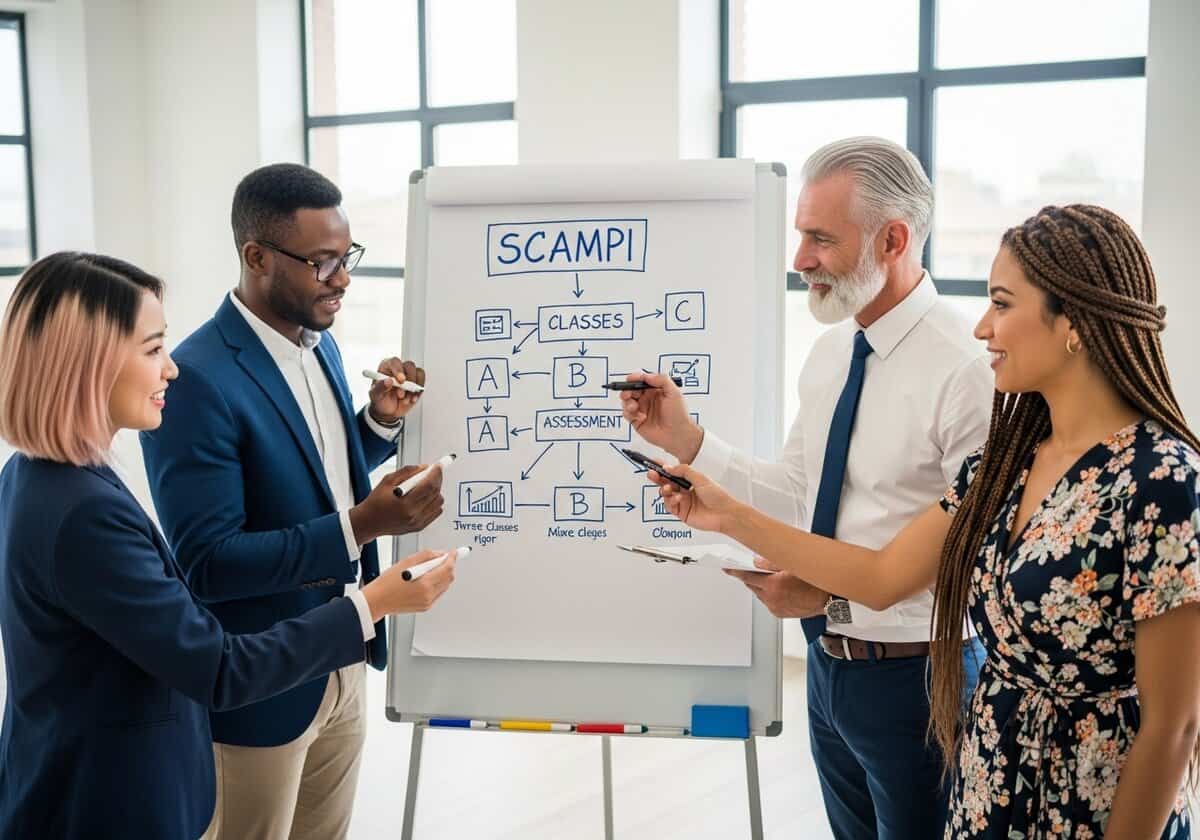
SCAMPI 방법론 또는 표준 CMMI CMMI(Appraisal Method for Process Improvement)는 엄격한 평가와 지속적인 개선을 통해 조직 역량을 강화하는 방법입니다. 카네기 멜론 소프트웨어 공학 연구소에 따르면, CMMI 프레임워크를 구현한 조직은 35%의 개선 효과를 경험합니다. 프로세스 성능 over time, demonstrating the tangible benefits of structured appraisal processes. This article thoroughly explores the SCAMPI framework, detailing its objectives, classification of appraisal types (Classes A, B, and C), the key phases involved in the SCAMPI appraisal process, and the essential roles required for effective evaluations.
핵심 요약

- SCAMPI는 프로세스 개선을 위한 체계적인 접근 방식을 제공합니다.
- 평가는 프로세스의 강점과 약점을 파악하는 데 도움이 됩니다.
- 평가의 엄격성은 세 가지 등급(A, B, C)으로 구분됩니다.
- 주요 단계는 준비, 실행 및 보고입니다.
- 수석 감정평가사가 감정평가를 이끌어갑니다. 팀 효율적으로.
- 다양한 분야에 걸쳐 조직의 성숙도를 향상시킵니다.
SCAMPI의 정의 및 프레임워크
SCAMPI는 Standard CMMI Appraisal Method for Process Improvement의 약자로, 프로세스 개선을 평가하고 향상시키기 위해 고안된 구조화된 평가 접근 방식입니다. 프로세스 능력 조직 내부에서 발생합니다. 이는 다음과 같은 점에 뿌리를 두고 있습니다. 역량 성숙도 모델 통합 (CMMI)는 소프트웨어 엔지니어링 및 시스템 엔지니어링 분야의 프로세스 개선에 사용되는 검증된 프레임워크입니다.
SCAMPI 방법론은 조직이 사전 정의된 성숙도 수준(레벨 1(초기)부터 레벨 5(최적화)까지)에 맞춰 철저한 평가를 수행함으로써 강점과 개선이 필요한 영역을 파악하도록 지원합니다.
CMMI 프레임워크에 대한 자세한 내용은 여기에서 확인할 수 있습니다(이 SCAMPI에 대한 자세한 내용을 보기 전에 먼저 확인하는 것이 좋습니다).

SCAMPI 프레임워크는 평가 프로토콜, 지침 및 평가 프로세스를 이끄는 일련의 목표를 포함한 다양한 구성 요소로 이루어져 있습니다. 이 프레임워크 내에서 평가는 세 가지 유형으로 명확하게 구분되며, 조직은 목표, 규모 및 특정 산업 요구 사항에 따라 특정 유형을 선택할 수 있습니다.
- A등급은 포괄적인 데이터 수집 및 분석을 포함하는 가장 엄격한 평가를 제공합니다.
- B반과 C반은 학습의 깊이와 초점이 각기 다릅니다.
또한, 이 방법론은 산업 표준 및 정부 규정 준수를 보장하는 메커니즘 역할을 합니다. 방위 산업 계약 또는 품질 보증에 관련된 조직은 엄격한 지침을 준수해야 하므로 SCAMPI는 책임성과 신뢰성을 입증하는 데 매우 중요합니다. 평가를 통해 시정 조치가 필요한 영역을 파악하여 조직이 규정을 준수하면서 운영 준비 태세를 향상시킬 수 있습니다.
팁: 조직은 자원 배분과 프로세스 개선 이니셔티브 간의 일관성을 확보하기 위해 SCAMPI 목표를 전략 계획에 통합해야 합니다. 이러한 일관성 확보는 교육 및 기술 투자 최적화로 이어져 조직의 모든 계층에 걸쳐 SCAMPI 방법론의 효과를 극대화할 수 있습니다.
SCAMPI 분류 및 구체적인 적용 사례
SCAMPI(Standard CMMI Appraisal Method for Process Improvement)는 각각 다른 평가 요구 사항과 맥락에 맞춰 설계된 세 가지 유형으로 나뉩니다.
- A등급 감정평가: 가장 포괄적인 평가 유형으로, CMMI 모델에 따라 조직의 프로세스를 완벽하게 평가해야 합니다. 이 등급은 조직의 성숙도 수준 달성 역량을 평가하는 데 사용되며, 규정 준수 및 위험 관리가 최우선인 대규모 프로젝트에 매우 중요합니다. 예를 들어, 방위산업체는 국방부의 엄격한 프로그램 관리 기준을 충족하는지 확인하기 위해 A등급 평가를 받을 수 있으며, 이를 통해 프로젝트 성공률을 높이고 비용을 절감할 수 있습니다. life-cycle 비용. 일반적인 총 소요 기간: 6~8주.
- B등급 감정평가: 클래스 A보다 엄격성이 낮은 중간 단계 접근 방식을 제공합니다. 이 과정은 본격적인 평가를 진행하지 않고도 프로세스의 강점과 약점에 대한 통찰력을 얻고자 하는 조직에 적합합니다. 분석 결과를 바탕으로 목표에 맞는 개선 방안을 마련하여 효율성과 고객 만족도를 모두 향상시킬 수 있습니다. 일반적인 총 소요 기간은 4~6주입니다.
- C등급 감정평가: C등급 평가는 가장 비공식적인 형태로, 일반적으로 내부 평가나 업계 표준 대비 벤치마킹에 사용됩니다. 상위 등급 평가에 드는 비용 부담 없이 개선이 필요한 프로세스 영역을 파악하는 데 도움이 됩니다. 특히 중소기업에서는 미래 성장을 뒷받침할 기초적인 관행을 정립하기 위해 C등급 평가를 활용하는 경우가 많습니다. C등급 평가의 가장 큰 장점은 프로세스 개선에서 빠른 성과를 확인할 수 있어 지속적인 개선을 위한 신속한 피드백 순환이 가능하다는 점입니다. 평가 기간은 보통 2~4주 정도 소요됩니다.
이러한 클래스 중 어떤 것을 선택할지는 조직의 목표, 현재 상황 등 여러 요인에 따라 달라집니다. 성숙도 수준또한 규제 요건도 고려해야 합니다. 조직은 외부 이해관계자의 공식적인 인정을 받기 위해 A등급 인증을 활용하는 동시에 내부 감사 또는 시범 프로젝트에는 B등급 또는 C등급 인증을 선택할 수 있습니다.
The SCAMPI Appraisal Process
Essential Roles in the SCAMPI Evaluation
| The SCAMPI evaluation process relies on various roles that align to ensure an effective appraisal of an organization’s process maturity: |  |
| The Appraisal Team Leader (ATL): directs the overall evaluation, functioning as a mediator between the organization and the SCAMPI team. The ATL must possess extensive experience in appraisal methodologies and should ideally have completed related training. A successful ATL streamlines communication, coordinates schedules, and ensures that all team members possess the necessary skills to perform their roles efficiently. | The Appraisal Team Members (ATMs): who perform several tasks, including data collection, document review, and observation during interviews. ATMs bring subject matter expertise in specific domains, which is crucial for making informed judgments about the organization’s practices. These members are also responsible for verifying that evidence aligns with appraisal criteria laid out in the SCAMPI methodology in details. |
| Subject Matter Experts (중소기업): also play a significant part in the SCAMPI evaluation, providing targeted insights into areas such as technical practices, risk management, and quality assurance. SMEs enhance the appraisal accuracy, ensuring that findings are well-founded. | The Organization representative: this individual assists the appraisal team in understanding the organizational context, policies, and existing practices. He is responsible for facilitating meetings, actively engaging in discussions and offering organizational insights, he bridges the gap between the SCAMPI evaluation team and the internal processes. |
The SCAMPI Steps
The SCAMPI appraisal process consists of distinct phases designed to assess and improve organizational processes systematically:
| SCAMPI Class A Appraisals | SCAMPI Class B Appraisals | SCAMPI Class C Appraisals | |
|---|---|---|---|
| 1. Initiation & Purpose | Specific: sponsor authorizes for official maturity/capability level rating, benchmarking, or supplier qualification. SEI-Authorized Lead Appraiser is mandatory. Objectives and scope are formally defined and documented. | Specific: sponsor defines purpose, typically for internal process improvement, initial gap analysis, risk identification, or progress tracking between Class A appraisals. Lead Appraiser is CMMI knowledgeable but not necessarily SEI-authorized. Objectives and scope are more flexible. | Specific: sponsor defines a very specific, narrow focus (e.g., health check of a single process area, readiness for a minor change, or verifying a specific practice). Often conducted by internal personnel with CMMI knowledge. Emphasis on quick turnaround and targeted insight. |
| 2. Planning the Appraisal | Specific: requires a detailed, formal appraisal plan (schedule, resources, logistics, data needs, team roles). Rigorous team selection and formal training. Organizational Unit (OU) preparation is extensive, often including a readiness review. Formal identification of required objective evidence. | Specific: involves a less formal appraisal plan. Team selection is more flexible, based on knowledge and availability. OU preparation is less intensive. Focus on identifying key areas for data collection efficiently. | Specific: minimal formal planning. Quick identification of scope, participants, and data sources. Often utilizes opportunistic scheduling and existing resources. |
| 3. Preparing for Data Collection | Specific: involves development/tailoring of comprehensive data collection instruments (interview scripts, document review checklists based on all CMMI PIs). Appraisal team is formally trained on the CMMI model and the SCAMPI A method.Extensive review of preliminary objective evidence is mandatory. | Specific: involves development or adaptation of data collection instruments, which can be less structured or use standard templates. Team familiarization with relevant CMMI areas. Review of readily available documentation. Less emphasis on exhaustive preliminary evidence. | Specific: utilizes informal checklists or highly focused questions.Minimal specific preparation, relying on existing knowledge of the process area and the specific objective. |
| 4. Conducting Data Collection (On-site/Remote) | Specific: starts with a formal opening meeting. Involves extensive and rigorous data collection through interviews (practitioners, managers, process owners), thorough document reviews (direct and indirect evidence for all PIs in scope), and observation of demonstrations. Daily data consolidation and validation by the entire team. A rigorous evidence trail is maintained. | Specific: data collection through interviews (individual or group), document reviews, and potentially workshops. Focus is on identifying strengths and weaknesses broadly across selected areas. Data consolidation is less formal and iterative. Evidence trail is less rigorous. | Specific: highly targeted and rapid data collection (e.g., short, focused interviews with key personnel, review of specific artifacts or records). Can be very short in duration (hours to a few days). Focus is solely on the predefined specific objective. |
| 5. Consolidating & Validating Data / Analysis | Specific: involves rigorous corroboration of evidence from multiple sources (triangulation) for all PIs. Formal characterization of practice implementation (strengths, weaknesses, alternative practices) against CMMI goals and practices. Draft preliminary findings are documented and reviewed by the team for consensus against strict criteria. | Specific: consolidation of observations and collected data. Identification of key process strengths, weaknesses, and improvement opportunities/themes. Analysis is more qualitative and focused on identifying patterns and areas for improvement rather than formal characterization. | Specific: rapid analysis of collected information directly against the specific focus of the appraisal. Identification of key observations and immediately actionable items. |
| 6. Generating Ratings/Findings | Specific: formal determination of satisfaction for CMMI Specific Goals and Generic Goals based on collected, validated objective evidence. Leads to the generation of official Maturity Level rating (Staged representation) or Capability Level ratings (Continuous representation) by the SEI-Authorized Lead Appraiser. | Specific to Class B & C: No official ratings are produced. Class B Specific: findings focus on gaps against the CMMI model, areas of concern, potential risks, and detailed recommendations for improvement. Observations are often mapped to CMMI practices if applicable. Class C Specific: findings are typically direct observations related to the narrow scope and are presented as actionable feedback or quick wins. | |
| 7. Reporting Results | Specific: results in a formal, comprehensive appraisal report including scope, method, team, detailed findings (strengths, weaknesses per Process Area), supporting objective evidence, and the official ratings. Formal presentation to sponsor and OU. If rated, an Appraisal Disclosure Statement and data package are submitted to the CMMI Institute. Formal closing meeting. | Specific: report focuses on findings, observations, identified risks, and detailed recommendations for process improvement. Format can be less formal than Class A. Presentation to sponsor and relevant stakeholders. Primarily for internal distribution and use. | Specific: often an informal report, email summary, or brief presentation summarizing key observations and suggested immediate actions. Emphasis is on quick, practical feedback to the target audience. |
| Resource Intensity & Duration | High resource intensity (larger team size, significant effort from OU personnel, cost). Typically 1-3 weeks for the on-site/data collection phase, plus significant preparation (weeks/months) and reporting time (weeks). | Medium resource intensity. Duration varies, often 3-10 days for data collection and analysis, with less preparation and reporting overhead than Class A. | Low resource intensity. Typically 1-3 days, including preparation and reporting. Very focused effort on a small scale. |
| Typical examples |  A large defense contractor requires an official CMMI Maturity Level 3 rating to bid on a government contract. |  A software development department wants to assess its current process maturity against CMMI Level 2 practices to identify key areas for improvement before considering a formal Class A appraisal. |  A project team manager wants a quick check on whether the team is consistently following the newly implemented peer review process for critical software modules. |
| 팁 |
|
|
|
Bonus: SCAMPI parameters vs CMMI Maturity Levels
Our industry-unique technical, quality, legal, quality, control parameters suggested per each CMMI Maturity Level and SCAMPI Class Appraisals (big screen strongly recommended).
| CMMI Maturity Level | SCAMPI Class A Appraisals | SCAMPI Class B Appraisals | SCAMPI Class C Appraisals |
|---|---|---|---|
| ML1: Initial | Specific: while ML1 is not a target to achieve (it’s the starting point), a Class A appraisal indirectly assesses it. If an organization fails to meet the goals of ML2 Process Areas (PAs), it is, by default, appraised at ML1.
| Specific to Class B & C: generally not a direct focus for a “ML1 inspection” itself, as the goal is usually improvement towards higher levels. If assessing an organization suspected to be at ML1:
| |
| ML2: Managed | Specific: rigorous inspection of all ML2 Process Areas (REQM, PP, PMC, SAM, MA, PPQA, CM). Requires objective evidence for institutionalization via Generic Practices (GP 2.1 to GP 2.10) at the project level.
Evidence of project-level process discipline is mandatory for an ML2 rating. | Specific: reviews practices related to ML2 PAs to identify strengths, weaknesses, and improvement opportunities. Less formal evidence collection and validation than Class A.
Aims to provide a gap analysis against ML2 PAs for internal improvement or Class A readiness. | Specific: highly focused deep dive into one or two specific ML2 practices, a single PA, or an aspect of a PA on a specific project (e.g., “Effectiveness of requirements traceability on Project X” or “Is the change control process for Project Y being followed?”).
Provides quick, targeted feedback on a limited aspect of ML2. |
| ML3: Defined | Specific: rigorous inspection of all ML3 Process Areas (e.g., RD, TS, PI, VER, VAL, OPF, OPD, OT, IPM, RSKM, DAR) in addition to ML2 PAs. Requires evidence of an organizational standard set of processes and supporting assets, and that projects tailor from these. Institutionalization via GPs up to GP 3.2.
Evidence of organizational standardization, tailoring, and process asset deployment is mandatory for an ML3 rating. | Specific: explores the existence, adequacy, deployment, and use of organizational standard processes and assets.
Assesses the maturity of organizational process infrastructure and consistency of its use. | Specific: could investigate a specific organizational process, asset, or ML3 practice (e.g., “How effectively is the organizational standard risk management process being tailored and used by Project Z?” or “Usability of the new requirements specification template from the PAL”).
Checks health, adoption, or effectiveness of a very specific part of the ML3 infrastructure. |
| ML4: Quantitatively Managed | Specific: rigorous inspection of ML4 PAs (OPP, QPM) in addition to ML2 & ML3 PAs. Requires objective evidence of statistical and quantitative management of selected subprocesses.
Deep dive into data validity, statistical methods, criteria for subprocess selection, and how quantitative insights drive project and process management is mandatory for an ML4 rating. | Specific: explores initial efforts towards or readiness for quantitative management. Does not verify statistical validity deeply.
Identifies opportunities for, and readiness towards, implementing quantitative management. | Specific: could look at a specific subprocess to assess its stability or data richness for potential quantitative management. Or, review the application of a pilot quantitative technique on a project.
Assesses feasibility or early results of a very limited quantitative effort for a narrow scope. |
| ML5: Optimizing | Specific: rigorous inspection of ML5 PAs (OPM, CAR) in addition to ML2, ML3 & ML4 PAs. Requires objective evidence of continuous, data-driven process improvement and innovation.
Evidence of a sustained, data-driven continuous improvement culture and tangible performance benefits is mandatory for an ML5 rating. | Specific: identifies opportunities for innovation or more systematic causal analysis and problem prevention. Does not verify deep statistical impact or institutionalization of improvements.
Assesses potential for or early stages of establishing an optimizing culture and systematic improvement mechanisms. | Specific: could assess the effectiveness of a specific pilot improvement initiative or the application of a specific causal analysis technique for a recurring problem.
Evaluates a single instance of an improvement, problem-solving activity, or innovation effort. |
팁: regularly revisiting SCAMPI appraisal results can cultivate an environment of sustained improvement, helping organizations stay ahead of regulatory changes and competitive pressures.
결론
The SCAMPI methodology serves as a cornerstone for organizations aiming to enhance their process maturity through systematic evaluation and targeted improvement strategies. By adhering to structured phases and clearly defined roles, organizations can effectively implement the CMMI framework and witness substantial performance enhancements. The significant statistic from the Carnegie Mellon Software Engineering Institute—that organizations leveraging CMMI frameworks achieve a 35% improvement in process performance—speaks volumes about the tangible benefits derived from rigorous appraisal practices such as those found within the SCAMPI methodology in details.

자주 묻는 질문
SCAMPI 방법론이란 무엇인가요?
SCAMPI는 Standard CMMI Appraisal Method for Process Improvement의 약자입니다. CMMI 프레임워크를 활용하여 조직의 프로세스를 평가하고 개선하기 위해 고안된 구조화된 접근 방식입니다.
SCAMPI의 다양한 분류와 각각의 구체적인 적용 분야는 무엇인가요?
SCAMPI는 A, B, C의 세 가지 등급으로 나뉩니다. A 등급은 공식 CMMI 등급 평가에 사용되는 공식적이고 포괄적인 평가이며, B 및 C 등급은 비공식적이며 준비 상태 평가 또는 내부 평가에 중점을 둡니다.
SCAMPI는 조직 프로세스 성숙도에 어떤 영향을 미칩니까?
SCAMPI는 조직에게 프로세스 성숙도 수준에 대한 상세한 정보를 제공합니다. 이러한 통찰력을 통해 목표에 맞는 개선을 추진할 수 있으며, 궁극적으로 효율성과 효과성을 향상시킬 수 있습니다.
SCAMPI는 CMMI 모델과 어떤 관련이 있습니까?
SCAMPI는 CMMI 모델을 기반으로 하며, CMMI 프레임워크를 사용하여 프로세스를 평가하고 개선합니다. SCAMPI는 조직의 관행을 CMMI 프레임워크에 제시된 모범 사례에 맞춰 조정합니다.
관련 주제
- 벤치마킹 사례: 조직의 프로세스를 업계 선두 기업의 프로세스와 비교하여 격차를 파악하는 방법.
- Root Cause Analysis (RCA): 공정상의 결함이나 실패의 근본적인 원인을 찾아내는 기법.
- 프로세스 매핑: 조직 프로세스를 분석하고 개선하기 위한 워크플로의 시각적 표현.
- 지속적 개선 모델: 프레임워크와 같은 PDCA 또는 식스 시그마 프로세스의 지속적인 개선을 촉진합니다.
- Capability Maturity Model Integration (CMMI) Frameworks: 조직 전반의 프로세스 효율성을 향상시키기 위해 고안된 상세한 가이드입니다.
- Change management strategies: 프로세스 및 조직 문화 변화 관리를 위한 체계적인 접근 방식.
- 품질경영시스템(QMS): 조직의 품질을 지속적으로 개선하기 위해 조직을 지휘하고 통제하는 일련의 조정된 활동.
- 이해관계자 참여 기법: 개선 과정의 성공을 보장하기 위해 관련 당사자 모두를 참여시키는 전략.
- 위험 관리 프레임워크: 프로젝트 및 프로세스에서 발생할 수 있는 잠재적 위험을 식별하고 관리하기 위한 체계적인 방법론.
- 성능 측정 시스템: 프로세스와 관행의 효율성 및 효과성을 평가하기 위한 프레임워크.
사용된 용어집
Asynchronous Transfer Mode (ATM): 고정 크기의 셀을 사용하여 데이터를 전송하는 고속 네트워킹 기술로, 다양한 미디어 유형에서 효율적이고 유연한 통신을 가능하게 합니다. 음성, 영상, 데이터 등 다양한 서비스 유형을 지원하며, 서비스 품질(QoS) 관리를 용이하게 합니다.
Capability Maturity Model Integration (CMMI): 이 프로세스 개선 프레임워크는 소프트웨어 개발 및 서비스 제공을 포함한 다양한 영역에서 성과, 품질 및 효율성에 중점을 두고 효과적인 프로세스 개선에 필요한 핵심 요소를 조직에 제공합니다. 조직의 성장을 안내하기 위해 5단계의 성숙도 레벨로 구성되어 있습니다.
Computer Aided Manufacturing (CAM): 소프트웨어와 컴퓨터 제어 기계를 사용하여 제조 공정을 자동화하는 기술로, 다양한 산업 분야에서 정밀한 생산, 설계 변경 및 효율적인 자원 관리를 가능하게 합니다.
Computer-Aided Manufacturing (CAM): 소프트웨어와 컴퓨터 제어 기계를 사용하여 제조 공정을 자동화함으로써 정밀도, 효율성 및 생산 속도를 향상시킵니다. 설계 및 제조 워크플로우를 통합하여 디지털 모델을 물리적 제품으로 직접 변환할 수 있도록 합니다.
Contract Manufacturer (CM): 아웃소싱 업체란 특정 설계 및 품질 사양에 따라 다른 회사를 대신하여 제품을 생산하는 회사를 말합니다. 이러한 방식을 통해 의뢰 기업은 마케팅 및 제품 개발과 같은 핵심 역량에 집중하고 제조 공정은 아웃소싱할 수 있습니다.
Performance Qualification (PQ): a process that verifies a system or equipment operates according to specified requirements under real-world conditions, ensuring it consistently performs its intended function within predetermined limits.
Personnel Airlock (PAL): a sealed entryway designed to allow personnel to transition between different pressure environments while minimizing contamination and maintaining safety, typically used in space stations, laboratories, or cleanrooms. It features interlocking doors that prevent simultaneous opening.
Plan Do Check Act (PDCA): 목표 계획, 계획 실행, 기대치 대비 결과 평가, 성과 및 프로세스 개선을 위한 시정 조치라는 네 가지 반복 단계로 구성된 지속적인 개선 모델.
Qualified Person (QP): an individual with the necessary education, experience, and authority to oversee and ensure compliance with regulatory requirements in the preparation and submission of technical documents, particularly in the mining and resource sectors, as defined by relevant industry standards.
Quality Management System (QMS): 제품 및 서비스의 일관된 품질을 보장하고, 지속적인 개선을 촉진하며, 고객 및 규제 요건을 충족하기 위한 체계적인 프로세스, 절차 및 책임 시스템.
Root Cause Analysis (RCA): 문제나 실패로 이어지는 근본적인 요인을 체계적으로 파악하는 과정으로, 단순히 증상만 치료하는 것이 아니라 근본적인 문제를 해결하고 제거하는 것을 목표로 합니다.
Statistical Process Control (SPC): a method of quality control that employs statistical techniques to monitor and control a process, ensuring it operates at its full potential by identifying variations and maintaining consistent output within specified limits.
Value Engineering (VE): 프로젝트의 기능을 분석하고 비용을 절감하며 품질이나 신뢰성을 희생하지 않고 성능을 향상시켜 프로젝트의 가치를 높이는 체계적인 방법입니다. 이는 비용 효율적인 대안을 파악하고 실행하기 위해 여러 분야의 전문가가 협력하는 팀워크를 포함합니다.
Verification and Validation (V&V): 시스템이 사양을 충족하고 의도된 목적을 달성하는지 확인하는 프로세스로, 두 가지 별개의 활동으로 구성됩니다. 검증은 제품이 설계 사양을 충족하는지 확인하는 것이고, 유효성 검사는 제품이 사용자의 요구 사항을 충족하는지 평가하는 것입니다.

















