Product Design, Manufacturing & Innovation Resources
بيت » تصميم المنتج » المنهجيات » منهجية SCAMPI لتقييم CMMI بالتفصيل

منهجية SCAMPI لتقييم CMMI بالتفصيل

سكامبي

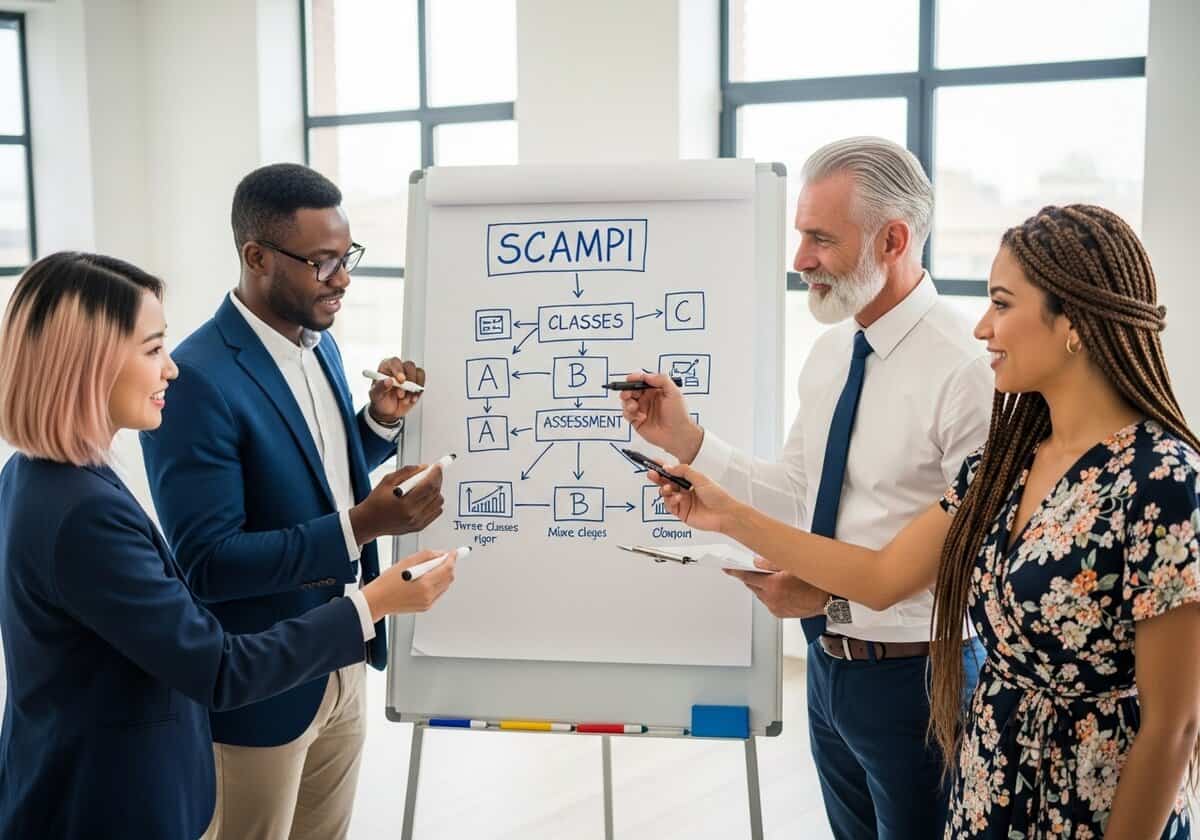
The SCAMPI methodology, or Standard CMMI Appraisal طريقة for Process Improvement, is the method in enhancing organizational capabilities through rigorous evaluation and continuous improvement. According to the Carnegie Mellon Software Engineering Institute, organizations that implement CMMI frameworks experience a 35% improvement in أداء العملية over time, demonstrating the tangible benefits of structured appraisal processes. This article thoroughly explores the SCAMPI نطاق, detailing its objectives, classification of appraisal types (Classes A, B, and C), the key phases involved in the SCAMPI appraisal process, and the essential roles required for effective evaluations.

النقاط الرئيسية

Evaluation
Assessment rigor categorizes process evaluation into three classes to identify strengths and weaknesses.
  • SCAMPI provides a structured approach for process improvement.
  • Evaluation identifies strengths and weaknesses of processes.
  • Three classes (A, B, C) define assessment rigor.
  • Key phases include preparation, execution, and reporting.
  • Lead appraisers guide the appraisal الفرق efficiently.
  • Promotes organizational maturity across various sectors.

Definition of SCAMPI and its Framework

SCAMPI, which stands for Standard CMMI Appraisal Method for Process Improvement, is a structured assessment approach designed to evaluate and enhance قدرة العملية within organizations. It is rooted in the دمج نموذج نضج القدرات المتكاملة (CMMI), a proven framework used for process improvement in software engineering and systems engineering.

The SCAMPI methodology facilitates organizations in identifying strengths and areas needing enhancement by conducting thorough evaluations that align with predefined maturity levels, which range from Level 1 (Initial) to Level 5 (Optimizing).

nanostructured materials with a high density of grain boundaries that act as sinks for radiation-induced defects

Capability maturity model integration 1
انظر أيضامستويات نموذج تكامل نضج القدرات الخمسة (CMMI)

The SCAMPI framework comprises various components, including appraisal protocols, guidelines, and a set of objectives that drive the evaluation process. Within this framework, three classes of appraisals are distinctly identified, an organization being able to choose a specific class based on its goals, size, and specific industry requirements:

  • Class A provides the most rigorous assessment, involving comprehensive data collection and analysis
  • Classes B and C offer varying degrees of depth and focus.

Additionally, the methodology serves as a mechanism for ensuring compliance with industry المعايير and government أنظمة. Organizations involved in defense contracting or quality assurance must adhere to strict guidelines, making SCAMPI crucial in demonstrating accountability and reliability. Appraisals can uncover areas needing corrective actions, enabling organizations to maintain compliance while improving their operational readiness.

نصيحة: organizations should integrate SCAMPI objectives into their strategic planning to ensure alignment between resource allocation and process improvement initiatives. This alignment can lead to optimized investments in training and technology, further amplifying the impact of the SCAMPI methodology in details across all levels of the organization.

SCAMPI Classes and Their Specific Applications

SCAMPI (Standard CMMI Appraisal Method for Process Improvement) exists in three distinct classes, each designed to serve different appraisal needs and contexts.

  • Class A appraisals: are the most comprehensive, requiring a full evaluation of an organization’s processes against the CMMI model. This class is utilized to assess an organization’s capability for achieving maturity levels and is critical for large-scale projects where compliance and risk management are paramount. For instance, a defense contractor may undergo a Class A appraisal to ensure that their processes meet strict DOD standards for program management, leading to improved project success rates and reduced دورة الحياة costs. Typical total duration: 6-8 weeks.
  • Class B appraisals: offer an intermediate approach, typically conducted with less rigor than Class A. This class is suitable for organizations looking to gain insight into their process strengths and weaknesses without committing to a full assessment. The findings can guide targeted improvements, which can lead to an increase in both efficiency and customer satisfaction. Typical total duration: 4-6 weeks.
  • Class C appraisals: are the least formal and are commonly used for internal assessments or benchmarking against industry standards. They help organizations identify process areas needing improvement without the associated costs of higher classes. Frequently, small businesses adopt this class to establish foundational practices that support future growth. A notable benefit is that Class C appraisals can reveal quick wins in process improvement, enabling rapid feedback loops for ongoing enhancement. Typical total duration: 2-4 weeks.

The choice among these classes depends on several factors including organizational goals, current مستوى النضج, and regulatory requirements. Organizations might consider utilizing a Class A for formal recognition by external stakeholders, while opting for Class B or C for internal audits or pilot projects.

The SCAMPI Appraisal Process

Essential Roles in the SCAMPI Evaluation

The SCAMPI evaluation process relies on various roles that align to ensure an effective appraisal of an organization’s process maturity:
Scampi evaluation
Roles in the scampi evaluation process enhance organizational process maturity assessment.
The Appraisal Team Leader (ATL): directs the overall evaluation, functioning as a mediator between the organization and the SCAMPI team. The ATL must possess extensive experience in appraisal methodologies and should ideally have completed related training. A successful ATL streamlines تواصل, coordinates schedules, and ensures that all team members possess the necessary skills to perform their roles efficiently.The Appraisal Team Members (ATMs): who perform several tasks, including data collection, document review, and observation during interviews. ATMs bring subject matter expertise in specific domains, which is crucial for making informed judgments about the organization’s practices. These members are also responsible for verifying that evidence aligns with appraisal criteria laid out in the SCAMPI methodology in details.
Subject Matter Experts (الشركات الصغيرة والمتوسطة): also play a significant part in the SCAMPI evaluation, providing targeted insights into areas such as technical practices, risk management, and quality assurance. SMEs enhance the appraisal accuracy, ensuring that findings are well-founded.The Organization representative: this individual assists the appraisal team in understanding the organizational context, policies, and existing practices. He is responsible for facilitating meetings, actively engaging in discussions and offering organizational insights, he bridges the gap between the SCAMPI evaluation team and the internal processes.

The SCAMPI Steps

The SCAMPI appraisal process consists of distinct phases designed to assess and improve organizational processes systematically:

 SCAMPI Class A AppraisalsSCAMPI Class B AppraisalsSCAMPI Class C Appraisals
1. Initiation & PurposeSpecific: sponsor authorizes for official maturity/capability level rating, benchmarking, or supplier qualification. SEI-Authorized Lead Appraiser is mandatory. Objectives and scope are formally defined and documented.Specific: sponsor defines purpose, typically for internal process improvement, initial gap analysis, risk identification, or progress tracking between Class A appraisals. Lead Appraiser is CMMI knowledgeable but not necessarily SEI-authorized. Objectives and scope are more flexible.Specific: sponsor defines a very specific, narrow focus (e.g., health check of a single process area, readiness for a minor change, or verifying a specific practice). Often conducted by internal personnel with CMMI knowledge. Emphasis on quick turnaround and targeted insight.
2. Planning the AppraisalSpecific: requires a detailed, formal appraisal plan (schedule, resources, logistics, data needs, team roles). Rigorous team selection and formal training. Organizational Unit (OU) preparation is extensive, often including a readiness review. Formal identification of required objective evidence.Specific: involves a less formal appraisal plan. Team selection is more flexible, based on knowledge and availability. OU preparation is less intensive. Focus on identifying key areas for data collection efficiently.Specific: minimal formal planning. Quick identification of scope, participants, and data sources. Often utilizes opportunistic scheduling and existing resources.
3. Preparing for Data CollectionSpecific: involves development/tailoring of comprehensive data collection instruments (interview scripts, document review checklists based on all CMMI PIs). Appraisal team is formally trained on the CMMI model and the SCAMPI A method.Extensive review of preliminary objective evidence is mandatory.Specific: involves development or adaptation of data collection instruments, which can be less structured or use standard templates. Team familiarization with relevant CMMI areas. Review of readily available documentation. Less emphasis on exhaustive preliminary evidence.Specific: utilizes informal checklists or highly focused questions.Minimal specific preparation, relying on existing knowledge of the process area and the specific objective.
4. Conducting Data Collection (On-site/Remote)Specific: starts with a formal opening meeting. Involves extensive and rigorous data collection through interviews (practitioners, managers, process owners), thorough document reviews (direct and indirect evidence for all PIs in scope), and observation of demonstrations. Daily data consolidation and تصديق by the entire team. A rigorous evidence trail is maintained.Specific: data collection through interviews (individual or group), document reviews, and potentially workshops. Focus is on identifying strengths and weaknesses broadly across selected areas. Data consolidation is less formal and iterative. Evidence trail is less rigorous.Specific: highly targeted and rapid data collection (e.g., short, focused interviews with key personnel, review of specific artifacts or records). Can be very short in duration (hours to a few days). Focus is solely on the predefined specific objective.
5. Consolidating & Validating Data / AnalysisSpecific: involves rigorous corroboration of evidence from multiple sources (triangulation) for all PIs. Formal characterization of practice implementation (strengths, weaknesses, alternative practices) against CMMI goals and practices. Draft preliminary findings are documented and reviewed by the team for consensus against strict criteria.Specific: consolidation of observations and collected data. Identification of key process strengths, weaknesses, and improvement opportunities/themes. Analysis is more qualitative and focused on identifying patterns and areas for improvement rather than formal characterization.Specific: rapid analysis of collected information directly against the specific focus of the appraisal. Identification of key observations and immediately actionable items.
6. Generating Ratings/FindingsSpecific: formal determination of satisfaction for CMMI Specific Goals and Generic Goals based on collected, validated objective evidence. Leads to the generation of official Maturity Level rating (Staged representation) or Capability Level ratings (Continuous representation) by the SEI-Authorized Lead Appraiser.Specific to Class B & C: No official ratings are produced.
Class B Specific: findings focus on gaps against the CMMI model, areas of concern, potential risks, and detailed recommendations for improvement. Observations are often mapped to CMMI practices if applicable.
Class C Specific: findings are typically direct observations related to the narrow scope and are presented as actionable feedback or quick wins.
7. Reporting ResultsSpecific: results in a formal, comprehensive appraisal report including scope, method, team, detailed findings (strengths, weaknesses per Process Area), supporting objective evidence, and the official ratings. Formal presentation to sponsor and OU. If rated, an Appraisal Disclosure Statement and data package are submitted to the CMMI Institute. Formal closing meeting.Specific: report focuses on findings, observations, identified risks, and detailed recommendations for process improvement. Format can be less formal than Class A. Presentation to sponsor and relevant stakeholders. Primarily for internal distribution and use.Specific: often an informal report, email summary, or brief presentation summarizing key observations and suggested immediate actions. Emphasis is on quick, practical feedback to the target audience.
    
Resource Intensity & DurationHigh resource intensity (larger team size, significant effort from OU personnel, cost). Typically 1-3 weeks for the on-site/data collection phase, plus significant preparation (weeks/months) and reporting time (weeks).Medium resource intensity. Duration varies, often 3-10 days for data collection and analysis, with less preparation and reporting overhead than Class A.Low resource intensity. Typically 1-3 days, including preparation and reporting. Very focused effort on a small scale.
Typical examples
Cmmi maturity level 3
Achieving cmmi maturity level 3 is essential for defense contractors to qualify for government contracts.

A large defense contractor requires an official CMMI Maturity Level 3 rating to bid on a government contract.
Cmmi level 2
Assessing process maturity against cmmi level 2 for برمجة development improvement.

A software development department wants to assess its current process maturity against CMMI Level 2 practices to identify key areas for improvement before considering a formal Class A appraisal.
Peer review process
Ensuring adherence to peer review processes in software development.

A project team manager wants a quick check on whether the team is consistently following the newly implemented peer review process for critical software modules.
النصائح
  • Ensure meticulous evidence collection, organization, and traceability for every PI. Conduct thorough readiness checks and pre-appraisal activities.
  • Use an experienced SEI-Authorized Lead Appraiser with relevant domain experience.
  • Prepare participants for formal interviews. Ensure strong, visible sponsor commitment and resource allocation.
  • Focus on honesty and identifying genuine improvement areas, not just “passing.” Use it as a learning and team-building opportunity.
  • Prioritize findings based on business impact and feasibility. Involve a good mix of practitioners and managers to get diverse perspectives.
  • Can be used to “pilot” process changes.
  • Keep the scope extremely narrow and well-defined. Focus on actionable feedback and quick wins.
  • Use internal experts familiar with the specific process. Quick turnaround from initiation to feedback is paramount.
  • Good for verifying specific process changes or addressing a particular concern.

Bonus: SCAMPI parameters vs CMMI Maturity Levels

Our industry-unique technical, quality, legal, quality, control parameters suggested per each CMMI Maturity Level and SCAMPI Class Appraisals (big screen strongly recommended).

CMMI Maturity LevelSCAMPI Class A AppraisalsSCAMPI Class B AppraisalsSCAMPI Class C Appraisals
ML1: InitialSpecific: while ML1 is not a target to achieve (it’s the starting point), a Class A appraisal indirectly assesses it. If an organization fails to meet the goals of ML2 Process Areas (PAs), it is, by default, appraised at ML1.

  • Technicities/Controls/Quality/Process Points: characterized by ad-hoc, inconsistent processes. Success depends on individual heroics rather than institutionalized processes. Few stable processes exist. Inspection focuses on verifying that work *is* being performed and results produced, even if chaotically, as a baseline. No specific “ML1 processes” are “inspected for compliance” beyond confirming activity. Failure to demonstrate ML2 PAs results in ML1.
  • Contracts/Legals: little to no systematic approach; handled reactively.
Specific to Class B & C: generally not a direct focus for a “ML1 inspection” itself, as the goal is usually improvement towards higher levels. If assessing an organization suspected to be at ML1:

  • Class B: would observe and document the ad-hoc nature of processes, lack of defined project management, inconsistencies, and reliance on individuals. Highlights these as fundamental gaps and risks, providing a baseline for recommending basic project management disciplines (ML2).
  • Class C: might investigate a single, highly problematic, and uncontrolled process that is symptomatic of ML1 (e.g., “why are critical defects repeatedly missed in product X testing?”) to understand its specific failures and recommend immediate, localized containment or rudimentary controls.
ML2: ManagedSpecific: rigorous inspection of all ML2 Process Areas (REQM, PP, PMC, SAM, MA, PPQA, CM). Requires objective evidence for institutionalization via Generic Practices (GP 2.1 to GP 2.10) at the project level.

  • Technicities: documented project plans (including estimates, resources, schedules, risks), managed requirements, version-controlled work products, defined measurement repository, documented quality assurance procedures, supplier agreements.
  • Controls: monitoring project performance against plans, tracking progress, corrective actions based on deviations, configuration audits, PPQA audits ensuring compliance with project-defined processes, formal reviews with management and stakeholders.
  • Quality: adherence to project-specific defined processes and standards, objective تَحَقّق of process compliance (PPQA). Work products are controlled.
  • Process Points: established policies for managing projects, documented project-specific processes, provision of resources (funding, people, tools), assigned responsibilities, training for project personnel on their roles and processes. Stakeholder involvement is planned and managed.
  • Contracts/Legals (SAM PA): formal agreements with suppliers, monitoring supplier performance against those agreements, managing changes to subcontracts.

Evidence of project-level process discipline is mandatory for an ML2 rating.

Specific: reviews practices related to ML2 PAs to identify strengths, weaknesses, and improvement opportunities. Less formal evidence collection and validation than Class A.

  • Technicities: examines existence and practical use of project plans, requirements management approaches, version control, measurement activities, QA activities, and supplier management.
  • Controls: how projects generally monitor progress, manage changes, involve stakeholders, and ensure quality. Focus on identifying inconsistencies or areas lacking control.
  • Quality: general adherence to planned project processes, effectiveness of QA reviews, identification of common quality issues at the project level.
  • Process Points: understanding if projects are planned and managed according to some documented processes. Are basic project management disciplines evident? Identifies gaps in policies, resources, or training that hinder project management.
  • Contracts/Legals (SAM PA): reviews how supplier relationships are managed, if agreements exist, and if performance is tracked.

Aims to provide a gap analysis against ML2 PAs for internal improvement or Class A readiness.

Specific: highly focused deep dive into one or two specific ML2 practices, a single PA, or an aspect of a PA on a specific project (e.g., “Effectiveness of requirements traceability on Project X” or “Is the change control process for Project Y being followed?”).

  • Technicities/Controls: adherence to a specific documented procedure, use of a specific tool (e.g., CM tool), execution of a specific review (e.g., PPQA audit for one artifact).
  • Quality: effectiveness of a specific control or quality check within the narrow scope (e.g., are defects found by PPQA reviews being addressed?).
  • Process Points: is there a documented process for the specific item under review for that project? Are people aware of it?

Provides quick, targeted feedback on a limited aspect of ML2.

ML3: DefinedSpecific: rigorous inspection of all ML3 Process Areas (e.g., RD, TS, PI, VER, VAL, OPF, OPD, OT, IPM, RSKM, DAR) in addition to ML2 PAs. Requires evidence of an organizational standard set of processes and supporting assets, and that projects tailor from these. Institutionalization via GPs up to GP 3.2.

  • Technicities: documented organizational standard processes, tailoring guidelines, Process Asset Library (PAL) containing templates, checklists, lessons learned, process descriptions. Documented engineering processes (RD, TS, PI, VER, VAL). Risk management plans and status. Decision analysis records for key decisions.
  • Controls: organizational oversight of process definition and improvement. Collection and analysis of process-related experiences and measurements to improve organizational assets. Projects use their defined process (tailored from organizational standards) and integrated project management practices. Configuration management of organizational process assets.
  • Quality: consistency in process execution across similar projects due to tailoring from common standards. Quality of organizational process assets themselves. Effectiveness of verification and validation processes.
  • Process Points: established organizational infrastructure for defining, maintaining, and improving standard processes (OPF, OPD). Organizational training programs aligned with standard processes (OT). Mechanisms for organizational learning and sharing best practices. Proactive risk management (RSKM). Formal decision-making processes (DAR).
  • Contracts/Legals: indirectly, organizational standard processes might include guidelines for supplier selection or contract reviews, building upon SAM at ML2.

Evidence of organizational standardization, tailoring, and process asset deployment is mandatory for an ML3 rating.

Specific: explores the existence, adequacy, deployment, and use of organizational standard processes and assets.

  • Technicities: is there a documented set of standard processes? How are they tailored? Is there a PAL, is it used and useful? How are risks and decisions typically handled across projects? Are engineering processes defined and followed?
  • Controls: how does the organization ensure its standard processes are used and improved? Is there evidence of integrated project management based on tailored organizational processes?
  • Quality: consistency of process application. Are the organizational assets helpful? Are VER/VAL activities consistently applied?
  • Process Points: are there mechanisms for organizational learning (OPF, OPD)? Is relevant training provided (OT)? Is risk management systematically approached (RSKM)?

Assesses the maturity of organizational process infrastructure and consistency of its use.

Specific: could investigate a specific organizational process, asset, or ML3 practice (e.g., “How effectively is the organizational standard risk management process being tailored and used by Project Z?” or “Usability of the new requirements specification template from the PAL”).

  • Technicities/Controls: adoption and practical application of a specific organizational standard process element by a project. Usefulness of a specific PAL asset.
  • Quality: fif-for-purpose of a specific organizational asset or tailoring guideline in a specific project context. Effectiveness of a specific engineering practice (e.g., peer review process defined organizationally).

Checks health, adoption, or effectiveness of a very specific part of the ML3 infrastructure.

ML4: Quantitatively ManagedSpecific: rigorous inspection of ML4 PAs (OPP, QPM) in addition to ML2 & ML3 PAs. Requires objective evidence of statistical and quantitative management of selected subprocesses.

  • Technicities: statistically established process performance baselines (PPBs) and models (PPMs) for selected subprocesses. Use of التحكم في العمليات الإحصائية (SPC) techniques. quantitative objectives for quality and process performance set for projects, based on organizational objectives and PPBs. Data collection and analysis capabilities for quantitative management.
  • Controls: projects select critical subprocesses for quantitative management. Monitoring and control of these subprocesses using statistical methods to understand and manage variation. Prediction of project performance based on quantitative data.
  • Quality: subprocesses are statistically stable and capable. Reduced process variation. Objective data used to manage quality and performance.
  • Process Points: organizational infrastructure (OPP) for defining process performance objectives, selecting subprocesses, collecting and analyzing quantitative data, and deploying statistical techniques. Projects use these organizational assets for Quantitative Project Management (QPM).
  • Contracts/Legals: quantitative performance data might inform supplier selection or contract performance clauses in advanced scenarios.

Deep dive into data validity, statistical methods, criteria for subprocess selection, and how quantitative insights drive project and process management is mandatory for an ML4 rating.

Specific: explores initial efforts towards or readiness for quantitative management. Does not verify statistical validity deeply.

  • Technicities: are metrics collected that could form the basis for PPBs? Is there any use of statistical analysis for process understanding? Are any subprocesses identified as critical for performance? Is data used to set performance goals?
  • Controls: how is performance data used for decision-making, even if not fully statistical? Are there attempts to predict outcomes?
  • Quality: are there attempts to measure process capability or understand sources of variation, even qualitatively?
  • Process Points: availability of historical data, analytical skills within the organization, understanding of basic statistical concepts and process variation. Are there organizational objectives that could be cascaded to projects quantitatively

Identifies opportunities for, and readiness towards, implementing quantitative management.

Specific: could look at a specific subprocess to assess its stability or data richness for potential quantitative management. Or, review the application of a pilot quantitative technique on a project.

  • Technicities/Controls: data collection practices for a specific metric; initial attempts at charting, control limits, or statistical analysis for a focused area. Feasibility of setting quantitative objectives for a small part of a project.

Assesses feasibility or early results of a very limited quantitative effort for a narrow scope.

ML5: OptimizingSpecific: rigorous inspection of ML5 PAs (OPM, CAR) in addition to ML2, ML3 & ML4 PAs. Requires objective evidence of continuous, data-driven process improvement and innovation.

  • Technicities: use of causal analysis techniques (e.g., root cause analysis, Pareto, fishbone) to identify and address root causes of defects and problems. Proactive identification, evaluation, piloting, and deployment of incremental and innovative process improvements based on quantitative understanding of their impact.
  • Controls: organizational mechanisms for continuous improvement. Organizational performance management aligned with business objectives, using quantitative data to select and prioritize improvements. Tracking and evaluation of deployed improvements to ensure they meet objectives and are institutionalized.
  • Quality: measurable improvement in process performance, quality, and business outcomes, driven by analysis and innovation. Prevention of defect recurrence through addressing root causes. Culture of innovation and empowerment.
  • Process Points: organizational infrastructure for selecting and piloting improvements (OPM), deploying changes, and performing Causal Analysis and Resolution (CAR). Empowered teams for improvement. Feedback loops from CAR and OPM into organizational processes and assets.
  • Contracts/Legals: highly mature organizations might collaborate with suppliers on joint process optimization initiatives based on shared quantitative goals.

Evidence of a sustained, data-driven continuous improvement culture and tangible performance benefits is mandatory for an ML5 rating.

Specific: identifies opportunities for innovation or more systematic causal analysis and problem prevention. Does not verify deep statistical impact or institutionalization of improvements.

  • Technicities: how are lessons learned used to prevent future problems? Are there any formal causal analysis activities? Are innovative ideas solicited, evaluated, and explored? How are improvements deployed?
  • Controls: how are process improvements proposed, prioritized, and deployed? Is their impact assessed?
  • Quality: is there a focus on preventing problems and proactively optimizing performance beyond current targets?
  • Process Points: existence of a culture for improvement, mechanisms for sharing innovations and lessons learned. Is there top management support for optimization efforts?

Assesses potential for or early stages of establishing an optimizing culture and systematic improvement mechanisms.

Specific: could assess the effectiveness of a specific pilot improvement initiative or the application of a specific causal analysis technique for a recurring problem.

  • Technicities/Controls: the process and outcome of a specific CAR effort (e.g., did they identify a valid root cause for a specific defect type?). Results and learnings from a piloted innovation (e.g., a new tool or technique).

Evaluates a single instance of an improvement, problem-solving activity, or innovation effort.


نصيحة:
regularly revisiting SCAMPI appraisal results can cultivate an environment of sustained improvement, helping organizations stay ahead of regulatory changes and competitive pressures.

خاتمة

The SCAMPI methodology serves as a cornerstone for organizations aiming to enhance their process maturity through systematic evaluation and targeted improvement strategies. By adhering to structured phases and clearly defined roles, organizations can effectively implement the CMMI framework and witness substantial performance enhancements. The significant statistic from the Carnegie Mellon Software Engineering Institute—that organizations leveraging CMMI frameworks achieve a 35% improvement in process performance—speaks volumes about the tangible benefits derived from rigorous appraisal practices such as those found within the SCAMPI methodology in details.

Scampi methodology
Scampi methodology enhances process maturity and performance through structured evaluation and cmmi implementation.

الأسئلة الشائعة

What is the SCAMPI methodology?

SCAMPI stands for Standard CMMI Appraisal Method for Process Improvement. It is a structured approach designed to evaluate and enhance organizational processes using the CMMI framework.

What are the different classes of SCAMPI and their specific applications?

SCAMPI has three classes: A, B, and C. Class A is formal and comprehensive, used for official CMMI ratings, while Classes B and C are less formal and focus on readiness assessments or internal evaluations.

How does SCAMPI impact organizational process maturity?

SCAMPI provides organizations with a detailed understanding of their process maturity levels. This insight enables targeted improvements, ultimately leading to higher efficiency and effectiveness.

How does SCAMPI relate to CMMI models?

SCAMPI is directly based on CMMI models, using their framework to assess and enhance processes. It aligns organizational practices with the best practices outlined in the CMMI framework.


مواضيع ذات صلة

  • Benchmarking practices: a method for comparing organization’s processes with those of industry leaders to identify gaps.
  • تحليل السبب الجذري (RCA): a technique for finding the underlying reasons for process deficiencies or failures.
  • تخطيط العمليات: visual representation of workflows to analyze and improve organizational processes.
  • Continuous improvement models: frameworks like PDCA أو ستة سيجما that facilitate ongoing enhancements in processes.
  • 'sacrificial' internal cladding that absorbs the majority of neutron damage, protecting the structural vessel detailed guides designed to improve process efficiencies across organizations.
  • إدارة التغيير strategies: structured approaches to managing change in processes and organizational culture.
  • Quality Management Systems (QMS): a set of coordinated activities to direct and control an organization to consistently improve quality.
  • Stakeholder engagement techniques: strategies for involving all relevant parties in the improvement process to ensure success.
  • Risk management frameworks: structured methodologies for identifying and managing potential risks in projects and processes.
  • Performance measurement systems: frameworks for assessing the efficiency and effectiveness of processes and practices.

مسرد المصطلحات المستخدمة

Asynchronous Transfer Mode (ATM): تقنية شبكات عالية السرعة تستخدم خلايا ثابتة الحجم لنقل البيانات، مما يتيح اتصالات فعّالة ومرنة عبر مختلف أنواع الوسائط. تدعم هذه التقنية أنواعًا متعددة من الخدمات، بما في ذلك الصوت والفيديو والبيانات، مما يُسهّل إدارة جودة الخدمة (QoS).

Capability Maturity Model Integration (CMMI): إطار عمل لتحسين العمليات يُزوّد ​​المؤسسات بالعناصر الأساسية لتحسين فعال للعمليات، مع التركيز على الأداء والجودة والكفاءة في مختلف المجالات، بما في ذلك تطوير البرمجيات وتقديم الخدمات. ويتألف من خمسة مستويات نضج لتوجيه نمو المؤسسة.

Computer Aided Manufacturing (CAM): تكنولوجيا تستخدم البرمجيات والآلات التي يتم التحكم فيها بواسطة الكمبيوتر لأتمتة عمليات التصنيع، مما يتيح الإنتاج الدقيق وتعديلات التصميم وإدارة الموارد بكفاءة في مختلف الصناعات.

Contract Manufacturer (CM): شركة تُنتج سلعًا نيابةً عن شركة أخرى، وعادةً ما تتبع مواصفات تصميم وجودة محددة. يتيح هذا الترتيب للشركة المُوظِّفة التركيز على كفاءاتها الأساسية، كالتسويق وتطوير المنتجات، مع الاستعانة بمصادر خارجية لعمليات التصنيع.

Performance Qualification (PQ): عملية تتحقق من أن النظام أو المعدات تعمل وفقًا لمتطلبات محددة في ظل ظروف العالم الحقيقي، مما يضمن قيامها بوظيفتها المقصودة باستمرار ضمن حدود محددة مسبقًا.

Personnel Airlock (PAL): مدخل مُحكم الإغلاق، مُصمم للسماح للموظفين بالانتقال بين بيئات ضغط مُختلفة مع تقليل التلوث والحفاظ على السلامة، ويُستخدم عادةً في محطات الفضاء والمختبرات والغرف النظيفة. يتميز بأبواب مُتشابكة تمنع الفتح المُتزامن.

Plan Do Check Act (PDCA): نموذج التحسين المستمر يتكون من أربع خطوات تكرارية: التخطيط للهدف، وتنفيذ الخطة، وتقييم النتائج مقابل التوقعات، واتخاذ الإجراءات التصحيحية لتحسين الأداء والعمليات.

Qualified Person (QP): فرد يتمتع بالتعليم والخبرة والسلطة اللازمة للإشراف على الامتثال للمتطلبات التنظيمية وضمانه في إعداد وتقديم الوثائق الفنية، وخاصة في قطاعي التعدين والموارد، كما هو محدد بواسطة معايير الصناعة ذات الصلة.

Quality Management System (QMS): نظام منظم من العمليات والإجراءات والمسؤوليات يهدف إلى ضمان الجودة المتسقة في المنتجات والخدمات، وتسهيل التحسين المستمر، وتلبية متطلبات العملاء والمتطلبات التنظيمية.

Statistical Process Control (SPC): طريقة لمراقبة الجودة تستخدم تقنيات إحصائية لمراقبة عملية ما والتحكم فيها، والتأكد من أنها تعمل بكامل إمكاناتها من خلال تحديد الاختلافات والحفاظ على الناتج المتسق ضمن حدود محددة.

Value Engineering (VE): طريقة منهجية لتحسين قيمة المشروع من خلال تحليل وظائفه، وخفض التكاليف، وتحسين الأداء دون المساس بالجودة أو الموثوقية. تتضمن هذه الطريقة عملاً جماعياً متعدد التخصصات لتحديد وتنفيذ بدائل فعّالة من حيث التكلفة.

Verification and Validation (V&V): عملية لضمان أن النظام يلبي المواصفات ويحقق الغرض المقصود منه، وتتضمن نشاطين متميزين: التحقق يتحقق مما إذا كان المنتج يلبي مواصفات التصميم، بينما يقوم التحقق بتقييم ما إذا كان يلبي احتياجات المستخدم ومتطلباته.

الصور بالحجم الكامل والتنزيلات متاحة فقط 100% مجاناً للأعضاء المسجلين.