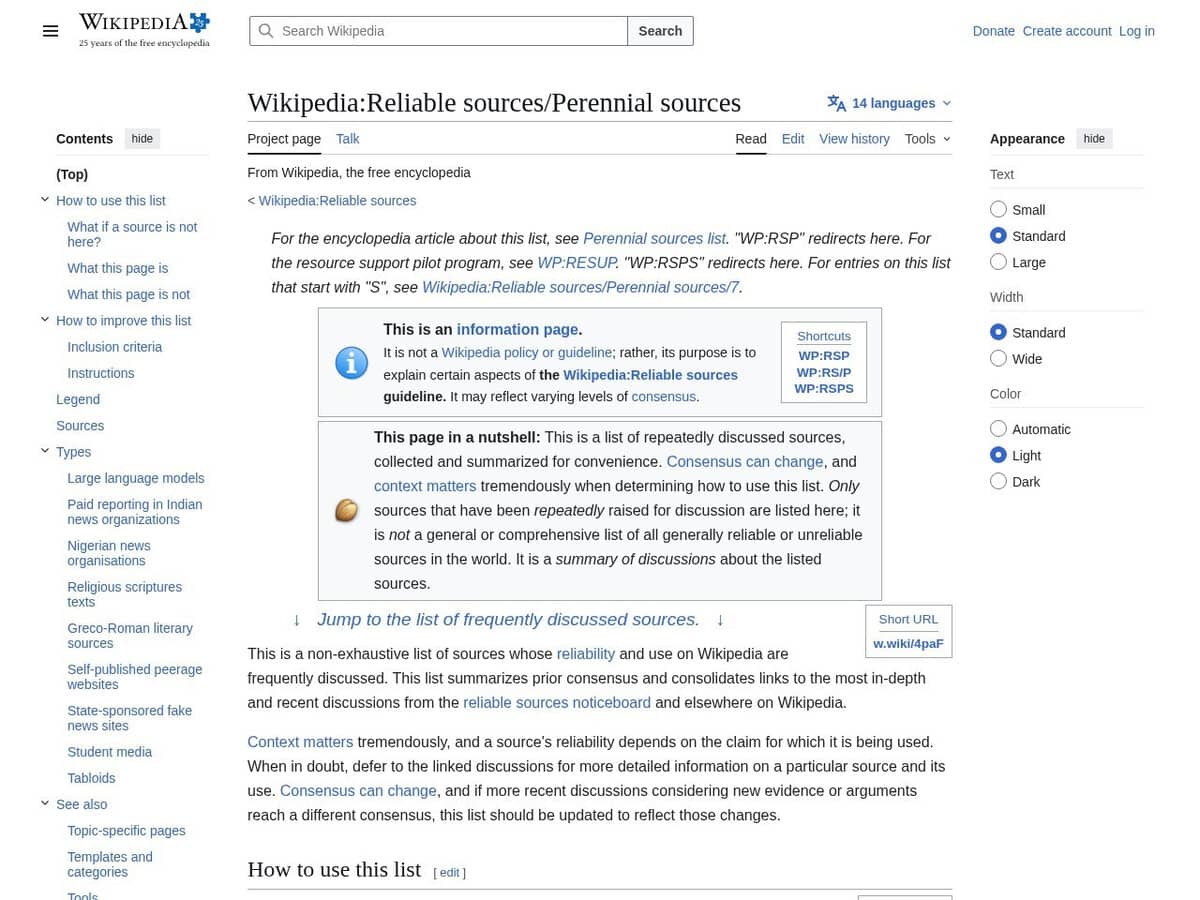
위키백과 '지속적으로 신뢰받는 출처' 페이지는 자주 인용되는 뉴스 기관, 학술 저널 및 디지털 플랫폼의 신뢰성에 대한 커뮤니티의 합의를 기록한 동적 색인입니다. 이 페이지는 출처의 편집 기준에 대한 문서화된 평가를 기반으로 출처를 '일반적으로 신뢰할 수 있음', '합의 없음', '사용 중단됨'과 같은 특정 등급으로 분류합니다. 사실 확인 역사적 배경과 편향 가능성을 고려합니다. 각 항목은 공식적인 의견 요청(RfC)에 연결되어 투명한 감사 추적 기록을 제공하며, 출판물의 소유권 변경, 편집 방향 변화 또는 AI 생성 콘텐츠 통합을 반영하여 지속적으로 업데이트되는 미디어 신뢰도에 대한 메타 분석을 제공합니다.
팁: by very far not complete compared to the whole 인터넷, but if your site target is on this list, be sure it has been discussed extensively.
Quality assurance and innovation professionals can apply this resource as a secondary validation layer when vetting non-peer-reviewed technical intelligence and industry news. By cross-referencing external reports against these consensus-based ratings, engineers and researchers can identify publications with a history of systemic inaccuracy or promotional bias before integrating their data into technical documentation or feasibility studies. This systematic approach to source verification is particularly valuable in manufacturing for filtering out unreliable market intelligence and ensuring that strategic decisions are grounded in information from outlets with established reputations for accuracy.