Product Design, Manufacturing & Innovation Resources
집 » PFAS 생물축적 및 생물농축

PFAS 생물축적 및 생물농축

2000
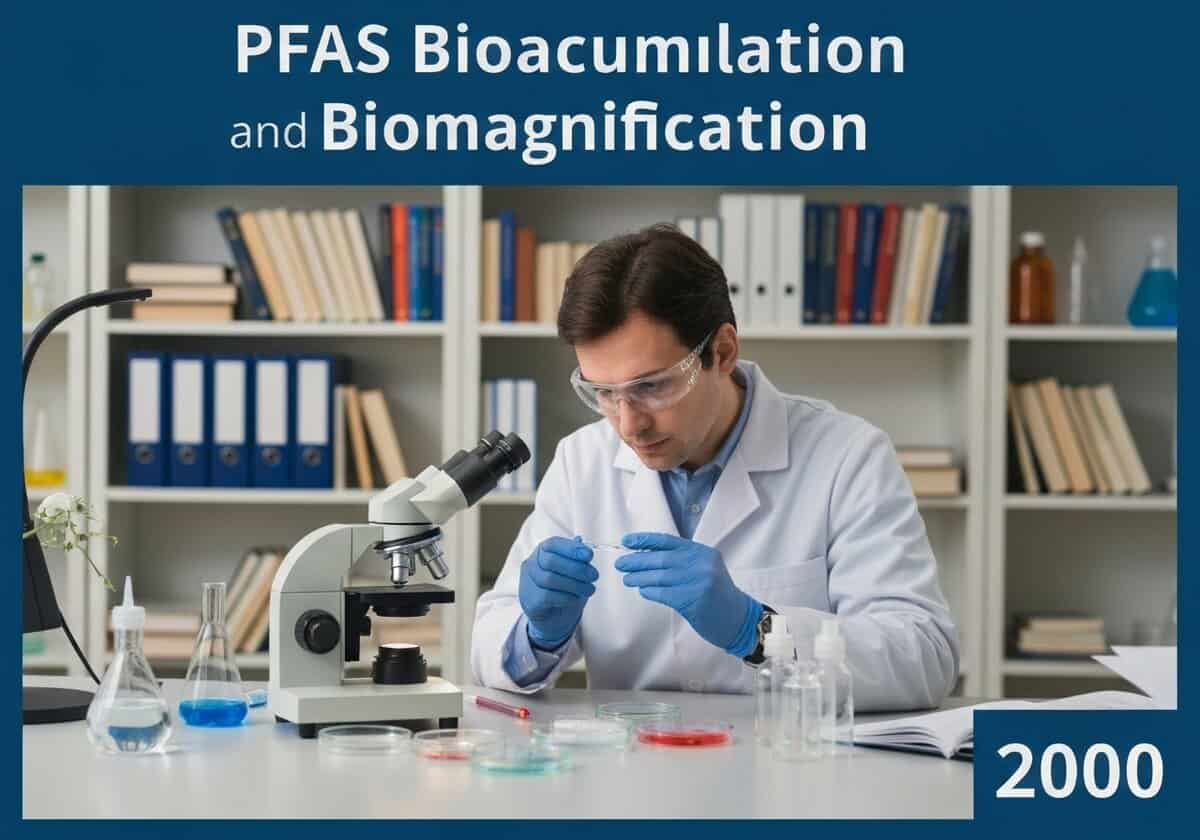
Toxicologist analyzing fish samples for PFAS in a laboratory setting.

(설명을 위한 생성된 이미지입니다)

지방 조직에 축적되는 많은 잔류성 유기 오염 물질과는 달리, 장쇄 PFAS PFOA와 PFOS 같은 유해물질은 주로 혈청 내 단백질(예: 알부민)에 결합하여 간과 같이 혈액 공급이 풍부한 장기에 축적됩니다. 이는 체내 생물 축적과 먹이사슬을 통한 생물 농축으로 이어져, 인간을 포함한 최상위 포식자에서 농도가 높아집니다.
The environmental behavior of long-chain PFAS is distinct from classical persistent organic pollutants (POPs) like PCBs or DDT. While traditional POPs are lipophilic (fat-loving) and accumulate in adipose tissue, the amphiphilic nature of PFAS (having both a hydrophobic/lipophobic tail and a hydrophilic head) dictates a different biological fate. The charged functional group (e.g., carboxylate in PFOA or sulfonate in PFOS) interacts with proteins. Specifically, these compounds bind to serum albumin in the blood and fatty acid-binding proteins within cells. This protein-binding mechanism facilitates their transport throughout the body and leads to accumulation in protein-rich tissues and organs with high blood flow, such as the liver, kidneys, and blood itself. Because they are not easily metabolized or excreted, their biological half-life in humans can be several years. This persistence within a single organism is the basis for bioaccumulation. As organisms are consumed by others higher up the food web, the concentration of PFAS increases at each trophic level, a process known as biomagnification. This is why top predators like polar bears, dolphins, and humans often exhibit the highest levels of PFAS contamination.

UNESCO Nomenclature: 2512
독성학

유형

생물학적 과정

분열

점진적

용법

널리 사용됨

전구체

  • 먹이 사슬과 영양 단계에 대한 이해
  • 생체 조직 내 저농도 화학물질을 검출하기 위한 분석화학 기술(예: LC-MS/MS) 개발
  • DDT와 수은과 같은 이전 오염물질에서 확립된 생물축적 개념
  • 의약품의 단백질 결합에 관한 연구

응용 프로그램

  • 생선 섭취에 대한 공중 보건 권고안 개발
  • PFAS 배출을 제한하는 환경 규제(예: 스톡홀름 협약)
  • 인체 노출 수준을 추적하기 위한 생체 모니터링 프로그램
  • 건강 위험을 예측하는 독성학 모델

특허:

NA

잠재적 혁신 아이디어

  • genetically engineered microbes that express proteins with high affinity for pfas to aid in bioremediation
  • nanoparticle-based ‘sponges’ that mimic serum proteins to capture pfas from water
  • crispr-based biosensors that detect cellular stress caused by pfas accumulation
  • pharmacological agents that compete with pfas for protein binding sites to accelerate excretion
  • food chain models incorporating pfas protein-binding kinetics for more accurate risk assessment
  • advanced dialysis filters specifically designed to remove protein-bound pfas from blood
  • synthetic food additives that bind pfas in the gut to prevent absorption
  • drone-based tissue sampling of wildlife for large-scale biomagnification studies
  • organ-on-a-chip technology to study pfas accumulation and toxicity in human liver and kidney models
  • ai algorithms to predict the bioaccumulation potential of new chemicals based on molecular structure
관련 주제: 생물 축적, 생물 농축, PFAS, PFOA, PFOS, 독성학, 잔류성 유기 오염 물질, 혈청 알부민, 환경적 운명, 먹이 사슬.

역사적 맥락

PFAS 생물축적 및 생물농축

1990
1990
1990
2000
2006
1990
1990
1990
1993
2001-09-01

(날짜를 알 수 없거나 관련이 없는 경우, 예를 들어 "유체역학"의 경우, 주목할 만한 등장 시기를 대략적으로 추정하여 제공합니다.)

10년차 기념일

고화질 이미지 및 다운로드는 등록된 회원에게만 100% 무료로 제공됩니다.

> 로그인 <