"미래는 오늘을 준비하는 사람들의 것이다." - 말콤 X
In our tech world, making a technology roadmap for product development is key. It’s like a map that guides innovation and aligns projects with your goals. Through a technology roadmap, companies see the big picture, noting important goals and how to use resources.
이는 우선순위를 정하고 현명한 선택을 하는 데 도움이 됩니다. 우리는 이러한 로드맵을 만드는 최선의 방법을 살펴볼 것입니다. 이를 통해 기술이 업무에 원활하게 통합되어 더 큰 성공을 거둘 수 있을 것입니다.
핵심 요약
- 기술 로드맵에는 프로젝트 계획 로드맵, 제품 로드맵, 플랫폼 로드맵 등 다양한 유형이 있습니다.
- 훌륭한 기술 로드맵에는 SMART 목표와 일정표가 포함되어야 합니다. 간트 차트주요 이정표 및 위험 점검 사항.
- '그것을 만든다'는 것은 전략적 목표를 설정하고, 현재 기술을 점검하고, 이해 관계자를 참여시키고, 무엇부터 시작할지 선택하는 것을 의미합니다.
- 로드맵을 유용하게 유지하려면 부서 간 협력과 지속적인 업데이트가 필요합니다.
제품 개발에서 기술 로드맵이란 무엇인가요?
에이 기술 로드맵 기업이 기술을 활용하여 목표를 달성할 수 있도록 안내합니다. 중요한 기술 프로젝트에 집중하고, 자원 낭비를 방지하며, 새로운 기술적 기회를 수용할 수 있도록 지원합니다.
정의 및 목적
이는 기업이 목표를 달성하기 위해 기술을 어떻게 활용할 것인지를 보여주는 계획입니다. 이 로드맵을 통해 기술 계획 수립이 더욱 수월해집니다. 기술 프로젝트를 기업 목표 및 투자와 연계시켜 명확한 계획을 수립할 수 있으며, 이해관계자의 참여를 증진하고 현명한 기술 투자 결정을 내릴 수 있도록 안내합니다.
기술 로드맵의 유형
기술 로드맵에는 여러 종류가 있으며, 각각 특정한 초점을 가지고 있습니다.
- 제품 로드맵: 이는 6개월에서 12개월을 내다보는 단기적인 계획으로, 시장 및 고객 변화에 신속하게 적응하는 것을 목표로 합니다.
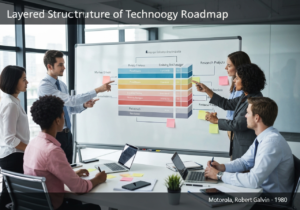
- 기술 로드맵: 1년에서 3년 사이의 기간을 포괄하는 이 계획들은 회사의 기술 목표를 달성하기 위한 구체적인 단계를 제시합니다. 이는 자원의 효율적인 활용과 기술 비전의 공유를 보장합니다.
- 플랫폼 로드맵: 그들은 회사의 기술 체계에 핵심 기술 플랫폼을 개발하고 통합하는 계획을 세웁니다.
- 애플리케이션 로드맵: 그들은 주요 비즈니스 소프트웨어의 수명 주기와 업데이트 계획을 수립합니다.
- IT 시스템 로드맵: CRM 및 ERP와 같은 대규모 시스템 계획에 집중합니다. 이러한 시스템이 중요한 비즈니스 활동을 지원하도록 보장합니다.
다양한 로드맵은 업데이트 및 개선 계획을 수립하여 기술 부채를 관리하는 데 도움이 됩니다. 이를 통해 기술 스택을 안정적이고 확장 가능하게 유지할 수 있습니다. 또한 기술 팀과 회사 목표를 연결하여 현명한 기술 및 아키텍처 선택을 지원합니다.
기술 로드맵이 제공하는 전략적 방향성은 조직이 새로운 기술 트렌드와 시장 수요에 효율적으로 적응할 수 있도록 해줍니다.
| 로드맵 유형 | 기간 | 집중하다 |
|---|---|---|
| 제품 로드맵 | 6-12개월 | 고객 요구사항 및 시장 동향 |
| 기술 로드맵 | 1-3년 | 자원, 기술 및 테크놀로지 |
| 플랫폼 로드맵 | 변하기 쉬운 | 핵심 플랫폼 개발 및 통합 |
| 애플리케이션 로드맵 | 변하기 쉬운 | 소프트웨어 수명 주기 및 업데이트 |
| IT 시스템 로드맵 | 변하기 쉬운 | 주요 시스템 및 그 기능 |
탄탄한 기술 로드맵은 효과적인 기술 계획 수립에 필수적입니다. 이는 단기 및 장기 프로젝트 모두에서 디지털 목표를 달성하기 위한 단계별 접근 방식을 지원합니다. 또한 기업의 기술 구조의 기반이 되며, 기술 발전과 전략적 성장을 위한 방향을 제시합니다.
현행 제조 공장 역량 평가
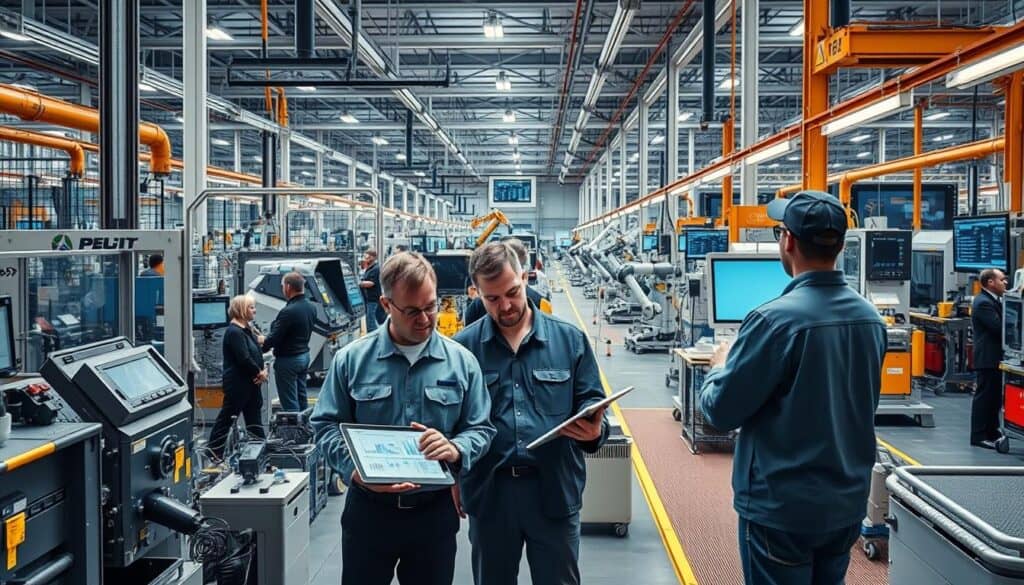
미래의 기술 발전에 대비하기 위해서는 제조 공장의 역량을 평가하는 것이 매우 중요합니다. 여기에는 현재 시스템과 장비를 검토하는 것이 포함됩니다. 이를 통해 강점과 개선이 필요한 부분을 정확히 파악할 수 있습니다.
기술 감사 실시
기술 진단은 현재 기술 현황을 파악하는 데 매우 중요합니다. 시스템 목록을 작성하고, 기능을 점검하며, 취약점을 찾아내는 작업이 포함됩니다. 2023년 딜로이트 보고서에 따르면 제조 부문 리더의 86%가 스마트 팩토리 기술이 향후 경쟁력 강화에 기여할 것이라고 생각합니다. 이는 철저한 기술 평가를 통해 공장의 디지털 전환을 위한 준비를 갖추는 것이 얼마나 중요한지를 보여줍니다.
전통적인 수작업 단계에서 디지털 우선 단계로 전환하려면 전략적인 계획이 필요합니다. 새로운 기술에 투자하고, 종종 기업 문화도 변화시켜야 합니다. 이러한 단계는 지속적인 혁신과 분석, 인공지능, 머신러닝과 같은 첨단 기술에 의존합니다.
| 단계 | 형질 | 예시 |
|---|---|---|
| 전통 무대 | 수동 공정, 전통적인 방법 | 기본 제조 설비 |
| 초기 단계 | 디지털 기술 사용 시작하기 | 디지털 재고 관리, 기본 자동화 |
| 디지털 우선 단계 | 지속적인 혁신, 첨단 기술 활용 | AI, 머신러닝을 활용한 프로세스 |
사용자 인터뷰 및 설문조사
디지털 성숙도 단계를 전환하는 것은 사용자 피드백을 통해 배우는 것에도 달려 있습니다. 사용자 피드백은 기술의 영향에 대한 실시간 통찰력을 제공하고 개선해야 할 점을 알려줍니다. 업계 전문가들은 디지털 변화가 단순히 새로운 기술에 관한 것이 아니라 운영 및 사용자 요구를 충족하는 세부적인 계획에 관한 것이라고 말합니다.
프로젝트 및 미래 제조 공장 목표 정의
In today’s world, it’s key to define your project goals and the aims of your future manufacturing plant clearly. By setting SMART goals, your projects become specific, measurable, achievable, relevant, and time-bound. These goals must align with your organization’s overall strategy.
Setting SMART Goals
Creating SMART goals means carefully looking at what your manufacturing can now do and what it will need to do. Goals need to be clear to provide a roadmap. They must include ways to measure success, be achievable, fit with the wider business aims, and have deadlines. This method ensures goals help your strategy and are practical.
Aligning with Strategic Objectives
Aligning with strategic objectives is crucial for turning plans into real results. By matching your goals with the business’s main aims, your efforts are more united. This makes departments work better together, helps use resources well, and tackles key areas like keeping the business going, making processes automatic, and updating systems.
Setting project goals in line with strategy helps manage changes and surprises. It makes your organization more flexible and strong.
| Key Areas | Objectives |
|---|---|
| Strategy and Systems Assessment | Align business and system goals, support growth or cost reduction |
| 사이버 보안 | Ensure data protection and business continuity |
| Business Continuity | Maintain operations during disruptions, market pivots |
| Process Automation and Improvement | Increase efficiency, reduce operational costs |
Investing Resources in Research rather than in Current Development
Putting money into research and current development keeps companies ahead. They must manage resources well. This means balancing new ideas with improving what they already have. A crucial part of this is investing smartly in technology. Funds should go to projects with great promise.

Balancing Innovation and Improvement
Managing resources well means finding a middle ground. It’s about funding tech that’s cutting-edge and improves existing processes. Take the infrastructure bill as an example. It put $9.5 billion into clean hydrogen and $10 billion into 탄소 포집. These projects mix new tech with upgrades, showing a strategic approach to innovation.
Resource Allocation
Deciding which projects get money is key in planning tech investments. It’s about judging their potential payoff and how important they are. For instance, $12 billion is going towards advanced nuclear reactors. Also, the National Science Foundation will get $3.5 billion for research and upgrades. Allocating resources this way helps companies grow sustainably.
Dealing with challenges like shifting goals and focusing too much on resources can be improved. It requires an integrated tech roadmap. This starts with setup and is followed by refinement. Here, managers choose priorities that fit the company’s strategy. They also check if they have everything needed to succeed. This organized strategy in managing resources can spark efficient, impactful innovations.
Creating a Technology Planning Framework
Building a strong technology planning framework is key for success. It helps align tech efforts with the goals of the organization. At the same time, it ensures resources are used well and stakeholders stay involved.
주요 구성 요소
A good planning framework has clear goals, and identifies needs for resources and training. Goals must be SMART: specific, measurable, achievable, relevant, and time-bound. This makes sure everyone knows the purpose behind tech projects.
Identifying new system capabilities and noting potential risks are critical steps. This complete view helps predict challenges and improve efficiency. It aids in boosting productivity across various departments.
모범 사례
Following best practices for roadmap creation is vital for a strong technology framework. It’s important to include different teams in making the roadmap. Such collaboration sparks innovation and links tech strategies to business goals.
 It keeps communication clear and ensures everyone is on the same page. Laying out a release schedule, prioritizing tasks, and setting a timeline are key for success.
| 이익 | 설명 |
|---|---|
| Clear Direction | Provides a strategic framework for guiding technology initiatives, enhancing business processes. |
| Resource Allocation | Enables effective allocation of resources by prioritizing projects based on impact and feasibility. |
| Risk Mitigation | Outlines potential risks and dependencies, facilitating proactive management and risk mitigation. |
| Stakeholder Engagement | Encourages input and buy-in from cross-functional teams, fostering collaboration and alignment. |
| Evaluation and Adaptation | Utilizes performance metrics for continuous evaluation and adaptation of the roadmap. |
Stakeholder Engagement and Collaboration
Effective stakeholder engagement is key for tech roadmap development. It involves different groups like top bosses, IT experts, and users. This means everyone understands the plans and feels they have a part in them.
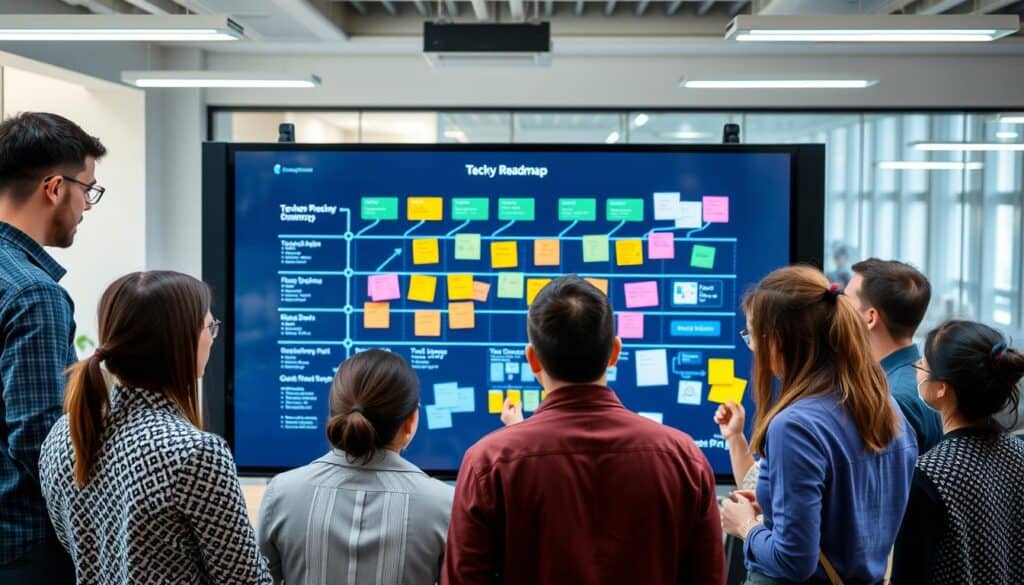
A good technology roadmap is like a guide. It shows what needs to be done and why, in line with the company’s goals. It talks about the tech we have, our aims, plans, progress, resources, challenges, and timelines. This way, everyone involved knows what’s expected and works together well.
Asking for ideas from the team helps make the roadmap suit their needs. This makes the plan better and more likely to succeed in bringing change.
| Benefits of stakeholder engagement | 세부 |
|---|---|
| Alignment with Business Objectives | Ensures technology initiatives are in line with strategic goals. |
| Enhanced Collaboration | Facilitates input from diverse teams for a more comprehensive roadmap. |
| Resource Efficiency | Promotes optimal allocation of resources and minimizes duplicate efforts. |
| Improved Communication | Ensures all stakeholders are aware of their roles and the roadmap’s direction. |
It’s vital to share the tech roadmap with everyone involved. Break down the goals so they’re clear and measurable. Use KPIs to see how things are going. Tech roadmaps are crucial for meeting the company’s big picture goals, making sure tech investments help us reach our vision.
Developing a Timeline for Implementation
Creating a realistic timeline is key to a successful technology plan. It’s important to look at several factors to make a good timeline. This includes checking resource availability, market trends, and what the organization needs.
Factors to Consider
When making a timeline, you need to think about:
- Resource Availability: It’s critical to know what human, financial, and tech resources are available to meet deadlines.
- Market Conditions: Understanding current and upcoming market trends can help adjust the timeline to grab opportunities and avoid risks.
- Organizational Priorities: The timeline should match the organization’s goals to ensure the tech plan helps the business.
Using Gantt Charts
간트 charts are great for showing the project schedule. They make it easy to see project steps and how they depend on each other. Here’s why Gantt charts are helpful:
| 이익 | 세부 |
|---|---|
| Clear Visualization | Gantt charts show the project timeline clearly, helping everyone understand key moments and how tasks are linked. |
| Enhanced Communication | With Gantt charts, teams can share the project schedule clearly, making sure all understand the plan. |
| Realistic Scheduling | Gantt charts allow for making schedules that really fit with available resources and timelines, avoiding impossible deadlines. |
Using Gantt charts helps in planning and managing tech projects better. They support a more organized and clear way of working. This approach minimizes problems and supports steady progress and growth.
Prioritizing Technology Initiatives
It’s key to get technology initiatives in order for a great tech roadmap. We’ll look at how to weigh both the impact and the effort needed. We’ll also consider the risks. Picking the right projects to start with helps make sure we’re going for the ones that help most.
Impact vs. Effort
It’s crucial to match each initiative’s impact with the effort it requires. We need to see how these efforts help achieve business goals and better the tech setup.
- High Impact, Low Effort: these projects are top priority. They offer big benefits for little input.
- High Impact, High Effort: these need more resources but are worth it for their alignment with company goals.
- Low Impact, Low Effort: these can wait or be scheduled for later.
- Low Impact, High Effort: requires lots of work for minimal returns. Think carefully before committing resources here.
위험 평가
Assessing risks along with impact and effort is key. Understanding potential hurdles lets us plan how to overcome them. This way, we can keep projects on track and aim for success.
| Risk Factor | 설명 | Mitigation Strategy |
|---|---|---|
| Technical Challenges | Potential technical hurdles that could delay implementation. | Thorough testing and flexible project plans. |
| Resource Constraints | Limited human or financial resources to execute the project. | Effective resource allocation and continuous monitoring. |
| Market Changes | Shifts in market conditions that affect project relevance. | Dynamic and responsive roadmap adjustments. |
Using these methods for picking initiatives and managing risks helps shape doable tech roadmaps. It tackles IT problems while improving the tech setup for success in both strategy and operation.
Monitoring and Adapting the Technology Roadmap
Keeping a technology roadmap up to date is crucial for success. Using project tracking tools is key. These tools give teams immediate updates. This lets them change the roadmap quickly as needed.
Project Tracking Tools
Tools like Jira, Asana, or Trello are great for watching technology projects closely. They make it easy to update everyone on progress. And they help make sure tasks are clearly assigned.
They come with Gantt charts and can track milestones. This keeps teams focused on near and far-off goals.
| 기간 | 설명 |
|---|---|
| Short-term | Projects planned for the next few months to a year. |
| Medium-term | Initiatives scheduled for one to three years. |
| Long-term | Tech initiatives spanning beyond three years. |
Adjusting for Changes
Being able to adapt is key in adaptive planning. Technology and business change fast. So, technology roadmaps need regular updates. Using project tracking tools helps teams shift things like resources and goals with ease.
Teams should check on milestones and possible risks often. It’s also smart to keep talking to stakeholders. This way, the roadmap stays relevant and useful.
Summary of Technology Roadmap Best Practices
To create a successful technology roadmap, focusing on technology planning excellence is key. Organizations should follow key best practices to build an effective roadmap strategy.
Setting clear goals is crucial. It’s important to outline goals, timelines, key milestones, and performance metrics. By matching these goals with business objectives, firms can link their vision to practical plans in the roadmap.
Starting with a detailed current state assessment helps identify tech needs. This includes looking at current systems, processes, and tech setups. Engaging stakeholders through interviews and surveys adds valuable insights.
Being flexible in planning is vital. Roadmaps should list projects by importance, urgency, and doability. It’s essential to think about using money, people, and tech wisely. Including strategies for handling risks, like laying out plans for problems and monitoring, is also key.
Employing strong tools like Jira makes managing the roadmap easier. These tools help by providing visual guides, focusing on objectives, and allowing for quick changes. Also, updating the roadmap regularly keeps it current with new trends or needs.
| 요소 | 설명 |
|---|---|
| Goal Setting | Defines clear objectives, timelines, milestones, and performance metrics aligned with strategic business goals. |
| Current State Assessment | Evaluates existing systems, processes, and technology stack for comprehensive understanding. |
| Stakeholder Engagement | Gathers input through interviews, workshops, surveys, and questionnaires for a well-rounded perspective. |
| Resource Allocation | Consideration of financial, human, and technological resources for project implementation. |
| 위험 관리 | Includes risk identification, mitigation strategies, contingency planning, and performance monitoring. |
| Project Tracking Tools | Utilizes tools like Jira for visual roadmaps, real-time visibility, and agile planning. |
| Regular Reviews and Updates | Ensures the roadmap remains dynamic and responsive to changing business needs. |
Following these best practices helps companies build a strong technology planning excellence. This leads to smarter tech investments and uses.
결론
In our fast-paced tech world, having a good technology roadmap is key. It helps plan out our tech needs in line with the best standards. This plan makes sure we use our resources well, boosting our work and new ideas.
Creating this roadmap starts with a detailed tech check and setting clear, smart goals. Each step is vital for bringing in new tech smoothly. It helps everyone understand why we’re spending on new tech. This unity is key for getting the support needed to meet our goals.
With set timelines and costs, companies can plan better. This makes sure everyone moves together in a well-thought-out way towards tech changes.
Tech roadmaps look at the big and small picture, making them useful on many levels. Keeping them up-to-date lets companies stay on track with their tech and business plans. It leads to smarter choices and lets everyone do their best, pushing growth and new ideas.
보충 자료 및 방법
- 전략 기획: 맹렬한 공부 분석(강점, 약점, 기회, 위협), 시나리오 계획
- Change management: Kotter’s 8-Step Process, ADKAR Model
- 시장 분석: PESTLE 분석, 포터의 5가지 경쟁력 분석
- Product Lifecycle Management (PLM): 단계별 게이트 프로세스, 린 제품 개발
- 비즈니스 모델 혁신: 비즈니스 모델 캔버스, 가치 제안 설계
- 디지털 전환: 디지털 성숙도 모델, 클라우드 컴퓨팅 통합
- 추세 분석: PEST 분석(정치, 경제, 사회, 기술)
자주 묻는 질문
제품 개발에서 기술 로드맵이란 무엇인가요?
기술 로드맵은 기술을 활용하여 비즈니스 목표를 달성하는 전략적 계획입니다. 기술적 기회를 포착하는 동시에 자원 낭비를 방지하여 기업의 민첩성과 집중력을 유지하는 데 도움을 줍니다.
기술 로드맵에는 어떤 유형이 있나요?
기술 로드맵에는 프로젝트 계획, 제품 로드맵 등 다양한 유형이 있습니다. 그 외에도 플랫폼 로드맵, 기술 로드맵, 애플리케이션 로드맵 등이 있습니다. 각 유형은 산업과 기업의 성공을 돕기 위해 특정한 목표를 가지고 있습니다.
기술 감사는 어떻게 수행하나요?
기술 진단을 하려면 먼저 보유하고 있는 기술 시스템 목록을 작성하세요. 각 시스템의 장점과 단점을 파악하십시오. 이를 통해 현재 보유하고 있는 기술을 파악하고 기술 개선 계획을 세울 수 있습니다.
기술 감사에서 사용자 인터뷰와 설문조사가 중요한 이유는 무엇일까요?
사용자 인터뷰와 설문조사는 최종 사용자로부터 직접적인 피드백을 제공합니다. 이를 통해 기술의 성능과 개선점을 파악할 수 있으며, 기술 계획이 올바른 방향으로 나아가고 있는지 확인할 수 있습니다.
혁신과 현재 개발에 자원을 어떻게 배분해야 할까요?
자원의 균형을 맞춘다는 것은 현재 운영에 필요한 것과 혁신이 가져올 수 있는 이점을 비교 검토하는 것을 의미합니다. 가치를 제공하면서 전략과도 부합하는 프로젝트를 선택하세요. 이렇게 하면 기존 서비스를 지원하는 동시에 새로운 아이디어를 모색할 수 있습니다.
기술 계획 프레임워크의 핵심 구성 요소는 무엇입니까?
탄탄한 기술 계획 프레임워크에는 명확한 마일스톤, 자원 계획 및 성공 측정 기준이 포함되어야 합니다. 또한 다양한 아이디어와 지원을 얻기 위해 여러 부서의 팀과 협력하는 것도 중요합니다.
기술 로드맵 개발 과정에서 이해관계자 참여를 어떻게 확보할 수 있을까요?
기술 계획 수립에 모든 사람이 참여할 수 있도록 워크숍과 인터뷰를 진행하세요. 함께 협력하는 것이 중요합니다. 이러한 접근 방식은 공동의 목표 의식을 고취하고 기술 로드맵이 모두에게 효과적으로 작동하도록 보장합니다.
기술 관련 사업의 우선순위를 어떻게 정할 수 있을까요?
어떤 기술에 집중할지 결정한다는 것은 필요한 노력과 잠재적 이점을 비교하는 것을 의미합니다. 사전에 위험 요소를 파악하면 문제를 조기에 해결하는 데 도움이 됩니다.
기술 로드맵에서 지속적인 모니터링은 얼마나 중요한가요?
기술 로드맵의 진행 상황을 지속적으로 모니터링하는 것이 중요합니다. 진행 상황을 추적하는 도구를 사용하면 새로운 기술, 비즈니스 변화 또는 고객 요구 사항의 변화에 적응할 수 있습니다.
사용된 용어집
Conversion Rate (CR): 웹사이트 또는 랜딩 페이지 방문자 중 구매 또는 뉴스레터 구독과 같은 원하는 행동을 완료한 방문자의 비율로, 전환 수를 전체 방문자 수로 나누어 계산합니다.
Customer Relationship Management (CRM): a system for managing a company's interactions with current and potential customers, utilizing data analysis to improve business relationships, enhance customer retention, and drive sales growth. It integrates various communication channels and automates processes to streamline customer engagement.
Enterprise Resource Planning (ERP): 재무, 인사, 제조 및 공급망을 포함한 핵심 비즈니스 프로세스를 통합 시스템으로 통합하여 조직 전반의 운영을 간소화하고 데이터 정확성을 향상시키며 의사 결정을 강화하는 소프트웨어 솔루션입니다.
Key Performance Indicator (KPI): a measurable value that demonstrates how effectively an organization is achieving key business objectives, often used to evaluate success at reaching targets.
Product Lifecycle Management (PLM): a systematic approach to managing a product's lifecycle from inception, through engineering design and manufacturing, to service and disposal, integrating people, processes, data, and technology to improve product quality, reduce time to market, and enhance collaboration across stakeholders.
Specific Measurable Achievable Relevant Timely (SMART): 명확하고, 정량화 가능하며, 달성 가능하고, 더 광범위한 목표와 일치하며, 시간 제한이 있는 목표를 설정하기 위한 프레임워크로, 효과적인 계획 수립 및 진행 상황 평가를 용이하게 합니다.