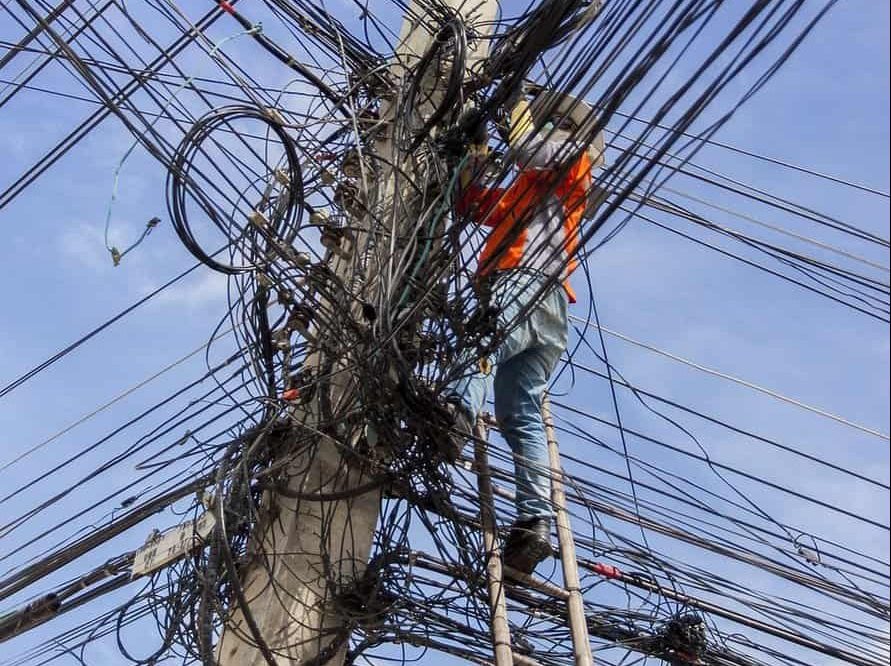
For product design engineers. The 40 TRIZ Principles are the solutions to solve the “TRIZ contradictions” in product design problem-solving or to highlight other approaches during your product design brainstorming sessions.
This article focuses on the 40 triz principles to be used with or without the TRIZ methodology.
Refer to TRIZ methods, tips, and tools at the end of this article.
The 40 TRIZ Principles
As these are translations from Russian -that may vary from book to book-, we have taken the most commonly used terminology, and we have regrouped the triz principles by family.
Note: we added complementary principles and technologies in the following chapter.
Highlighted in green is our selection of principles of high interest & frequent usage in Product Design
Different Assembly
This family regroups all means of assembling the components or parts differently. Clearly to be applied during the design choices.
| examples | our comments | |||
| #1 | Segmentation | Divide an object into independent parts |  |
Good to solve a tech problem or source a component of the shelf, but may lead to complexity & additional costs |
| #2 | Taking out | Separate an interfering part or property from an object, or single out the only necessary part or property of an object |  |
can be very effective, but product intent must be clear to eventually cut into the product specs |
| #4 | Asymmetry | Do not apply force or loads in a uniform or even way |  |
Applied locally frequently permits to reduce of the power and lean the structure (min exception and fatigue) |
| #5 | Merging | Regroups smaller parts or components to achieve the main goal |  |
Depends on context and volume: a dedicated part or component could be more cost and material effective |
| #7 | Nesting | Do you remember the “Matrioshka“, 러시아 중첩된 나무 조각 인형? | 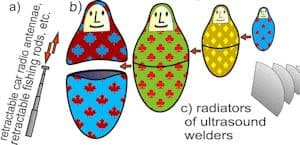 |
Modularity, a gain in storage, transport, 제품 변형 … |
| #27 | Intermediary | Add an intermediate part or function in the assembly |  |
Not the leanest approach. Is that the only solution? |
Adapt To Users or Context
This category regroups all means of changing the product or the system relative to its environment. Mostly at the specification phase rather than later at the design board.
| examples | our comments | |||
|
#3 |
Local quality | adapt the level of quality to the strict required, and only at the required place |  |
“Overprocessing” in the 7 wastes of Lean mindset, but for the Design Phase |
| #6 | Universality | Give other usages to an existing part or product |  |
Open new markets at very low effort and environmentally friendly. Not exactly to solve a design issue, but upstream. |
| #22 | Benefit From Harm | By lowering, adding, or increasing the harmful factor, make it a beneficial or secondary function | 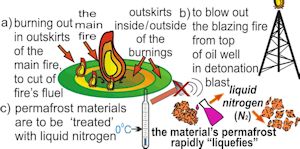 |
|
| #23 | 피드백 | Adapt actuator to effectively required parameter; control loop |  |
Self-leveling & without user intervention. |
| #25 | Self-service | Have the part or product perform other functions, regenerate itself, or produce usable wastes. |  |
When possible, a nice way of value added |
| #26 | Copying | Replace complex and costly components with cheap light and simple copies, or work on an image rather than the costly object itself |  |
(the essence of value Analyses in case you were not using that already) |
| #27 | Consumables | Replace something strong and costly with consumable parts or components |  |
mind the wastes, environment, and new regulations. Other Lean approaches exist |
Forms Follow Functions
One of the motos of this site. Read the corresponding post on Forms Follow Functions (fff): regroups all mean that change the shape or space. Usually, the simplest, most reliable, and most cost-effective solutions.
| examples | our comments | |||
| #8 | Anti-weight | Use the weight to lower other actuators |  |
typically the counterweight in an elevator |
| #14 | Spheroidality, Curvature | Make is round | 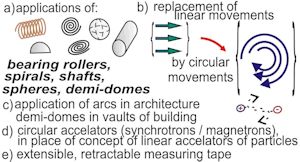 |
|
| #17 | Another dimension | 1D를 2D로 만들고, 2D를 3D로 만들었습니다. |  |
Permits opportunities (gaps, spaces) in the solving |
| #30 | Thin and Flexible | Make heavy structures thin, and eventually flexible if movement is needed | 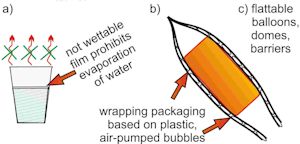 |
See the plastic tricks design library for molded hinges or thin walls |
Time Is The Essence
Family regrouping all TRIZ principles function related to time and new sequence.
Because not visible on the drawing board, solving a technical challenge with a new timed sequence can be overlooked
… but beware of not degrading the 사용자 경험 with longer or additional steps
| examples | our comments | |||
| #9 | Preliminary anti-action | Anticipate the harm with a counteraction | 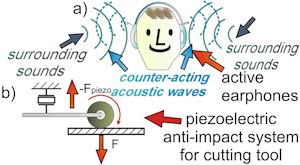 |
ex: preload of concrete beams, before the load itself |
| #10 | Preliminary action | Perform in advance the requirement or change or prepare in advance | 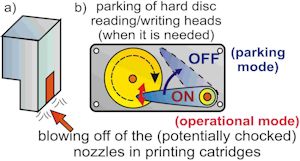 |
|
| #11 | Beforehand cushioning | “Prevent rather than cure” before too late |  |
Quality, Lean (…) but for design here |
| #13 | The other way round | Invert the physical principle or the parts relative to each other | 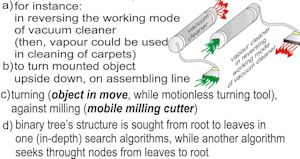 |
ex: on a Peltier module, cool one side instead of heating the other |
| #20 | Continuity of useful action | Do not stop the process or movement |  |
limit operations and WIP & uses inertia |
| #21 | Rushing Through | Perform the action quick |  |
Same logic as applying the force not evenly listed earlier, but on time, to limit the effort, energy, or risk |
| #34 | Discarding and recovering | Use, dispose or reuse at a later time | 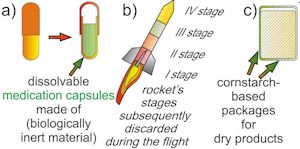 |
Environment and production friendly |
Physical Properties
TRIZ Principles which are related to either mechanical, physical, or chemical properties of the materials or the environment.
| examples | our comments | |||
| #12 | Equipotentiality | To conserve energy, limit position changes in a potential field | 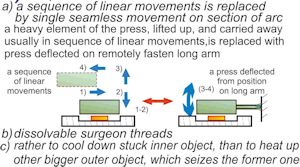 |
자기장 속에서 금속을 움직이거나 중력장 속에서 부품을 들어올리지 마십시오. |
| #15 | Dynamics | Make parts or components move relative to each other | 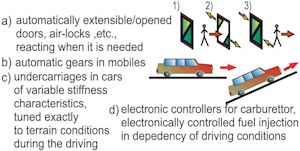 |
|
| #16 | Partial or excessive action | Reduce or increase slightly some specs to reach the conform zone |  |
Pareto: 20% makes the 80%. Or is 95% enough? |
| #18 | Mechanical vibration | Use vibrations rather than big movements |  |
permits very local effect, usually more energy efficient |
| #19 | Periodic action | Replace continuous linear actuators with rotary, pulsating, or repetitive means |  |
link to the previous, depending on the magnitude |
| #28 | 역학 substitution | Replace Mechanics with magnet or electromagnetism |  |
Refer to our Design with Magnets post |
| #29 | Pneumatics and hydraulics | Replace Mechanics with Hydraulics system |  |
some constraints, but worth every cent when adaptative, flexible, or long distances |
| #31 | Porous materials | Design with porous materials (or increase micro or macro porosity) |  |
Lighter. 3D 치사한 사람 & metal powder sintering helps these days |
| #32 | Color change |
Change the color, or transparency to ease the process. Indicate information by a color change. |
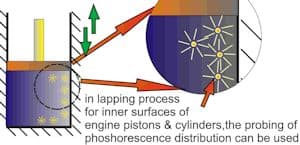 |
many special inks or materials are available, for 압력, temperature, density, humidity (…) indication |
| #33 | Homogeneity | Two interacting parts should have the same or similar materials | 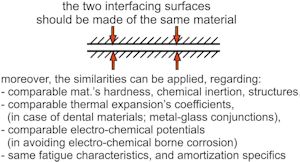 |
… and if fixed, be the same part! |
| #35 | Material Properties changes | use change of material properties: physical state change, strength, rigidity, texture, flexibility … |  |
(color, length in other principles) |
| #36 | Phases transition | use phase transition consequences: heat absorption or generation, volume change, transparency change … |  |
|
| #37 | 열팽창 | Use material thermal expansion (or contraction) to apply a force |  |
Fixed or temporary assemblies. Use bimetals also |
| #38 | Strong oxidants | O2 or O3 enriched atmosphere |  |
Mind the flammability & corrosivity aspects |
| #39 | Inert atmosphere | O2 or O3 lowered atmospheres to freeze some chemical reactions | 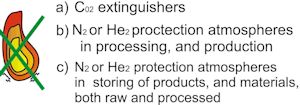 |
Opposite of previous; refer to the Triangle of Fire |
| #40 | Composite materials | Use composite materials |  |
Lighter. Well-known these days, but mind aging and process repeatability |
The TRIZ Methodology in a Nutshell
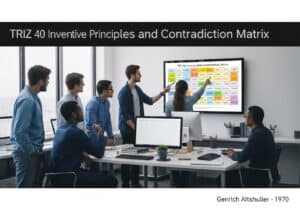
The contradiction matrix and the TRIZ principles are the fundamental tools within this methodology, developed by the Soviet inventor and science fiction writer Genrich Altshuller.
1 – Preparing the Contradiction Table
The table consists on aligning all 39 engineering parameters versus the new product functions. By cross-referencing these parameters within the matrix, designers and engineers can identify potential solutions that might not be immediately obvious, fostering innovative thinking and efficient problem resolution.
The 39 engineering parameters
| Weight of moving object Weight of non-moving object Length of moving object Length of non-moving object Area of moving object Area of non-moving object Volume of moving object Volume of non-moving object Speed Force Tension, pressure Shape Stability of object |
Strength Durability of moving object Durability of non-moving object Temperature Brightness 움직이는 물체에 소비되는 에너지 Energy spent by non-moving object Power Waste of energy Waste of substance Loss of information Waste of time Amount of substance |
신뢰할 수 있음 Accuracy of measurement Accuracy of manufacturing Harmful factors acting on object Harmful side effects 제조 가능성 Convenience of use Repairability Adaptability Complexity of device Complexity of control Level of automation 생산력 |
The Product Functions
Refer to other articles on this site to define proper user product functions, not to be confused with constraints (ex: a mandatory legal standard is a constrain from a product design point of view … unless you are the standard distributor or reseller)
2 – Applying the 40 Principles
Addressing contradictions is the crucial step in problem-solving. The process begins with identifying the specific contradiction, which typically falls into one of two categories: technical or physical.
- A technical contradiction arises when improving one aspect of a system leads to the deterioration of another.
- A physical contradiction involves conflicting requirements for the same element.
Now filling the table with one or more of the 40 principles listed above in each cell is the key step.
As the table consists of likely several hundreds of cells, to be reviewed in details with an open mind to creative and new solution, the process can be very long. Some software do help for that, but you loose the global view of the table, adjacent columns or rows that can be grouped together in a common solution.
We have seen some detailed research on AI applied to TRIZ, without a publicly available tool so far (see public research paper here)
팁: if time is a factor, we recommend focusing on key contradictions and user functions, rather filling superficially all the cells. A design-to-cost 또는 minimal viable product approche can help in this priorisation -see other posts for these methods-.
This systematic approach enables the transformation of the contradiction into a creative opportunity, facilitating innovative breakthroughs.
Triz Methodology examples
A classic example of TRIZ in action is its application in the automotive industry to address the challenge of reducing vehicle weight without compromising safety. By employing TRIZ principles, engineers identified the use of high-strength, lightweight materials like carbon fiber composites, which allowed for substantial weight reduction while maintaining structural integrity.
또 다른 예는 스마트폰의 배터리 수명을 향상시키기 위해 TRIZ가 사용된 전자 제품에서 찾을 수 있습니다.
The rest of this article is reserved for members
To limit scraping bots (currently 40,000 hits per day!),
we had to restrict access to full articles and tools to registered members only.
to access all the rest.