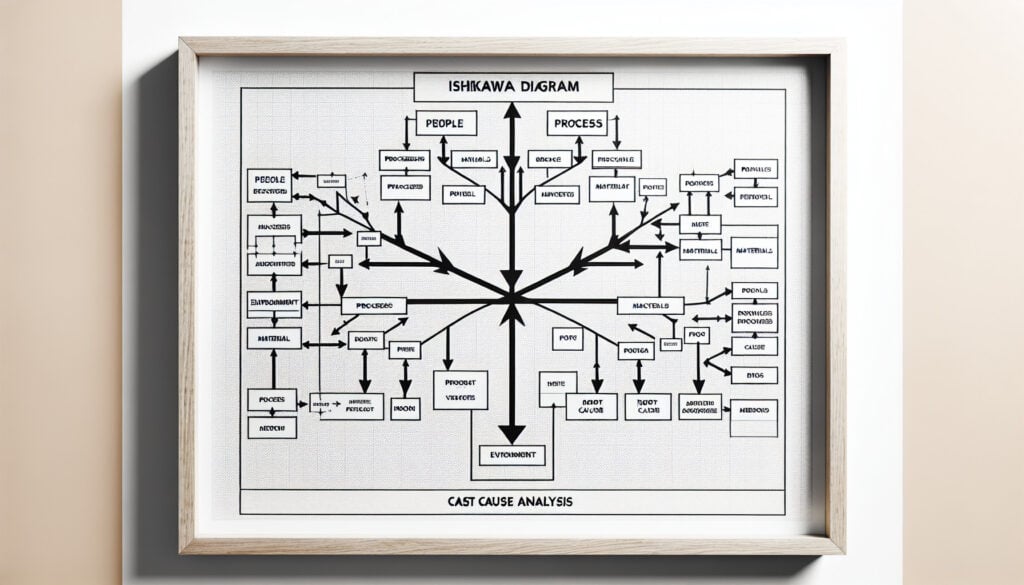
The Ishikawa Diagram is widely utilized in various industries such as manufacturing, healthcare, software development, and service sectors, serving as an effective tool during phases of problem-solving or quality improvement initiatives. Typically employed in team brainstorming sessions, this methodology draws participation from diverse stakeholders including engineers,
品質保証 personnel, project managers, and frontline employees, enabling a comprehensive examination of issues from multiple angles. Each category within the diagram, such as people, processes, machinery, materials, measurements, and environment, encourages participants to think critically about all potential causes that could contribute to a problem, facilitating a systematic approach to identifying root causes rather than just addressing surface-level symptoms. With its straightforward visual format, the diagram promotes collaborative discussions and enhances understanding among team members, making it easier to communicate complex issues and fostering a shared commitment to developing actionable solutions. Industries often apply this methodology in contexts like
シックスシグマ 継続的な改善が不可欠なプロジェクトやリーンイニシアチブにおいて、その有効性を実証する。
多用途性 さまざまなプロジェクトの種類や目標にわたって活用できます。実際には、このツールは、一時的な解決策を提供するだけでなく、根本的な問題に対処する是正措置をチームが実施するよう促すことで、より持続可能な成果につながります。この取り組みは、トラブルシューティングに役立つだけでなく、将来の課題に対するチームの課題解決能力を強化します。