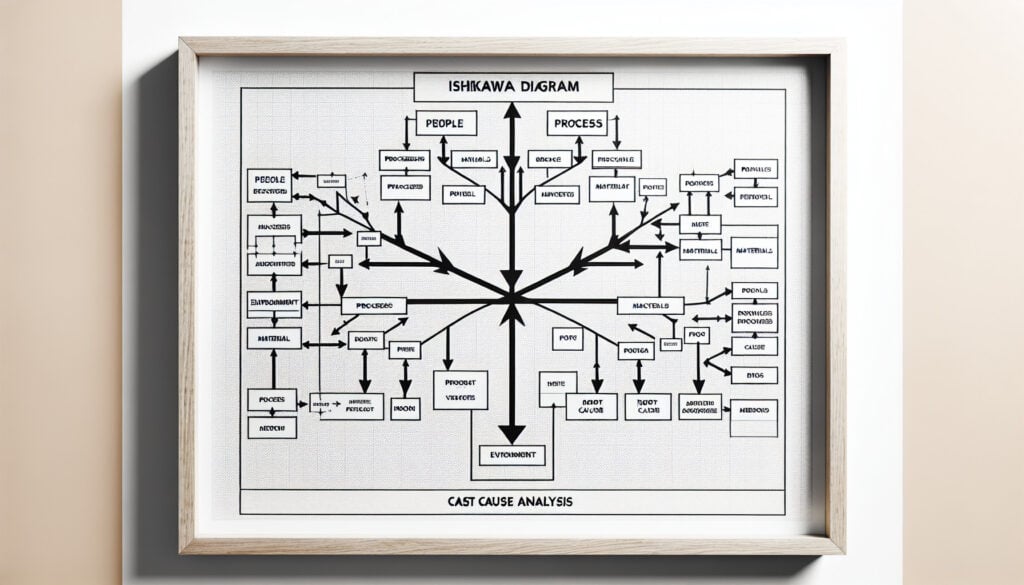
The Ishikawa Diagram is widely utilized in various industries such as manufacturing, healthcare, software development, and service sectors, serving as an effective tool during phases of problem-solving or quality improvement initiatives. Typically employed in team brainstorming sessions, this methodology draws participation from diverse stakeholders including engineers,
गुणवत्ता आश्वासन personnel, project managers, and frontline employees, enabling a comprehensive examination of issues from multiple angles. Each category within the diagram, such as people, processes, machinery, materials, measurements, and environment, encourages participants to think critically about all potential causes that could contribute to a problem, facilitating a systematic approach to identifying root causes rather than just addressing surface-level symptoms. With its straightforward visual format, the diagram promotes collaborative discussions and enhances understanding among team members, making it easier to communicate complex issues and fostering a shared commitment to developing actionable solutions. Industries often apply this methodology in contexts like
सिक्स सिग्मा ऐसे प्रोजेक्ट या लीन पहल, जहाँ निरंतर सुधार महत्वपूर्ण है, इसकी उपयोगिता को प्रदर्शित करता है।
बहुमुखी प्रतिभा विभिन्न प्रकार की परियोजनाओं और लक्ष्यों में इसका उपयोग किया जा सकता है। व्यवहार में, यह उपकरण टीमों को अस्थायी समाधान प्रदान करने के बजाय वास्तविक अंतर्निहित समस्याओं को हल करने वाले सुधारात्मक उपायों को लागू करने के लिए प्रोत्साहित करके अधिक स्थायी परिणाम प्राप्त करने में सहायक हो सकता है। इस अभ्यास में शामिल होने से न केवल समस्या निवारण में मदद मिलती है, बल्कि भविष्य की चुनौतियों के लिए टीम की समस्या-समाधान क्षमता भी मजबूत होती है।
विभिन्न पद्धतियों को पढ़ने और उनकी तुलना करने के लिए, हम अनुशंसा करते हैं
> व्यापक कार्यप्रणाली भंडार <
अन्य 400 से अधिक पद्धतियों के साथ।
इस कार्यप्रणाली पर आपकी टिप्पणियाँ या अतिरिक्त जानकारी का स्वागत है। नीचे टिप्पणी अनुभाग देखें ↓ , साथ ही इंजीनियरिंग से संबंधित कोई भी विचार या लिंक।