Product Design, Manufacturing & Innovation Resources
Casa » Il modello del tetraedro di fuoco

Il modello del tetraedro di fuoco

1960
  • Walter M. Haessler
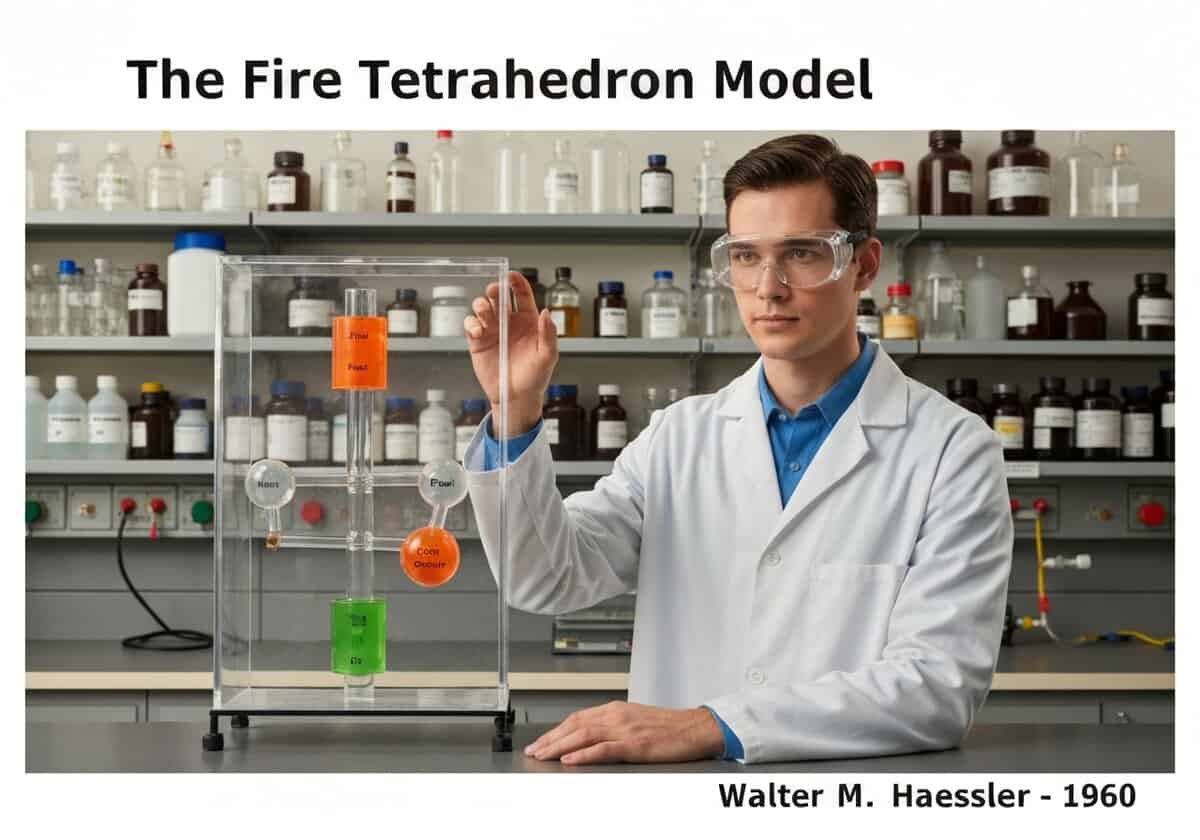
Dimostrazione in laboratorio del modello del tetraedro di fuoco nell'ingegneria chimica.

(Immagine generata a solo scopo illustrativo)

Il tetraedro di fuoco è un modello avanzato che aggiunge un quarto elemento al classico triangolo di fuoco: una reazione chimica a catena sostenuta. Questo quarto elemento rappresenta il processo in cui il calore prodotto dalla reazione di combustione è sufficiente a sostenere il fuoco creando ulteriori vapori e radicali infiammabili. Questo modello spiega meglio la combustione con fiamma.


While the triangolo di fuoco is sufficient for explaining the initiation of combustion, the fire tetrahedron provides a more complete model for understanding sustained, flaming fires. It incorporates the three elements of the triangle—heat, fuel, and an oxidizing agent—and adds a fourth face: the uninhibited chemical chain reaction. In a flaming fire, the initial heat causes the fuel to pyrolyze, releasing flammable vapors. These vapors mix with the oxidizer and combust, releasing more heat. A portion of this newly generated heat radiates back to the fuel, causing it to release more vapors, thus creating a self-sustaining cycle. This cycle involves highly reactive, short-lived molecules called free radicals (e.g., H•, O•, OH•). The fire tetrahedron model highlights that a fire can be extinguished not only by removing heat, fuel, or oxygen but also by interrupting this chemical chain reaction. This is the principle behind many modern extinguishing agents, such as dry chemical powders and halocarbon clean agents. These agents work by chemically interfering with the free radicals, effectively poisoning the fire and stopping the chain reaction, even if sufficient heat, fuel, and oxygen are still present.

Nota: sebbene questo quarto elemento renda i casi complessi più completi (polveri chimiche e agenti puliti a base di alogenuri), può comunque essere visto come un classico caso a 3 triangoli, in cui questo quarto elemento non fa altro che aggiungere o sopprimere la causa principale di uno degli altri 3.

UNESCO Nomenclature: 3305
- Ingegneria chimica

Tipo

Sistema astratto

Interruzione

Incrementale

Utilizzo

Uso diffuso

Precursori

  • the fire triangle model
  • discovery of free radicals in chemical reactions
  • Il lavoro di Nikolay Semyonov sulla teoria delle reazioni a catena.
  • development of halon and other chemical extinguishing agents

Applicazioni

  • development of chemical fire extinguishers (e.g., halon, dry chemical)
  • advanced firefighting strategies
  • fire investigation and analysis
  • processo chimico sicurezza
  • ricerca in chimica della combustione

Brevetti:

NA

Idee e potenziali innovazioni

  • catalytic fire suppression systems that actively neutralize combustion radicals
  • smart fire retardant materials that release chain-inhibiting agents when a specific temperature is reached
  • aerosol-based suppressants for enclosed spaces that disrupt the fire’s chemistry
  • ai models that predict fire behavior based on the kinetics of its chemical chain reactions
  • targeted acustico waves designed to disrupt the molecular interactions in a flame’s chain reaction
  • nanoparticle agents that provide a massive surface area for radical recombination
  • genetically engineered microorganisms that consume fuel sources and release flame-inhibiting gases
  • sistemi basati su laser per analizzare e interrompere la formazione di radicali liberi chiave nelle fiamme industriali
  • simulazioni di calcolo quantistico per progettare soppressori chimici più efficaci ed ecocompatibili
  • materiali autoriparanti per l'industria aerospaziale che rilasciano inibitori per fermare la combustione in caso di impatto o danneggiamento
Correlato a: tetraedro di fuoco, reazione a catena chimica, combustione, radicali liberi, estinzione, halon, sicurezza antincendio, combustione con fiamma, pirolisi, inibizione della fiamma.

Contesto storico

Il modello del tetraedro di fuoco

1960
1960
1960
1960
1960
1962
1963
1960
1960
1960
1960
1960
1960
1962-10-09
1964

(se la data è sconosciuta o non rilevante, ad esempio "meccanica dei fluidi", viene fornita una stima approssimativa della sua notevole comparsa)

decimo anno anniversario

Le immagini a grandezza naturale e i download sono disponibili, gratuitamente al 100%, solo per gli utenti registrati.

> Login <