Product Design, Manufacturing & Innovation Resources
Home » Time-of-Flight Diffraction (TOFD) Technique

Time-of-Flight Diffraction (TOFD) Technique

1970
  • Maurice G. Silk
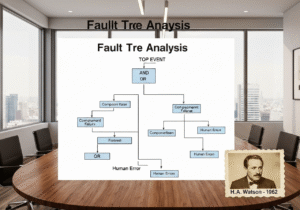
Technician performing Time-of-Flight Diffraction testing on a weld joint in a laboratory.

(generated image for illustration only)

Time-of-Flight Diffraction (TOFD) is a highly accurate ultrasonic technique for flaw detection and sizing. It uses separate transmitting and receiving probes. Instead of measuring the amplitude of a strong reflection from the face of a flaw, TOFD measures the arrival time of the much weaker waves diffracted from the flaw’s upper and lower tips, enabling precise through-wall size measurement.
The TOFD method represents a significant departure from conventional amplitude-based ultrasonic techniques. It is based on the physical phenomenon that when an ultrasonic wave strikes the sharp edge of a discontinuity, such as the top or bottom tip of a crack, the tip acts as a secondary source, radiating sound in all directions. This radiated energy is known as a diffracted wave.

In a typical TOFD setup, a transmitting probe sends a wide beam of ultrasound into the material, and a receiving probe, positioned a fixed distance away on the same surface, listens for the signals. The first signal to arrive at the receiver is the ‘lateral wave,’ which travels just beneath the surface directly from the transmitter. If a flaw is present, faint diffracted signals from its upper and lower extremities will arrive later. The time difference between the arrival of the lateral wave and the diffracted signals is precisely measured.

Using simple geometry and the known velocity of sound in the material, the time-of-flight data can be converted into highly accurate measurements of the flaw’s depth and through-wall height. A key advantage of TOFD is that its sizing accuracy is largely independent of the flaw’s orientation and the signal amplitude, overcoming major limitations of pulse-echo methods. This makes it one of the most reliable techniques for sizing critical planar defects like cracks and lack of fusion.

UNESCO Nomenclature: 3322
– Materials science

Type

Testing Method

Disruption

Substantial

Usage

Niche/Specialized

Precursors

  • fundamental understanding of wave diffraction phenomena from classical physics
  • the development of pulse-echo ultrasonic testing
  • the availability of highly accurate electronic timing circuits and digital signal processing
  • a recognized need in industry for more reliable flaw sizing methods than those based on signal amplitude

Applications

  • critical weld inspection in nuclear and pressure vessel fabrication
  • in-service crack growth monitoring in power generation components
  • pipeline girth weld inspection for the oil and gas industry
  • high-integrity component manufacturing quality control
  • aerospace structural integrity assessment

Patents:

NA

Potential Innovations Ideas

Due to scrapping bot traffic, currently more than 40k per day, this content is reserved to community members.
> Login < or > Register < (100% free) to access this, so as all other restricted content and tools.

Related to: TOFD, time-of-flight diffraction, NDT, crack sizing, flaw detection, weld inspection, diffraction, ultrasonic testing, non-destructive testing, structural integrity.

Historical Context

Time-of-Flight Diffraction (TOFD) Technique

1962
1964
1970
1970
1970
1970
1972
1960
1963
1965-12-21
1970
1970
1970
1970
1974

(if date is unknown or not relevant, e.g. "fluid mechanics", a rounded estimation of its notable emergence is provided)

Related Invention, Innovation & Technical Principles

Full size images and downloads are only available, 100% free, for registered members.

> Login <