Product Design, Manufacturing & Innovation Resources
Home » Static vs. Dynamic Verification (IT)

Static vs. Dynamic Verification (IT)

1970
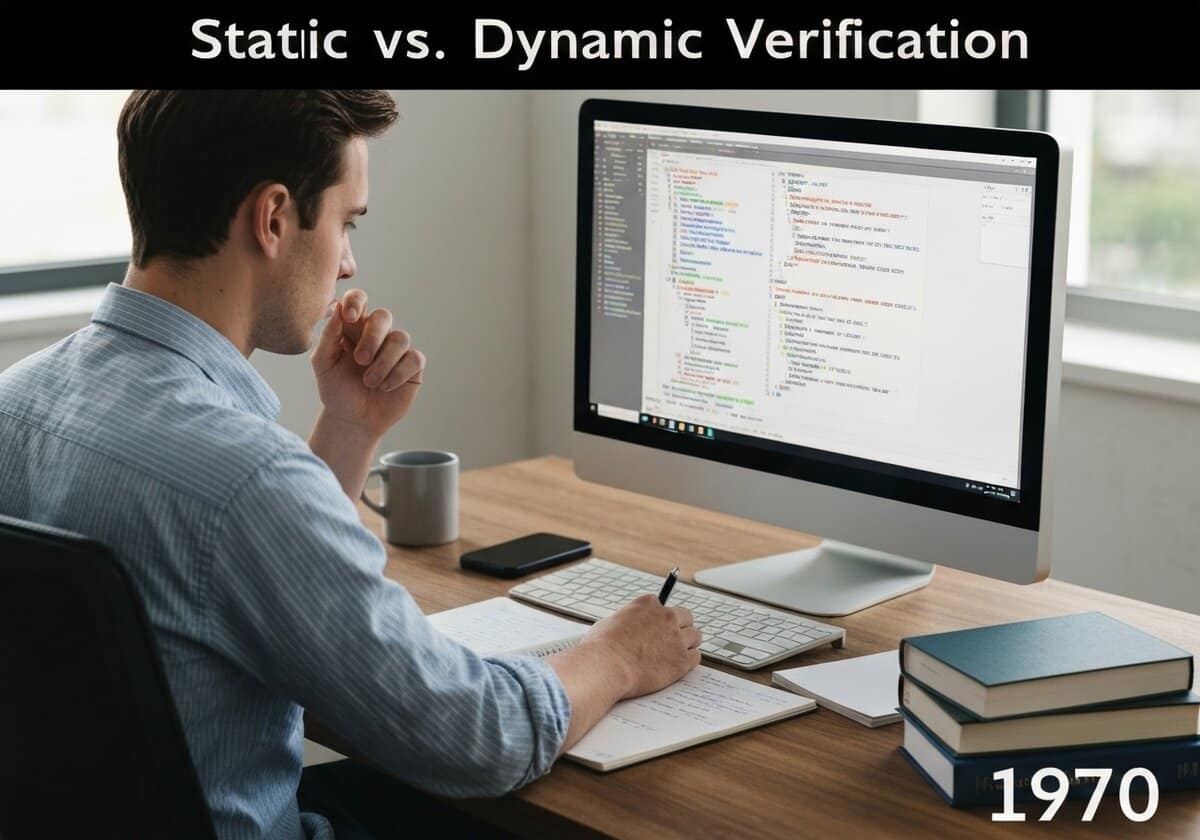
Software engineer performing static verification using code analysis tools in Computer Science.

(generated image for illustration only)

Verification techniques are broadly classified as static or dynamic. Static verification (or static analysis) examines the system’s code or design without executing it. Examples include code reviews, inspections, and automated static analysis tools. Dynamic verification (or testing) involves executing the system with a set of inputs and observing its behavior to find defects. Both are complementary for comprehensive quality assurance.

Static and dynamic verification are complementary approaches to finding defects. Static verification is performed early in the development cycle, often before the code is even compiled. It can analyze the entire codebase and identify issues like syntax errors, type mismatches, null pointer dereferences, and violations of coding standards. Because it doesn’t require execution, it can uncover problems in paths of the code that are difficult to reach through testing. Automated static analysis tools are now a standard part of modern development workflows, providing immediate feedback to developers within their integrated development environments (IDEs).

Dynamic verification, commonly known as testing, focuses on the runtime behavior of the software. It involves running the program with specific inputs and comparing the actual output with the expected output. This is the only way to detect certain types of errors, such as performance bottlenecks, memory leaks that occur over time, or incorrect handling of complex user interactions. Dynamic verification includes various levels of testing, from unit tests that check individual components to system tests that validate the entire application. While powerful, dynamic testing is inherently incomplete; it can only prove the presence of bugs for the tested inputs, not their absence for all possible inputs.

A comprehensive verification strategy utilizes both methods. Static analysis catches a class of errors cheaply and early, while dynamic testing validates the functional and non-functional behavior of the running system, ensuring it performs as expected under operational conditions.

UNESCO Nomenclature: 1203
– Computer Science

Type

Abstract System

Disruption

Substantial

Usage

Widespread Use

Precursors

  • compiler theory (for parsing and semantic analysis)
  • early debugging techniques (e.g., print statements)
  • formal logic
  • code walkthrough and inspection processes

Applications

  • static analysis tools in IDEs (e.g., lint, findbugs)
  • unit testing frameworks (e.g., junit, pytest)
  • code inspection and peer review processes
  • performance and load testing
  • security penetration testing

Patents:

NA

Potential Innovations Ideas

Due to scrapping bot traffic, currently more than 40k per day, this content is reserved to community members.
> Login < or > Register < (100% free) to access this, so as all other restricted content and tools.

Related to: static analysis, dynamic analysis, testing, verification, software quality, code review, unit testing, lint.

Historical Context

Static vs. Dynamic Verification (IT)

1960
1960
1967
1970
1970
1970
1970
1956
1960
1967
1967
1970
1970
1970
1970-01-01

(if date is unknown or not relevant, e.g. "fluid mechanics", a rounded estimation of its notable emergence is provided)

Related Invention, Innovation & Technical Principles

Full size images and downloads are only available, 100% free, for registered members.

> Login <