Product Design, Manufacturing & Innovation Resources
Home » Second Law of Thermodynamics

Second Law of Thermodynamics

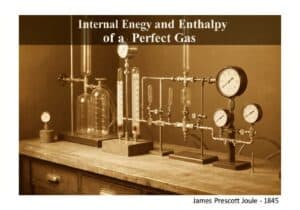
1850
  • Sadi Carnot
  • Rudolf Clausius
  • William Thomson (Lord Kelvin)
Engineers designing an efficient heat engine in a laboratory, illustrating thermodynamics applications.

(generated image for illustration only)

The Second Law introduces the concept of entropy and defines the direction of spontaneous processes. It can be stated in several ways, but a key consequence is that the total entropy of an isolated system can never decrease over time. This law explains the ‘arrow of time’ and why processes are irreversible, such as heat spontaneously flowing from a hot body to a cold one.

The Second Law is one of the most profound principles in science. One of its earliest formulations is the Clausius statement: ‘Heat can never pass from a colder to a warmer body without some other change, connected therewith, occurring at the same time.’ Another is the Kelvin-Planck statement: ‘It is impossible to devise a cyclically operating device, the sole effect of which is to absorb energy in the form of heat from a single thermal reservoir and to deliver an equivalent amount of work.’ Both statements forbid perpetual motion machines of the second kind.

The law’s novelty was the introduction of irreversibility into fundamental physics. While the First Law deals with energy conservation, the Second Law deals with energy quality and its inevitable degradation to less useful forms (waste heat). Ludwig Boltzmann later provided a statistical interpretation, defining entropy (\(S\)) as a measure of the number of possible microscopic arrangements (microstates) that correspond to a system’s observed macroscopic state. The formula \(S = k_B \ln W\) connects entropy to statistical probability, explaining that systems tend to evolve towards their most probable (highest entropy) state.

UNESCO Nomenclature: 2212
– Thermodynamics, statistical physics, and condensed matter

Type

Abstract System

Disruption

Revolutionary

Usage

Widespread Use

Precursors

  • Sadi Carnot’s work on the motive power of fire and the ideal heat engine cycle
  • observations of the inherent inefficiency of steam engines
  • the intuitive understanding that heat does not spontaneously flow from cold to hot
  • development of probability theory and statistics by Laplace and others

Applications

  • design of efficient heat engines and refrigerators (Carnot efficiency)
  • chemical engineering for predicting the spontaneity of reactions
  • information theory, where shannon entropy is a measure of information content
  • cosmology (the ‘heat death of the universe’ hypothesis)
  • materials science for understanding disorder and phase transitions

Patents:

NA

Potential Innovations Ideas

Due to scrapping bot traffic, currently more than 40k per day, this content is reserved to community members.
> Login < or > Register < (100% free) to access this, so as all other restricted content and tools.

Related to: second law, entropy, irreversibility, arrow of time, heat engine, Clausius statement, Kelvin-Planck statement, disorder, statistical mechanics, spontaneity.

Historical Context

Second Law of Thermodynamics

1845
1850
1850
1850
1850
1850
1851
1842
1847
1850
1850
1850
1850
1850
1851

(if date is unknown or not relevant, e.g. "fluid mechanics", a rounded estimation of its notable emergence is provided)

Related Invention, Innovation & Technical Principles

Full size images and downloads are only available, 100% free, for registered members.

> Login <